
Coral Identification Chart & Care Guide
Use the visual coral identification chart, growth-form clues, and 576 care profiles to compare soft corals, LPS, SPS, lighting, flow, and placement.

Visual reef reference
Coral Identification Chart for Reef Aquariums
Identify an aquarium coral by checking whether it has a hard skeleton, the relative size and shape of its polyps, and whether the colony branches, plates, encrusts, forms a mat, or grows as fleshy discs. Soft coral, LPS, and SPS are useful aquarium-care groups; LPS and SPS are hobby terms rather than formal taxonomic ranks.
 Soft coralsFlexible tissue; no stony skeleton
 ZoanthidsButton-shaped polyps joined by a mat
 LPS coralsHard skeleton with large fleshy polyps
 SPS coralsHard skeleton with many small polyps
 AcroporaBranching SPS with distinct axial tips
 Chalice coralsEncrusting or plating LPS with visible eyes
Quick coral identification decision tree
- No rigid stony skeleton: compare soft corals, mushroom corals, and zoanthids.
- Hard skeleton with large fleshy polyps or heads: begin with LPS corals.
- Hard skeleton covered by many tiny polyps: begin with SPS corals.
- Then compare growth form: branching, plating, encrusting, massive, mat-forming, or solitary.
- Confirm with the profile: color alone is unreliable because lighting and aquarium conditions can change appearance.
| Coral group | Skeleton | Polyp appearance | Common growth forms | Examples |
|---|---|---|---|---|
| Soft corals | No rigid stony skeleton | Fleshy polyps on flexible or leathery tissue | Branches, lobes, mats, or waving stalks | Toadstool leathers, Xenia, Green Star Polyps |
| Mushroom corals | No rigid stony skeleton | Single fleshy discs with smooth, textured, or hairy surfaces | Low spreading colonies across rock | Discosoma, Rhodactis, Ricordea |
| Zoanthids | No rigid stony skeleton | Round button-like polyps with a central mouth | Connected mats that spread across rock | Zoanthus and Palythoa |
| LPS corals | Hard calcium-carbonate skeleton | Large fleshy polyps, heads, or visible mouths | Branching heads, walls, mounds, plates, or encrusting tissue | Torch, Hammer, Frogspawn, Acan, Favia, Chalice |
| SPS corals | Hard calcium-carbonate skeleton | Numerous small polyps close to the skeleton | Fine branches, thick branches, plates, or encrusting sheets | Acropora, Montipora, Birdsnest, Stylophora |
This chart is a starting point for aquarium identification, not a substitute for skeletal or microscopic taxonomy. Use your browser’s print command to save a clean reference copy, then open the linked profiles for lighting, flow, placement, and care guidance.
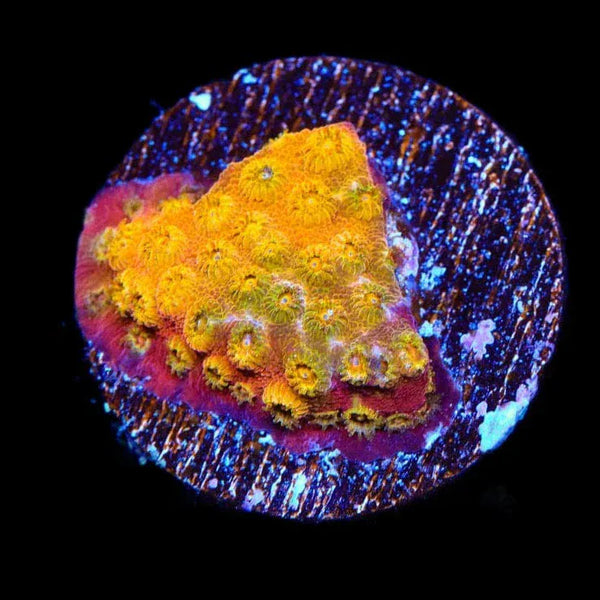
24k Gold Cyphastrea Coral
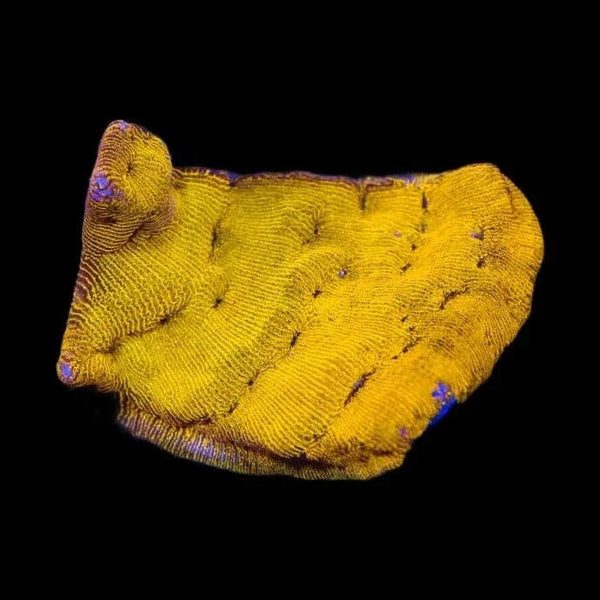
24k Gold Leptoseris Coral
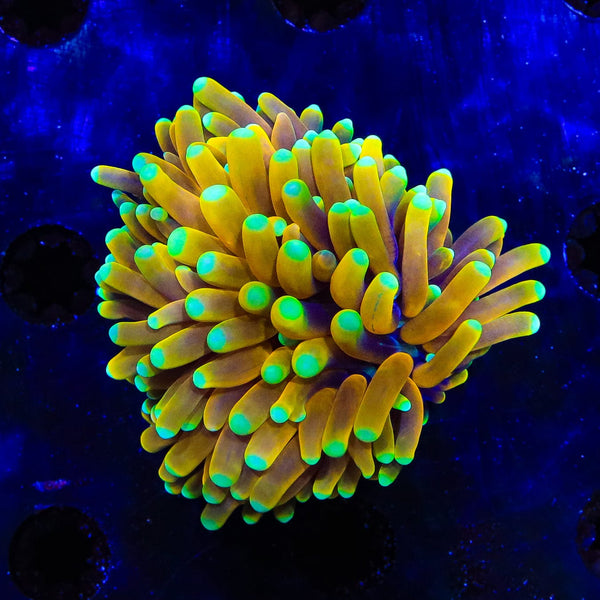
24k Gold Torch Coral
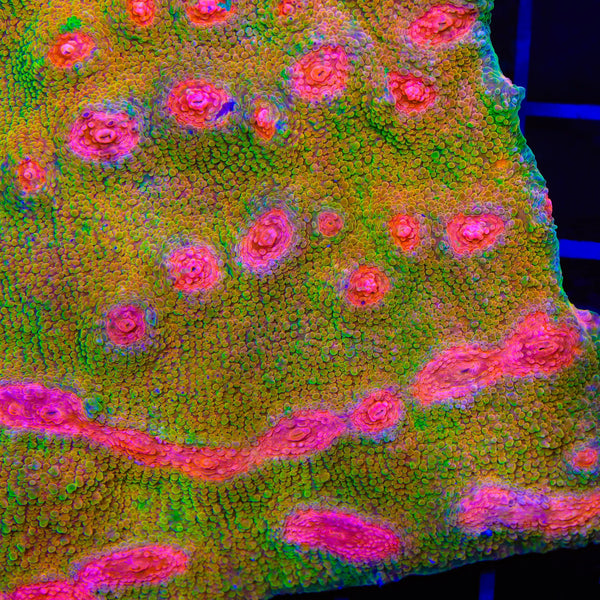
3G Mummy Eye Chalice Coral
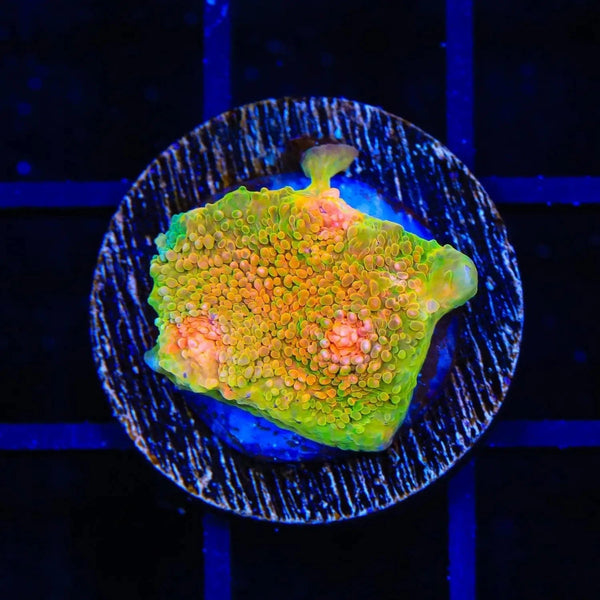
3G Mummy Eye Grafted Chalice Coral
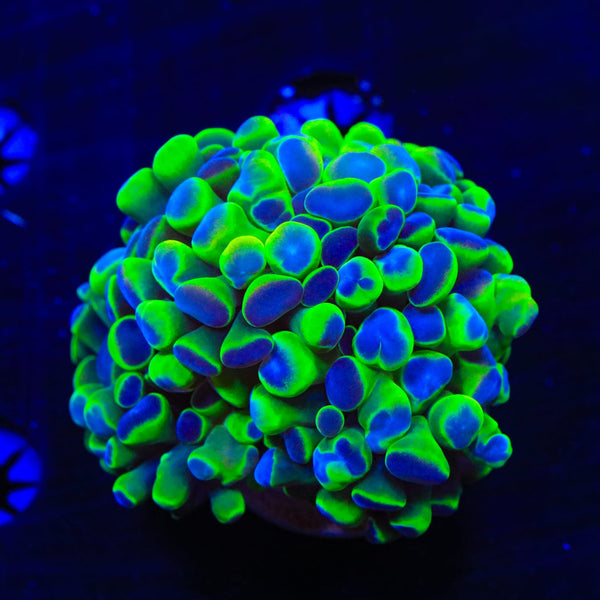
ACI Court Jester Hammer Coral
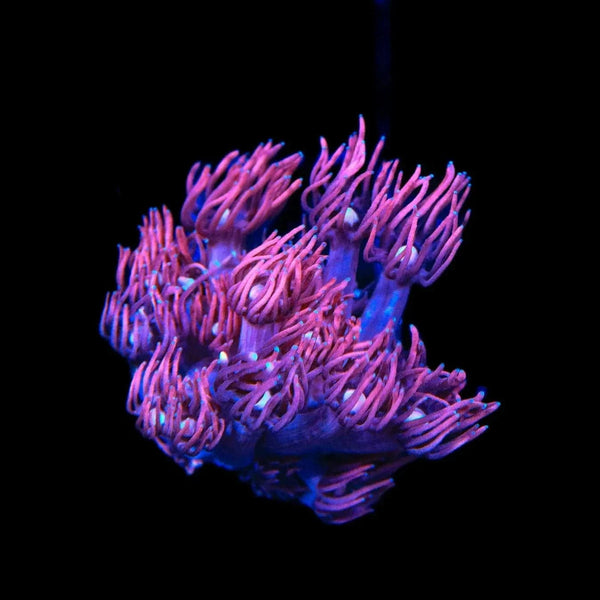
ACI Dragon Breath Goniopora Coral
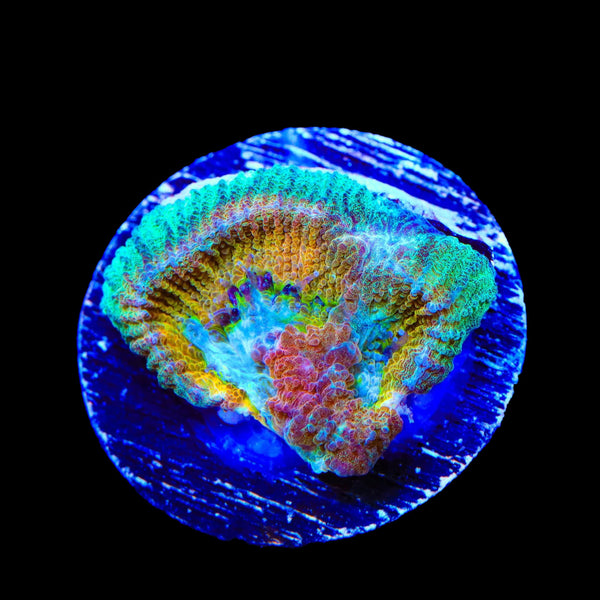
ACI Drunk Monkey Favia Coral
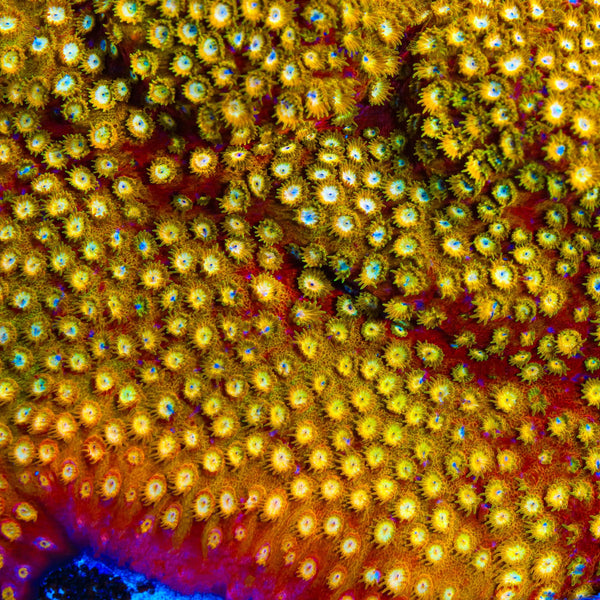
ACI Golden Girls Cyphastrea Coral
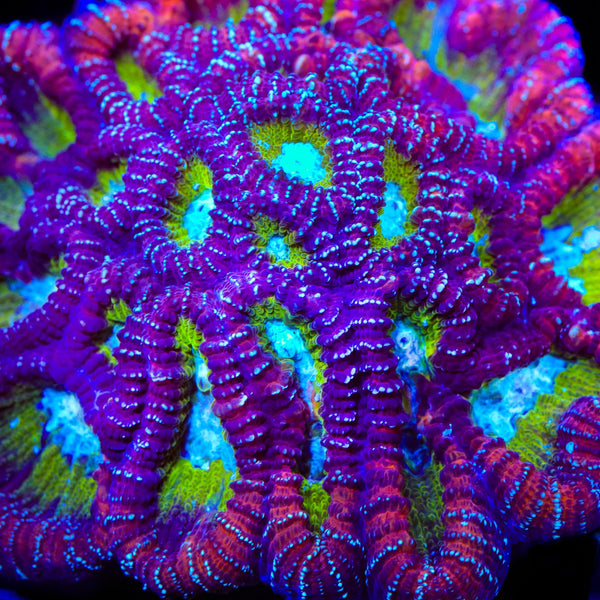
ACI Jinx Favia Coral
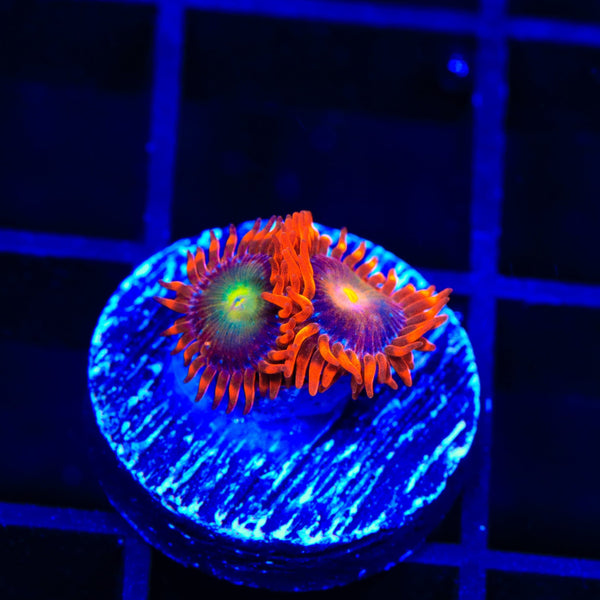
ACI Lorax Zoanthids Coral
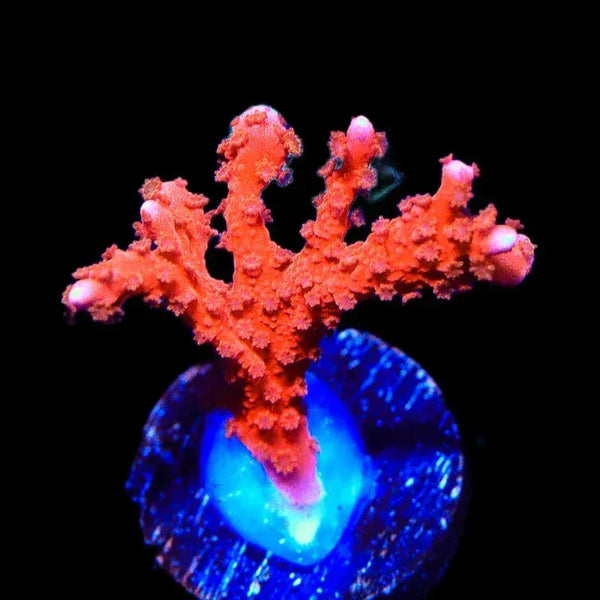
ACI Manila Spy Montipora Coral
How to Identify Coral
This coral glossary is a practical reference for comparing reef aquarium corals before you buy, place, or troubleshoot them. Each profile brings together the details that matter at the aquarium: common and scientific names, general care level, lighting, water flow, placement, feeding, and temperament. Use the search field when you already know a name, or browse the profile index when you are identifying a coral from its growth form, polyp shape, or trade name.
Identification is the first step, not the final care decision. Corals sold under similar common names can have different growth patterns and tolerances, while color alone can change under different lighting and nutrient conditions. Compare several visible traits, then open the individual profile for the complete care summary. If you are beginning with the broad groups, our guide to soft coral, LPS, and SPS coral types explains how those categories differ.
Aquarium Coral Types
Soft corals
Soft corals do not build the same rigid stony skeleton associated with LPS and SPS corals. Many are adaptable and bring movement to a reef, but fast-growing varieties still need deliberate placement so they do not overtake neighboring rockwork. Review each profile for its preferred light and flow rather than assuming every soft coral has identical needs.
Large-polyp stony corals
LPS corals combine a calcium-carbonate skeleton with large, fleshy polyps. Their tissue can be damaged by excessive direct flow, and many species need room for sweeper tentacles or other competitive behavior. The glossary helps compare familiar groups such as Euphyllia, brain corals, Acans, Favia, Goniopora, and chalice corals without treating them as one care category.
Small-polyp stony corals
SPS corals generally reward stable chemistry, appropriate light, and strong variable flow. Acropora, Montipora, Birdsnest, and related groups can differ substantially in placement and tolerance. Use the profiles to narrow the identification, then make changes gradually and watch the coral's response instead of chasing a single universal number.
Compare care requirements before placement
Start with the coral's current condition and the stable environment your aquarium can provide. Lighting recommendations are useful ranges, but acclimation matters whenever a coral moves between systems. Flow should keep the colony clean and deliver nutrients without pinning tissue against the skeleton. Placement also needs to account for growth, shading, and aggression from nearby colonies.
Care labels such as beginner, moderate, or advanced are a quick comparison tool. They do not replace testing or observation. Keep temperature and salinity consistent, follow alkalinity and nutrient trends, and leave enough time between adjustments to understand the result. If a coral retracts, pales, or develops tissue damage, review recent changes in light, flow, chemistry, pests, and neighboring corals before making another change.
Build a reef with compatible corals
A successful mixed reef is planned around zones. Lower-light or gentler-flow areas can suit one group, while exposed upper rockwork may support species that prefer more energy. Leave growth space around encrusting and plating corals, isolate aggressive or rapidly spreading colonies when appropriate, and remember that a small frag can become a large colony.
Coral Names and Pictures
Use photographs as an identification clue, but compare structure as well as color. Look at whether the colony branches, plates, encrusts, or forms separate fleshy heads; note the shape of the corallites and whether feeding or sweeper tentacles appear after dark. Trade names are useful labels for individual color forms, while the scientific grouping provides a more dependable starting point for care research.
Coral Care Guides by Type
Use the glossary to identify a coral, then continue with the focused care guide for its broader group.
Browse all profiles below to compare candidates, then use the individual guide as a starting point for acclimation and placement. For shopping rather than identification, visit our live coral collection. Keeping the informational glossary and the collection separate lets you research care first and choose livestock only after it fits the aquarium.
Browse every profile 1–250 of 576
- 24k Gold Cyphastrea Coral
- 24k Gold Leptoseris Coral
- 24k Gold Torch Coral
- 3G Mummy Eye Chalice Coral
- 3G Mummy Eye Grafted Chalice Coral
- ACI Court Jester Hammer Coral
- ACI Dragon Breath Goniopora Coral
- ACI Drunk Monkey Favia Coral
- ACI Golden Girls Cyphastrea Coral
- ACI Jinx Favia Coral
- ACI Lorax Zoanthids Coral
- ACI Manila Spy Montipora Coral
- ACI Mike the Mycedium Chalice Coral
- ACI Sunrise Cyphastrea Coral
- Alaskan Gold Rhodactis Mushroom Coral
- Alien Antivenom Zoanthids Coral
- Alien Hand leather Coral
- Alien Invasion Chalice Coral
- Anthelia Coral
- Aquacultured Gorgonian Coral
- Aquamans Revenge Montipora Coral
- ARC Fireworks Acropora Coral
- Armor of God Zoanthids Coral
- ASD Rainbow Millepora Acropora Coral
- Atomic Orange Mushroom Coral
- Atomic Orange Plate Coral
- Atomic Red Rhodactis Mushroom Coral
- Aussie Gold Torch Coral
- Awesome Blossom Zoanthids Coral
- Bam Bam Zoanthids Coral
- Banana Boat Torch Coral
- Banana Lobophyllia Coral
- Banana Lokani Acropora Coral
- Banana Torch Coral
- Barbie Party Blastomussa Coral
- BC Bubblebath Unicorn Acropora Coral
- Bicolor Frogspawn Coral
- Bicolor Hammer Coral
- BkChem Froot Loops Acropora Coral
- Black Widow Blastomussa Coral
- Bleeding Apple Scoly Coral
- Blue Eye Blondie Zoanthids Coral
- Blue Eye Green Star Polyps Coral
- Blue Green Sympodium Coral
- Blue Lagoon Zoanthids Coral
- Blue Lobophyllia Coral
- Blue Macaw Zoanthids Coral
- Blue Photosynthetic Sponge Coral
- Blue Raspberry Blastomussa Coral
- Blue Raven Merletti Blastomussa Coral
- Blue Snake Eye Goniopora Coral
- Blue Tip Frogspawn Coral
- Blue Tip Torch Coral
- Blueberry Blastomussa Coral
- Blueberry Crush Favia Coral
- Bow Tie Blaster Zoanthids Coral
- Bowzer Zoanthids Coral
- Bright Eye Alveopora Coral
- Bright Eye Micromussa Acan Coral
- BSA Titty Twister Blastomussa Coral
- Bubblegum Digitata Montipora Coral
- Burning Embers Zoanthids Coral
- Butt Muncher Zoanthid Coral
- Candy Apple Blastomussa Coral
- Candy Apple Pink Zoanthids Coral
- Candy Apple Red Zoanthids Coral
- CB Angel Eye Favia Coral
- CB Birthday Cake Acropora Coral
- CB Bling Bling Cyphastrea Coral
- CB Bloodbath Favia Coral
- CB Bubbleyum Favia Coral
- CB El Diablo Chalice Coral
- CB Golden Jawdropper Acropora Coral
- CB Maleficent Acropora Coral
- CB Rainbow Infusion Zoanthids Coral
- CB The Thing Anacropora Coral
- CC Banana Hammock Acropora Coral
- CC Voodoo Majick Acropora Coral
- Charmander Zoanthids Coral
- Cherry Garcia Chalice Coral
- Cherry Melon Blastomussa Coral
- Cherry Pie Blastomussa Coral
- Christmas Favia Coral
- Cinnamon Apple Rhodactis Mushroom Coral
- Cinnamon Blastomussa Coral
- Circus Freak Zoanthids Coral
- Convict Chalice Coral
- Cotton Candy Torch Coral
- Cracker Jack Blastomussa Coral
- Cranberry Blastomussa Coral
- Crayola Meltdown Chalice Coral
- Crocodile Tears Alveopora Coral
- CRT Golden Eye Acropora Coral
- Daisy Cutter Zoanthids Coral
- Death Star Bowerbankii Coral
- Deep Water Acan Coral
- Disco Hammer Coral
- Dragon Soul Favia Coral
- Dragon Spirit Favia Coral
- Dream Catcher Mushroom Coral
- Eagle Eye Zoanthids Coral
- Electric Gatorade Zoanthids Coral
- Electric Torch Coral
- Electro Hammer Coral
- Emerald Green Zoanthids Coral
- Everlasting Gobstopper Zoanthids Coral
- Exosphere Zoanthids Coral
- Favia of the Gods Favia Coral
- Fire and Ice Zoanthids Coral
- Fire Engine Rhodactis Mushroom Coral
- Firefly Mushroom Coral
- Firey Blastomussa Coral
- Flame Thrower Chalice Coral
- Flaming Strawberry Goniopora Coral
- Flaming Unicorn Goniopora Coral
- Forest Fire Digitata Montipora Coral
- Fruit Loops Zoanthids Coral
- Garf Bonsai Acropora Coral
- Gatorade Zoanthids Coral
- GB Butt Kisser Zoanthids Coral
- GB Fury Acropora Coral
- Glitter Bomb Goniopora Coral
- Glitter Rhodactis Mushroom Coral
- Glow Tip Hammer Coral
- Goblins on Fire Zoanthids Coral
- God of War Zoanthids Coral
- Gold Center Frogspawn Coral
- Gold Hammer Coral
- Gold Pocillopora Coral
- Gold Rainbow Hammer Coral
- Gold Torch Coral
- Golden Gate Rhodactis Mushroom Coral
- Gorilla Nipple Zoanthids Coral
- Grand Master Krak Zoanthids Coral
- Grandmaster Goniopora Coral
- Great Owl Zoanthids Coral
- Green Bay Packer Zoanthids Coral
- Green Birdsnest Coral
- Green Branching Cyphastrea Coral
- Green Cabbage Leather Coral
- Green Grande Palythoas Coral
- Green Hairy Mushroom Coral
- Green Hammer Coral
- Green Highlighter Tip Hammer Coral
- Green Leather Coral
- Green Long Polyp Toadstool Leather Coral
- Green Montipora Cap Coral
- Green Palythoa Grandis Coral
- Green Pocillopora Coral
- Green Slimer Acropora Coral
- Green Splatter Hammer Coral
- Green Splatter Wall Hammer Coral
- Green Star Polyps Coral
- Green Stem Duncan CoralDuncanopsammia axifuga
- Green Tip Frogspawn Coral
- Green Tip Hammer Coral
- Green Tip Torch Coral
- Green Toadstool Leather Coral
- Greg Hiller's Aqua Delight Acropora Coral
- Halle Berry Zoanthids Coral
- Hallucination Zoanthids Coral
- Heart Breaker Goniopora Coral
- High Beam Torch Coral
- Highlighter Frogspawn Coral
- Highlighter Toadstool Leather Coral
- Hollywood Stunner Chalice Coral
- Hologram Hammer Coral
- Holy Grail Hammer Coral
- Holy Grail Torch Coral
- Homewrecker Acropora Coral
- Hot Ring Blastomussa Coral
- Hulk Torch Coral
- Illuminati Zoanthids Coral
- Indo Gold Torch Coral
- Insane Diablo Diaseris Plate Coral
- Insane Rainbow Blastomussa Coral
- Irish Gold Rhodactis Mushroom Coral
- Jake Adams Immortal Tort Acropora Coral
- Jake Adams Rose Acropora Coral
- Japanese Toadstool Leather Coral
- Jawbreaker Zoanthids Coral
- Jedi Mind Trick Montipora Coral
- JF Acid Reflux Zoanthids Coral
- JF Aquaman Montipora Coral
- JF Avatar Chalice Coral
- JF Azz Krak Zoanthids Coral
- JF Beach Bum Montipora Coral
- JF Bloodshot Zoanthids Coral
- JF Buzz Kill Cyphastrea Coral
- JF Captain Jerk Palythoas Coral
- JF Chemical Reaction Chalice Coral
- JF Daisy Cutter Zoanthids Coral
- JF Daisy Duke Zoanthids Coral
- JF Dizzy Spell Montipora Coral
- JF Fairy Fart Zoanthids Coral
- JF Fairy Ring Favia Coral
- JF Fairy Tale Zoanthids Coral
- JF Frankie's Hot Pink Rim Montipora Cap Coral
- JF Fruity Pebbles Montipora Coral
- JF Gold Meister Chalice Coral
- JF Homewrecker Acropora Coral
- JF Jolt Acropora Coral
- JF Jungle Juice Zoanthids Coral
- JF Midnight Dynamite Montipora Coral
- JF Pink Rim Montipora Coral
- JF Psycho Rim Favia Coral
- JF Purple People Eater Favia Coral
- JF Raja Rampage Chalice Coral
- JF Silver Bullet Montipora Coral
- JF Sunkist Bounce Mushroom Coral
- JF Sweet Tooth Montipora Coral
- JF Toro Bravo Favia Coral
- JF Yellow Fever Montipora Coral
- JF Yellow Submarine Favia Coral
- Jingle Bells Cyphastrea Coral
- Johnny Pumpkin Seed Zoanthids Coral
- Joker Torch Coral
- Keds Reds Zoanthids Coral
- Kenya Tree Leather Coral
- Key Lime Pie Hammer Coral
- LA Lakers Zoanthids Coral
- Laura's Purple Polyp Acropora Coral
- Lich King Zoanthids Coral
- Lime Cynarina Coral
- Lime Hammer Coral
- Little Red Ferrari Acropora Coral
- Little Shop of Horror Zoanthids Coral
- Lunar Lemonade Acropora Coral
- Magic Carpet Persian Rug Mushroom Coral
- Magneto Zoanthids Coral
- Malaysian Miami Torch Coral
- Mango Haze Echinata Coral
- MattV Looney Tunes Tenuis Acropora Coral
- Mattv Orange Passion Acropora Coral
- Metallic Green Center Star Polyps Coral
- Meteor Shower Cyphastrea Coral
- Miami Hurricane Zoanthids Coral
- Mind Trick Zoanthids Coral
- Mint Finger Leather Coral
- Mint Frogspawn Coral
- Mint Green Star Polyps Coral
- Mint Leather Coral
- Mohawk Zoanthids Coral
- Monet Madness Cyphastrea Coral
- Mosh Pit Mushroom Coral
- Moss Posh Mushroom Coral
- Murder Hornet Zoanthids Coral
- My Clementine Zoanthids Coral
- Neon Green Digitata Montipora Coral
- Neon Hammer Coral