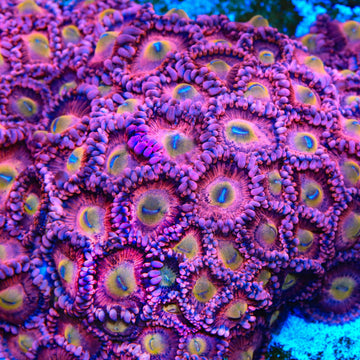
Daisy Cutter Zoanthids Coral
Overview
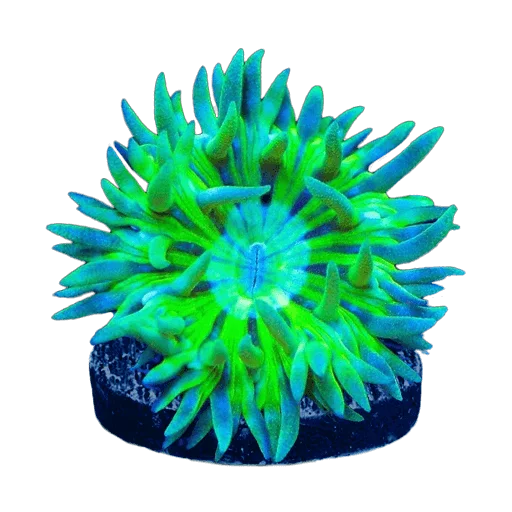
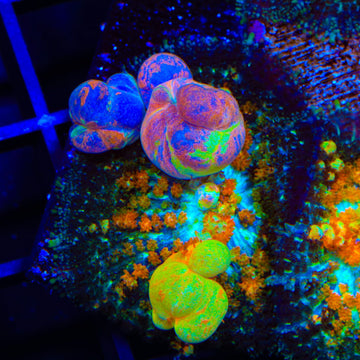
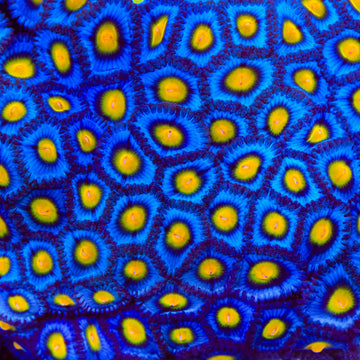
Daisy Cutter Zoanthids Coral forms tight colonies of small button-like polyps with pale, serrated skirts and bright radial mouths. Zoanthus sp., a soft colonial polyp, thrives under moderate light and moderate, indirect flow. Primarily photosynthetic with symbiotic algae, it also accepts fine particulate foods, which can support faster growth and improved coloration. Give space on isolated rock to manage spreading, and handle carefully due to possible palytoxin.
Quick Facts
Care
Easy
Lighting
Low–Moderate
Flow
Moderate
Placement
Low–Mid
Temperament
Peaceful (2–3 inches spacing)
Recommended Parameters
Temp
76–80°F
pH
8.1–8.4
Salinity
1.025–1.026
Calcium
400–450 ppm
AlkAlkalinity
8–10 dKH
Magnesium
1250–1350 ppm
Feeding
photosynthetic, microplankton, phytoplankton, zooplankton, rotifers, cyclops, reef roids and other coral-specific powdered foods, marine snow
Care & Placement
FAQ
Frequently Asked Questions
About the Daisy Cutter Zoanthids Coral
-
Why are my Daisy Cutter Zoas stretching tall or staying tiny and tight?
Tall, skinny stalks usually mean they’re chasing light or dodging flow; increase PAR gradually and give steadier, indirect flow. Tiny, tight polyps that won’t open often sit in blasting flow or too much light; reduce intensity 10–20% and redirect flow. Aim for moderate, random flow that keeps detritus off. Watch for shade from neighboring colonies—reposition frags to reduce shadowing and encourage even growth. -
How do I keep the center pattern and skirt color from washing out or shifting?
Color holds best under stable nutrients (NO3 ~5–15 ppm, PO4 ~0.03–0.08 ppm) and blue‑heavy spectrum. Too much white can mute the center pattern; too little nutrients can pale skirts. Increase PAR slowly if colors dull, but avoid sudden jumps. Trace elements matter—iodine and iron at natural levels support pigments. A weekly 10–15% water change helps maintain trace balance without chasing numbers. -
My colony is “melting” or staying closed while parameters test fine—what hidden issues should I check?
spect at night for zoa‑eating nudibranchs and sundial snails; dip with a coral dip to remove hitchhikers. Look for zoa pox (tiny cream pustules); treat with Furan‑2 dips. Increase flow to deter biofilm at the mat edge and siphon detritus. If algae is encroaching, spot‑treat the rock (not the polyps) with dilute peroxide out of water. Run fresh carbon and space from leathers to reduce chemical stress. -
Can Daisy Cutters overrun or irritate neighbors in a mixed reef?
Yes—once established, they spread fast along rock and can irritate nearby LPS and encrusters. Isolate on an island rock or create sand gaps as barriers. Trim mats monthly to keep edges in check. Run carbon and maintain good skimming to reduce chemical cues. Always handle with gloves and eye protection; even Zoanthus can contain palytoxin, and fragging aerosols or slime can be hazardous.