Glitter Bomb Goniopora Coral
Overview
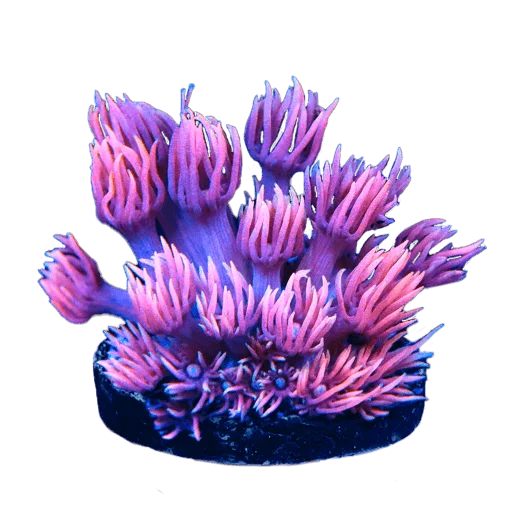
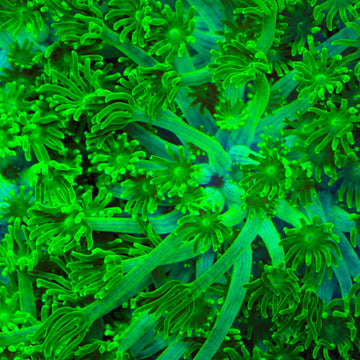
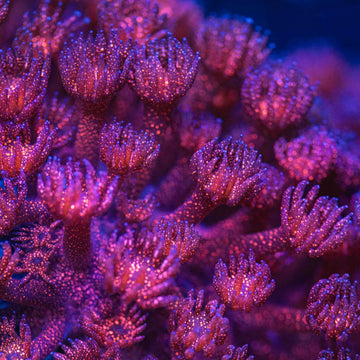
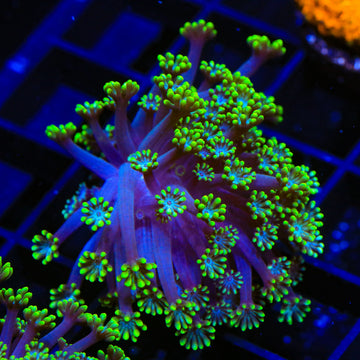
Glitter Bomb Goniopora Coral shows dense pom‑pom polyps with long, waving tentacles and bright speckled tips. Goniopora sp. is a stony, polyp-dense coral that prefers moderate light and gentle to moderate, indirect flow. It hosts symbiotic algae for photosynthesis but benefits from small particulate foods a few times per week, which can improve growth and color. Place on stable rock or sand with ample space from neighbors; avoid strong direct flow and stinging corals.
Quick Facts
Care
Difficult
Lighting
Moderate
Flow
Moderate indirect
Placement
Mid–Low
Temperament
Semi-aggressive (4–6 inches spacing)
Recommended Parameters
Temp
76–80°F
pH
8.1–8.4
Salinity
1.025–1.026
Calcium
420–450 ppm
AlkAlkalinity
8–9 dKH
Magnesium
1250–1350 ppm
Feeding
photosynthetic, phytoplankton, zooplankton, microplankton, rotifers, baby brine shrimp, copepods, cyclops, finely minced mysis, powdered coral foods
Care & Placement
FAQ
Frequently Asked Questions
About the Glitter Bomb Goniopora Coral
-
How do I keep the “glitter” speckles and color on the Glitter Bomb Goniopora Coral from fading?
Maintain moderate PAR (120–180) with a blue-leaning spectrum but some white for definition. Stable nutrients (nitrate 5–15 ppm, phosphate 0.03–0.1) support pigmentation. Many aquarists see better sparkle with balanced trace metals, especially iron and manganese—dose carefully and test. Avoid rapid light increases; if paling, reduce intensity 15–20% and increase feeding of fine particulate foods 2–4x weekly. -
My Goniopora deflates midday—normal or a problem?
Brief daily “rest” retraction can be normal. Persistent midday collapse signals irritation or instability: check for vermetid snails, hydroids, or detritus collecting in the polyp crown. Verify stable alkalinity and temperature; sudden changes trigger retraction. Reduce direct flow if tissue is whipping. If you spot mucus and foul odor, suspect brown jelly—frag away affected tissue and use an antibacterial dip promptly. -
Is it safe to let clownfish host the Glitter Bomb Goniopora?
Not recommended. Repeated rubbing can abrade tissue, leading to recession or infection, especially on long polyp varieties like Goniopora. If clowns persist, use a mesh barrier while they bond with a preferred host (e.g., a large Euphyllia or a substitute anemone). Provide alternative shelters and rearrange flow/structure to make the coral less attractive as a perch. -
Why does the base recede even though polyps look extended?
Base recession often stems from excessive, linear flow scouring the skeleton, sand abrasion, or chronic low nutrients despite good extension. Mount on stable rock off the sand, provide alternating, non-laminar flow, and keep nutrients detectable. Ensure consistent alkalinity and calcium for skeletal deposition. Inspect for vermetids cutting tissue at the rim. Target-feed small foods to support growth at the base, not just polyp extension.