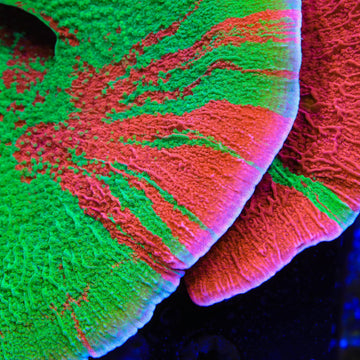
Forest Fire Digitata Montipora Coral
Overview
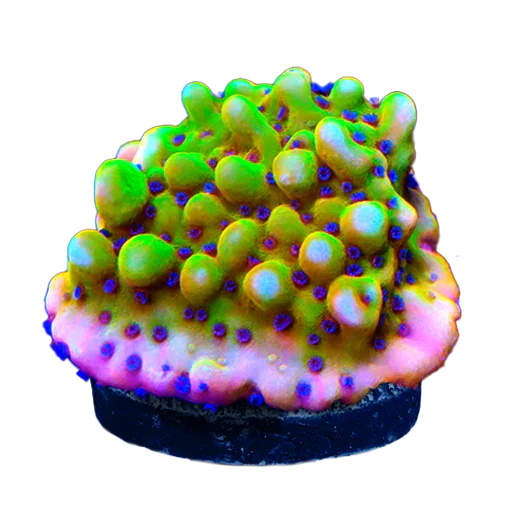
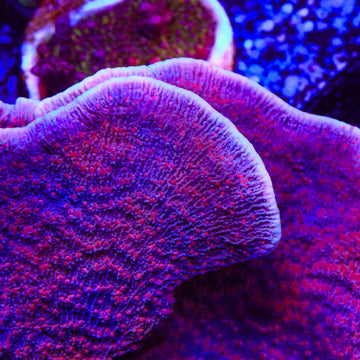
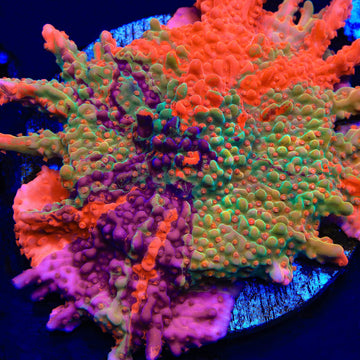
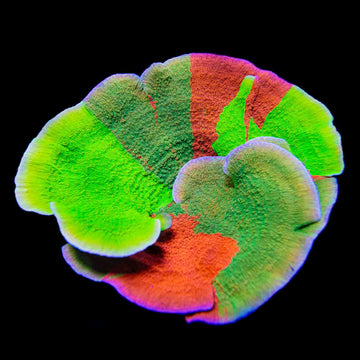
Forest Fire Digitata Coral shows bright orange-red branches with contrasting green polyps. Montipora digitata is a small polyp stony branching coral that prefers moderate to strong light and moderate water flow. It is primarily photosynthetic with symbiotic algae, but occasional fine particulate foods can support growth and maintain color. Place high and stable in the rockwork with space around the branches, as it can shade neighbors and is sensitive to sudden changes in water chemistry.
Quick Facts
Care
Moderate
Lighting
Moderate–High
Flow
Moderate–High
Placement
Mid–High
Temperament
Peaceful (2–3 inches spacing)
Recommended Parameters
Temp
76–80°F
pH
8.1–8.4
Salinity
1.025–1.026
Calcium
400–450 ppm
AlkAlkalinity
8–9 dKH
Magnesium
1280–1350 ppm
Feeding
photosynthetic (primary), phytoplankton, micro-zooplankton, rotifers, marine snow, amino acids, powdered coral foods
Care & Placement
FAQ
Frequently Asked Questions
About the Forest Fire Digitata Montipora Coral
-
Why does my Forest Fire Digitata lose its red/orange polyp color while the base stays green?
Color loss usually traces to low potassium (target ~380–420 ppm) or excessive nutrient stripping. Verify potassium with a reliable kit, run skimmer/filtration less aggressively if NO3/PO4 are near zero, and provide stable alkalinity (7.5–8.5 dKH). Moderate–high PAR (200–300) with strong blue spectrum supports pigmentation; acclimate slowly to brighter light to avoid tip burn and further fading. -
My colony grows thin, spindly branches instead of a dense “thicket.” How can I encourage fuller growth?
Increase cross-flow and place frags slightly lower at first. Mount cuttings horizontally or at an angle to promote multiple new growth tips. Keep alkalinity and nutrients stable (NO3 5–15 ppm, PO4 0.03–0.08 ppm). Periodic micro-fragging of long branches stimulates branching. Avoid shading from nearby SPS; this species self-shades easily, reducing lateral growth. -
What’s the best way to frag Montipora digitata for fast recovery and color retention?
Use clean bone cutters to take 1–2 cm tips from healthy, colored branches. Make quick, clean cuts above any shaded or damaged areas. Immediately glue to ceramic plugs and place in moderate light/strong flow. Maintain iodine and potassium within range; avoid large alkalinity shifts for 7–10 days post-cut. Mount frags horizontally for bushier growth and stronger coloration. -
How can I tell if montipora-eating nudibranchs are the issue, and what works beyond coral dips?
Look for scalloped bite marks, nocturnal feeding, and white egg spirals on shaded undersides. Dips help, but repeated manual inspections, basting, and removal are key. Quarantine affected pieces, frag above damaged tissue, and discard bases. A six-line, melanurus, or yellow coris wrasse can reduce adults (not eggs). Repeat dips every 4–5 days for 3–4 weeks.