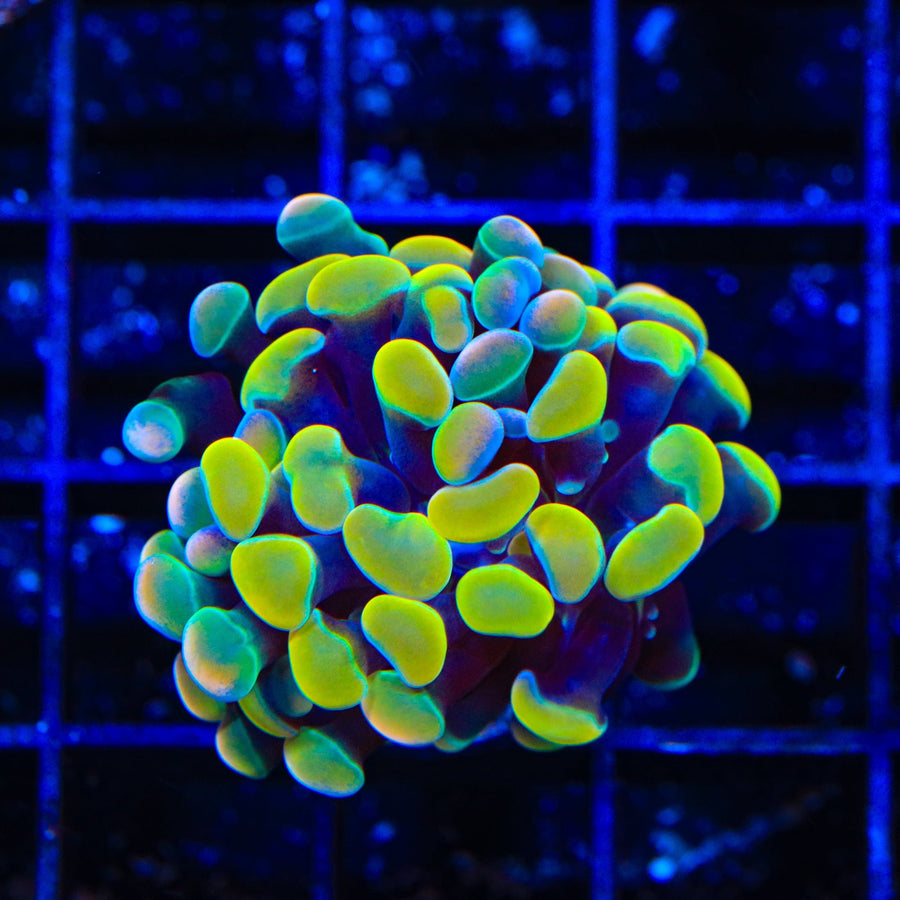
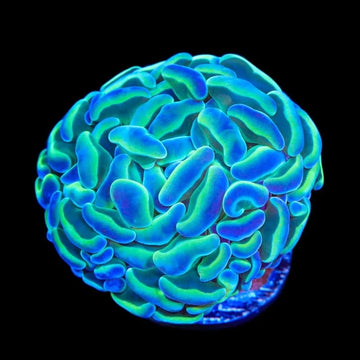
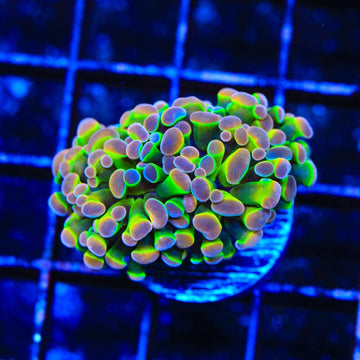
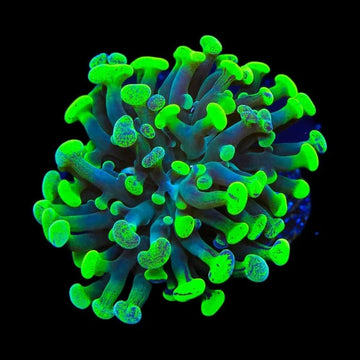
Bicolor Hammer Coral
Overview
The Bicolor Hammer Coral shows contrasting tips on hammer-shaped tentacles. Fimbriaphyllia paraancora is a large-polyp stony coral with branching heads, favoring moderate light and gentle to moderate flow. It relies on symbiotic algae for most nutrition, and occasional meaty foods can support growth and maintain color. Place with space from neighbors; sweeper tentacles can sting nearby corals.
Quick Facts
Care
Moderate
Lighting
Moderate
Flow
Moderate, indirect
Placement
Mid–Low
Temperament
Aggressive (6–8 inches spacing)
Recommended Parameters
Temp
77–80°F
pH
8.1–8.4
Salinity
1.025–1.026
Calcium
400–450 ppm
AlkAlkalinity
8–9.5 dKH
Magnesium
1280–1350 ppm
Feeding
photosynthetic, mysis shrimp, enriched brine shrimp, finely chopped seafood (shrimp, clam), copepods, rotifers, zooplankton, LPS coral foods
Care & Placement
FAQ
Frequently Asked Questions
About the Bicolor Hammer Coral
-
Why do some Bicolor Hammer heads lose the two-tone look over time?
Shifts in spectrum and nutrients can favor one pigment. Keep moderate PAR (80–150), strong blue/violet (420–450 nm), and stable nutrients (nitrate 5–15 ppm, phosphate 0.03–0.10 ppm). Avoid ultra-low nutrients and excessive white light. Pigment can rebound over weeks; if one branch stays monotone, fragging and placing it in slightly lower light can help restore contrast. -
My Fimbriaphyllia paraancora is receding from the base up—what’s the likely cause?
Base-up recession often points to bacterial issues or tissue damage at the skeleton edge, not just alkalinity swings. Inspect for dead skeleton or detritus accumulation. Increase random flow, turkey-baste debris, and perform an antiseptic dip (iodine-based). If a head is collapsing, cut it off above the rot to protect healthy branches. Maintain stable alk 8–9.5 dKH and mag 1300–1400 ppm. -
How far can its sweeper tentacles reach, and does it tolerate other Euphyllia?
Night sweepers commonly reach 2–3 inches, sometimes more in strong current. Give 4–6 inches of clearance. It may coexist with other hammers of the same colony better than with frogspawn or torch corals, which can provoke chemical and bacterial skirmishes. Avoid direct contact between different species or morphs, and run carbon with regular changes to reduce allelopathic stress. -
How do I prevent Brown Jelly Disease after a head is damaged?
Act fast: siphon the jelly, perform an antiseptic dip, increase aeration and random flow, and remove the affected head above healthy tissue. Keep nutrients stable, reduce heavy feeding, and maintain clean but not sterile water. Replace or rinse mechanical filtration, run fresh carbon, and avoid sudden light increases during recovery to limit further stress.