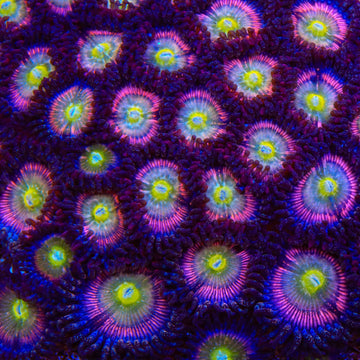
Butt Muncher Zoanthid Coral
Overview
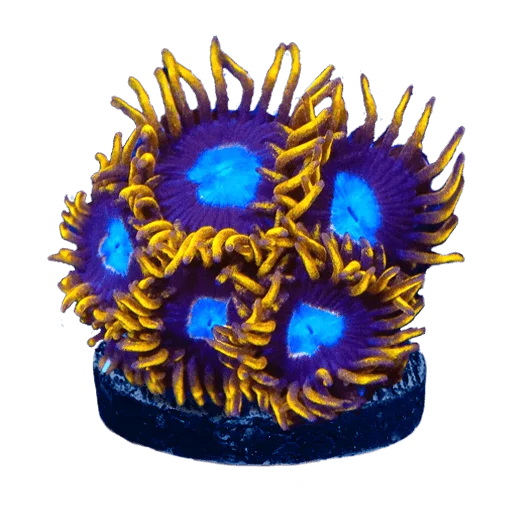
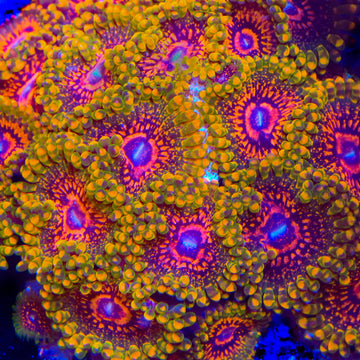
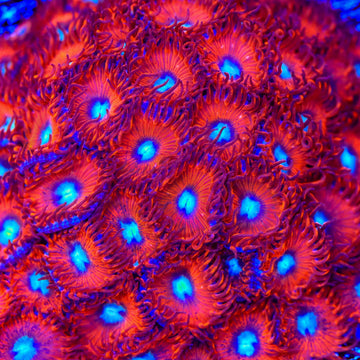
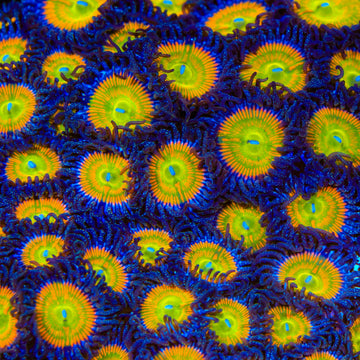
Butt Muncher Zoanthid Coral features small button-like polyps in tight colonies with contrasting centers and skirts. Zoanthus sp., a soft, mat-forming colonial coral, thrives under low to moderate lighting and gentle to moderate water flow. It is primarily photosynthetic via symbiotic algae but benefits from occasional small particulate foods, which can boost growth and deepen color. Place on isolated rock to control spreading and keep space from stinging or fast-growing neighbors.
Quick Facts
Care
Easy
Lighting
Low–Moderate
Flow
Moderate, indirect
Placement
Mid–Low
Temperament
Semi-aggressive (fast-growing; 2–3 inches spacing)
Recommended Parameters
Temp
76–82°F
pH
8.1–8.4
Salinity
1.025–1.026
Calcium
400–450 ppm
AlkAlkalinity
8–10 dKH
Magnesium
1250–1350 ppm
Feeding
photosynthetic, phytoplankton, zooplankton, rotifers, baby brine shrimp, copepods, microplankton, powdered coral foods
Care & Placement
FAQ
Frequently Asked Questions
About the Butt Muncher Zoanthid Coral
-
Why does my Butt Muncher Zoanthid shift colors under different lights?
Zoanthus sp. can change apparent hues as fluorescent proteins and zooxanthellae densities respond to spectrum and intensity. Under higher blue/UV, greens and oranges glow; under white-heavy light, tones look flatter. Stabilize PAR (120–180 for punchy color), keep nitrates 5–15 ppm and phosphates 0.03–0.1 ppm. Sudden jumps in PAR can bleach; ramp lighting over 2–3 weeks to preserve pigments. -
My colony is growing a thick mat but won’t extend long skirts—normal?
Butt Munchers tend to form dense, low polyps with modest skirts in medium flow. If skirts shorten, flow may be too strong or laminar. Aim for random, moderate flow that brushes polyps without folding them. Elevated nutrients can also thicken tissue; slight reductions often restore extension. Verify pests aren’t nipping—night inspections catch nudibranchs early. -
How can I safely frag this morph without risking toxins or melt?
Work wet, gloved, and goggled. Cut the mat between polyps with a new scalpel, avoiding slicing through oral discs. Rinse frags in fresh saltwater, then dip in iodine at coral-safe strength for 5–7 minutes. Mount on rough plugs with gel glue around, not under, the mouths. Provide moderate light/flow quarantine for 1–2 weeks to monitor for zoa pox or bacterial film. -
The polyps stay closed after a Lugol’s dip—what’s the fix?
Some Zoanthus are sensitive to high iodine. Run fresh carbon, perform a 10–15% water change, and reduce light by 20–30% for 3–5 days. Increase random flow slightly to shed film. If no improvement in 72 hours, try a broad coral dip (non-iodine) and inspect for sundial snails or spider-like zoa predators. Maintain stable alk 8–9 dKH to support recovery.