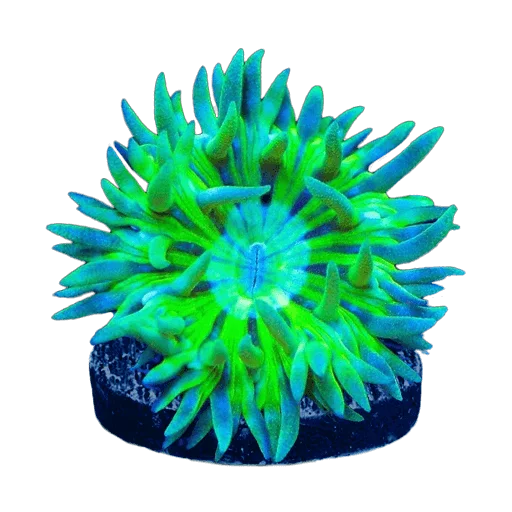
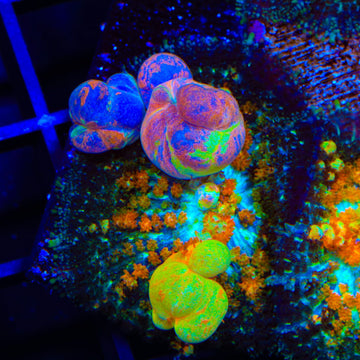
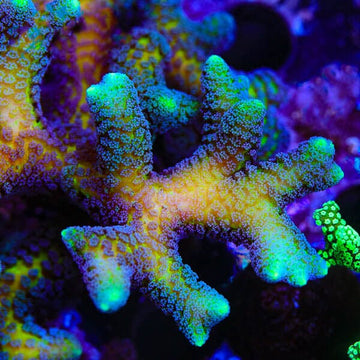
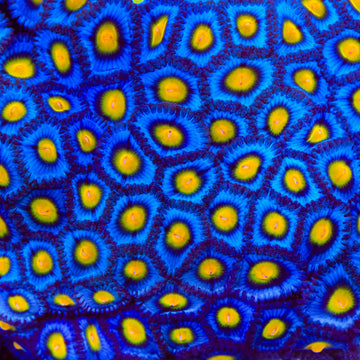
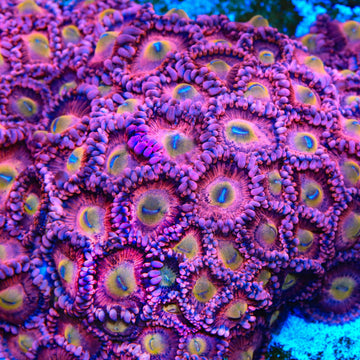
Fire and Ice Zoanthids Coral
Overview
Fire and Ice Zoanthids Coral features small polyps with bright blue centers and contrasting red-orange skirts, forming colorful mats. Zoanthus sp., a soft colonial polyp, spreads across rock and prefers moderate light with low to moderate water flow. It is photosynthetic with help from symbiotic algae, and occasional small meaty feedings can support faster growth and maintain color. Place on an isolated rock to limit spread and leave space from aggressive corals, as polyps can sting or overgrow neighbors.
Quick Facts
Care
Easy
Lighting
Low–Moderate
Flow
Moderate
Placement
Mid–Low
Temperament
Semi-aggressive (2–3 inches spacing)
Recommended Parameters
Temp
76–82°F
pH
8.1–8.4
Salinity
1.025–1.026
Calcium
400–450 ppm
AlkAlkalinity
8–10 dKH
Magnesium
1250–1350 ppm
Feeding
photosynthetic (primary), phytoplankton, zooplankton, microplankton, powdered coral foods, reef roids, marine snow, rotifers, finely minced meaty foods
Care & Placement
FAQ
Frequently Asked Questions
About the Fire and Ice Zoanthids Coral
-
Why do my Fire and Ice Zoanthids lose their crisp blue/white centers and look washed out?
Color shifts usually stem from spectrum, intensity, and nutrients. Too much white light or very high PAR can brown them; too little light can fade contrast. Aim for moderate PAR (100–200) with a blue-heavy spectrum, stable nitrate (5–15 ppm) and phosphate (0.03–0.1 ppm). Acclimate any lighting changes over weeks. Keep alkalinity and temperature steady to prevent stress-induced dulling. -
My polyps are stretching tall and the skirts look thin—what’s the fix?
That’s classic low-light or shaded growth. Increase PAR gradually or reposition the colony for unobstructed light. Ensure moderate, cross-flow so detritus doesn’t settle between polyps. If polyps shrink instead of stretch under stronger light, you’ve overshot—back intensity down 10–15% and extend the blue photoperiod rather than blasting whites. -
How do I handle sudden “melting” in this morph of Zoanthus sp.?
Act fast: increase flow around the colony, turkey-baste detritus, and stabilize parameters. Remove necrotic flesh and isolate healthy polyps on new plugs. Use an iodine or Furan-2 dip to curb bacterial issues. Verify nutrients aren’t bottoming out; ultra-low nitrate/phosphate often precede melt. Inspect for pests that create entry wounds, then quarantine until growth resumes. -
What pests target Fire and Ice Zoas, and how do I eradicate them?
Watch for zoa-eating nudibranchs, their egg spirals, sundial snails, and zoa spiders. Dips (iodine, peroxide, or commercial) knock back adults but won’t touch eggs—scrape eggs manually and repeat dips every 3–4 days for two weeks. Night inspections with a flashlight help. Consider a quarantine tank and, in displays, a pest-hunting wrasse if compatible.