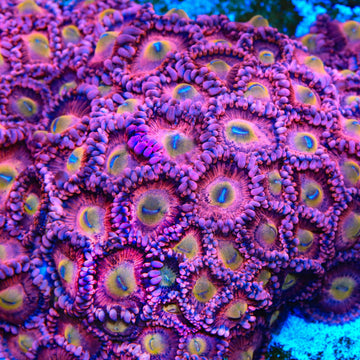
Flame Thrower Chalice Coral
Overview
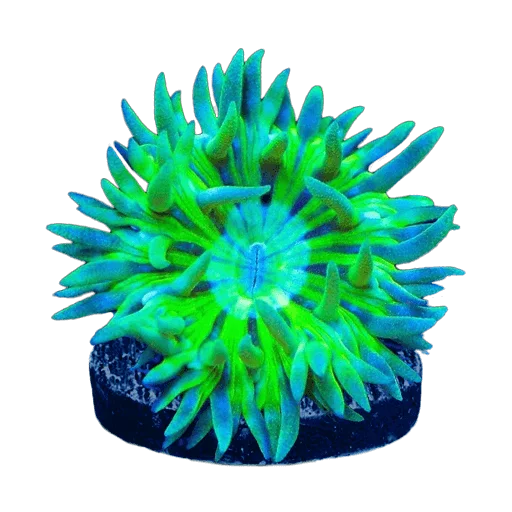
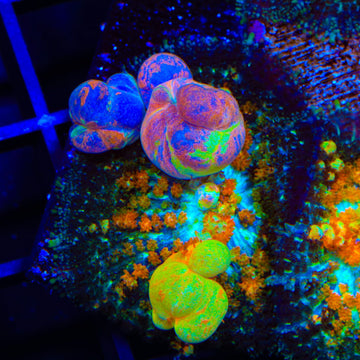
Flame Thrower Chalice Coral shows bright red to orange streaks with raised, contrasting “eyes” on a smooth, plating surface. Echinophyllia sp. is a slow-growing, plating LPS coral that forms undulating ridges and prefers moderate light with gentle to moderate water flow. It relies on symbiotic algae but benefits from occasional small meaty feedings at night, which can support faster growth and stronger color. Place on stable rock with space from neighbors, as its sweeper tentacles can sting nearby corals.
Quick Facts
Care
Moderate
Lighting
Low–Moderate
Flow
Low-moderate indirect
Placement
Low–Mid
Temperament
Aggressive (6–8 inches spacing)
Recommended Parameters
Temp
76–80°F
pH
8.1–8.4
Salinity
1.025–1.026
Calcium
400–450 ppm
AlkAlkalinity
8–9 dKH
Magnesium
1280–1350 ppm
Feeding
photosynthetic, microplankton, zooplankton, rotifers, copepods, finely chopped mysis shrimp, enriched brine shrimp, coral-specific powdered foods
Care & Placement
FAQ
Frequently Asked Questions
About the Flame Thrower Chalice Coral
-
Why does my Flame Thrower Chalice lose its fire-like colors over time, even though it looks healthy?
Color shifts usually track spectrum and nutrient balance. This morph keeps reds and oranges best under stable blue-heavy LEDs (peaks near 420–470 nm) with moderate PAR (75–150) and non-zero nutrients (NO3 5–15 ppm, PO4 0.03–0.1). Excessive white light or ultra-low nutrients push it toward green/teal. Increase photoperiod gradually rather than intensity, and avoid rapid alkalinity swings that mute pigments and stall new rim growth. -
The growth edge is stalling and tissue is receding from the rim—what’s the likely cause?
Rim recession often follows instability: fluctuating alkalinity or low magnesium (<1250 ppm) disrupts calcification. Strong, laminar flow aimed at the rim can also lift tissue. Stabilize alk (7.5–8.5 dKH), calcium (420–460), magnesium (1300–1400), and redirect flow to a gentle, random pattern. Inspect for vermetid snails or filamentous algae abrading the margin; manual removal and a brief iodine dip can help recovery. -
How aggressive is this chalice toward nearby corals, and what signs should I watch for?
Echinophyllia can deploy short sweepers and mesenterial filaments after lights out, leaving white sting marks on neighbors. It’s more reactive to high-flow contact or direct shadows. Give 3–4 inches of space, more down-current. Nighttime IR or red-light checks reveal extension patterns. If conflict occurs, slightly reduce flow, adjust spacing, and feed the chalice small meaty foods at dusk to satisfy energy demands and reduce nighttime aggression. -
My chalice inflates at night but ignores food—am I missing the feeding window?
Feeding response peaks shortly after lights out when feeder vesicles extend. Try target-feeding 30–60 minutes into the dark cycle with finely chopped mysis, reef roids, or micro-pellets, throttling pumps briefly to keep food near the mouths. If it stays unresponsive, verify phosphate isn’t bottomed out and reduce light intensity slightly for a week; mild “hunger” cues and stability tend to restart the feeding reflex.