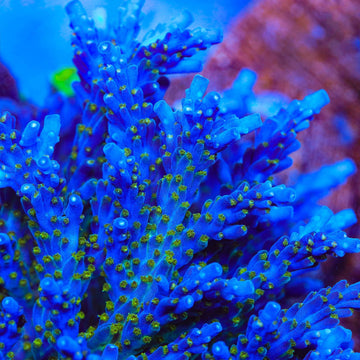
Greg Hiller's Aqua Delight Acropora Coral
Overview
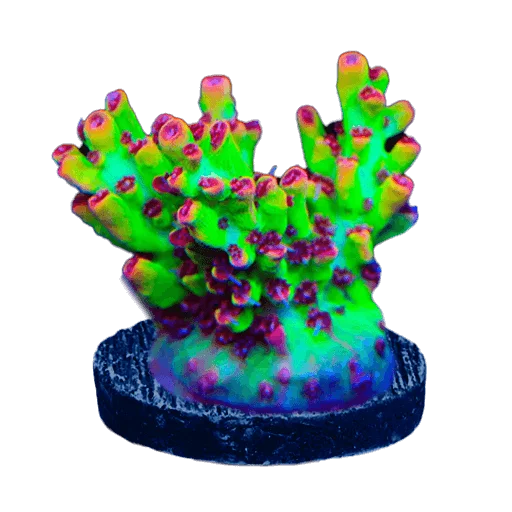
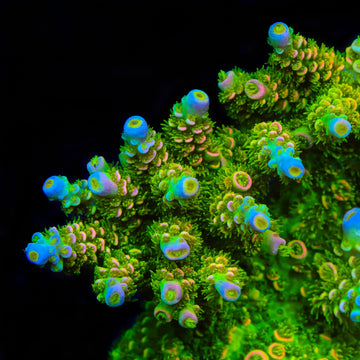
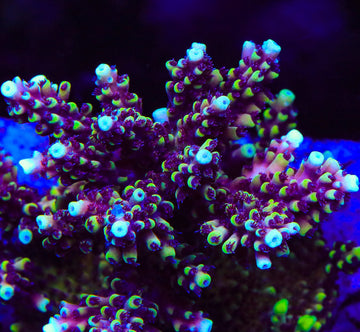
Greg Hiller's Aqua Delight Acropora Coral features tightly spaced, upward-branching sticks with contrasting pale tips. Acropora loisetteae is a branching small-polyp stony coral that prefers high light and strong, turbulent water flow. It relies on symbiotic algae for most nutrition but can benefit from occasional small plankton foods, supporting growth and stable color. Place high on rockwork with space from aggressive neighbors, and prevent shading as colonies thicken.
Quick Facts
Care
Difficult
Lighting
High
Flow
High
Placement
High
Temperament
Peaceful (3–6 inches spacing)
Recommended Parameters
Temp
77–80°F
pH
8.1–8.4
Salinity
1.025–1.026
Calcium
400–450 ppm
AlkAlkalinity
7–9 dKH
Magnesium
1280–1350 ppm
Feeding
photosynthetic, microzooplankton, rotifers, copepod nauplii, oyster eggs, reef roids, amino acid supplements
Care & Placement
FAQ
Frequently Asked Questions
About the Greg Hiller's Aqua Delight Acropora Coral
-
Why does Greg Hiller’s Aqua Delight sometimes table instead of forming tall branches?
Acropora loisetteae tends to form corymbose, plate-like colonies in high, turbulent flow and strong light. Mount frags horizontally on a low-profile plug to encourage a tabling form; vertical mounting often promotes more upright branching. Ensure perimeter flow is chaotic to prevent shaded, stagnant bases, which can trigger tissue loss as the colony spreads outward. -
My Aqua Delight faded from aqua-blue to washed-out cream. What nutrient or light tweak helps restore color?
This coral washes out in ultra-clean systems under high PAR. Aim for moderate nutrients: nitrate 5–15 ppm and phosphate 0.03–0.08 ppm, with PAR 250–350. Reduce light slightly if tips pale while bases remain dull. Stabilize alkalinity at 8–9 dKH; rapid increases can cause burnt tips and further bleaching in bright conditions. -
The base is experiencing slow tissue necrosis while tips look fine. How can I stop the recession?
Base STN in this species often stems from stagnant zones and shadowing under plates. Increase cross-flow and randomize turbulence to sweep detritus from the underside. Trim or reposition overhanging branches to admit light. Check for alkalinity swings and sub-7.8 pH at night. Consider a prophylactic dip to rule out pests hiding at the base. -
Are there pest signs unique to this coral compared to other Acropora?
AEFW often leave crescent bite marks along the smoother branch faces of loisetteae, and polyps retract more than usual. Red bugs cause persistent, patchy low polyp extension and dulling of the pink/red polyp color. Inspect at night with a flashlight, blast branches with a turkey baster, and use white/blue light mix to spot moving specks or flatworms.