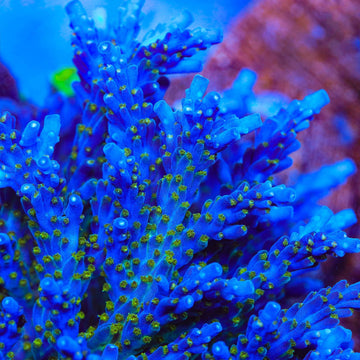
Jake Adams Rose Acropora Coral
Overview
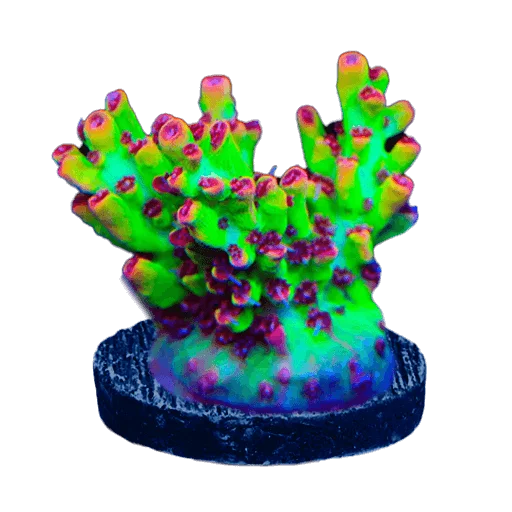
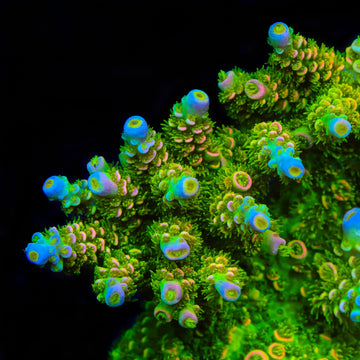
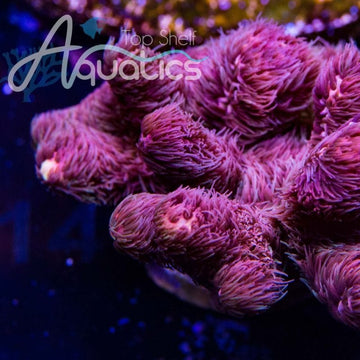
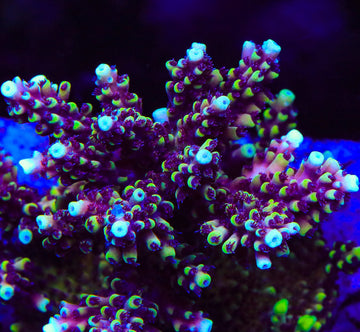
Jake Adams Rose Acropora Coral displays rose-pink branching stalks with pointed growth tips. Acropora sp., a small-polyp stony branching coral, thrives under strong lighting and brisk, turbulent water flow. It is primarily photosynthetic via symbiotic algae, though occasional very fine planktonic foods can support faster growth and deeper coloration. Place high on stable rock with space for growth, and keep clear of stinging corals and shading neighbors.
Quick Facts
Care
Difficult
Lighting
High
Flow
High, turbulent
Placement
High
Temperament
Peaceful (3–6 inches spacing from aggressive corals)
Recommended Parameters
Temp
77–80°F
pH
8.1–8.4
Salinity
1.025–1.026
Calcium
420–450 ppm
AlkAlkalinity
7–9 dKH
Magnesium
1280–1350 ppm
Feeding
photosynthetic (primary), microplankton, rotifers, copepod nauplii, oyster eggs, powdered SPS coral foods, amino acid supplements, dissolved organics
Care & Placement
FAQ
Frequently Asked Questions
About the Jake Adams Rose Acropora Coral
-
How do I keep the “rose” coloration vivid in the Jake Adams Rose Acropora Coral (Acropora sp.)?
Aim for PAR around 300–450 with strong blue-violet (420–460 nm) and a hint of near-UV. Keep alkalinity steady near 8–9 dKH, nitrate 5–15 ppm, phosphate 0.03–0.08 ppm. Maintain potassium at 390–420 ppm and adequate iodine; consider occasional ICP tests. Avoid excess red/white light and big nutrient swings. Moderate amino dosing at night can support pigments without browning. -
What mounting orientation best supports its growth form and prevents base die-off?
Start with a small, horizontal or slightly angled mount to encourage rapid encrustment before vertical branching. Place in high, cross-flow areas so detritus doesn’t settle at the base. As it shadows itself, prune inner branches and redirect flow to keep light and circulation on the encrusted base. Elevate the frag plug off rock crevices to reduce stagnant zones and vermetid irritation. -
I’m seeing pale, burnt tips while the base looks fine—what should I adjust?
This often occurs when high light meets low nutrients and high alkalinity. First, stabilize and lower alkalinity to 7.5–8.3 dKH. Nudge nutrients into the low-moderate range (nitrate 5–10 ppm, phosphate 0.03–0.06 ppm). Ease peak PAR by 10–20% or shorten the photoperiod. Avoid big changes all at once; adjust weekly and watch polyp extension and tip coloration for recovery. -
Which pests are most problematic for this coral, and how do I catch them early?
Watch for Acropora-eating flatworms (AEFW) and red bugs. Weekly, blast the colony with a turkey baster; AEFW bite marks appear as pale, irregular patches, and flatworms may dislodge. Inspect with a flashlight after lights out. Dips won’t remove eggs—use repeated dips 5–7 days apart and consider a monoculture quarantine. Maintain strong, variable flow to make settlement harder.