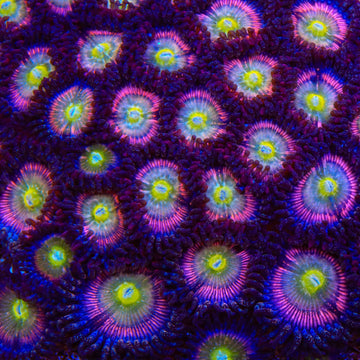
Burning Embers Zoanthids Coral
Overview
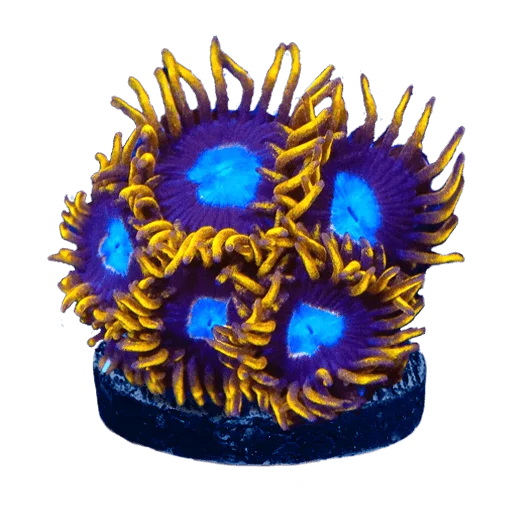
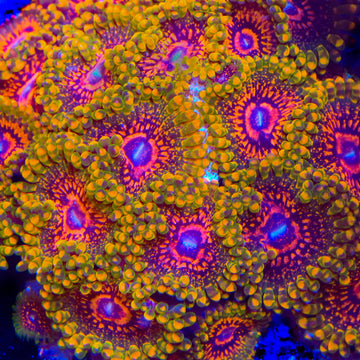
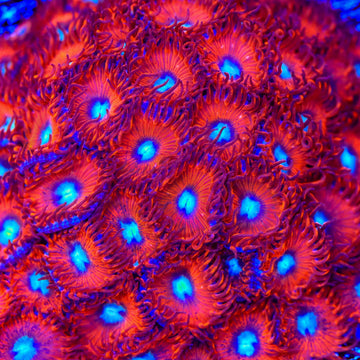
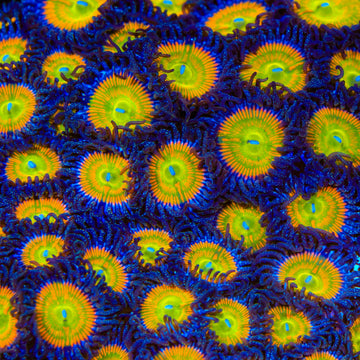
Burning Embers Zoanthids Coral has small button-like polyps with orange centers and darker skirts. Zoanthus sp., a colonial soft polyp coral, does well under moderate light and gentle to moderate water flow. It is primarily photosynthetic via symbiotic algae but benefits from occasional small particulate foods to support growth and maintain color. Place on an isolated rock with space to spread, avoid touching aggressive corals, and handle carefully due to potential palytoxin.
Quick Facts
Care
Easy
Lighting
Moderate
Flow
Moderate, indirect
Placement
Low–Mid
Temperament
Peaceful (2–3 inches spacing; may overgrow neighbors)
Recommended Parameters
Temp
76–82°F
pH
8.1–8.4
Salinity
1.025–1.026
Calcium
400–450 ppm
AlkAlkalinity
8–11 dKH
Magnesium
1250–1350 ppm
Feeding
photosynthetic (primary), phytoplankton, microplankton, rotifers, Cyclops, baby brine shrimp nauplii, powdered coral foods, marine snow
Care & Placement
FAQ
Frequently Asked Questions
About the Burning Embers Zoanthids Coral
-
Why did my Burning Embers lose their vivid orange centers after a lighting change?
Their pigments respond strongly to spectrum and PAR. Aim for moderate PAR (80–150) with strong blue/UV (420–470 nm). Too much white or sudden high PAR can wash colors or cause shrinkage; too little light dulls glow. Acclimate slowly, keep nutrients moderate (nitrate 5–15 ppm, phosphate 0.03–0.1), and maintain stable alkalinity. Colors often rebound within 2–4 weeks once conditions are consistent. -
My colony is staying closed and “melting” at the base—what should I check first?
Inspect at night for zoa-eating nudibranchs, sundial snails, and spiders. Remove pests and use an iodine-based dip. Increase random flow to prevent detritus on the mat, and siphon film algae. Rule out volatile organics from chemical warfare; run fresh carbon. Verify temp stability and salinity. If recession persists, isolate the frag and improve cleanliness; most issues trace to pests, low flow, or swings. -
How can I control fast spread without losing the tight colony look?
Mount Burning Embers on an “island” rock with a sand moat. When they approach the edge, score the mat with a sharp blade and peel a thin strip away, then superglue a border to halt growth. Alternatively, place on removable tiles and swap tiles as they fill. Regular pruning maintains the dense dome while protecting neighbors. -
Do Burning Embers respond to feeding, or is light enough?
They thrive on light but grow fuller skirts with occasional fine foods (rotifers, reef roids, or enriched nauplii). Target-feed lightly once or twice weekly with pumps paused, then resume flow after 10–15 minutes. Avoid overfeeding; aim for stable, mildly nutrient-rich water. Trace iodide and iron at natural levels can support polyp vigor, but don’t dose blindly—test first.