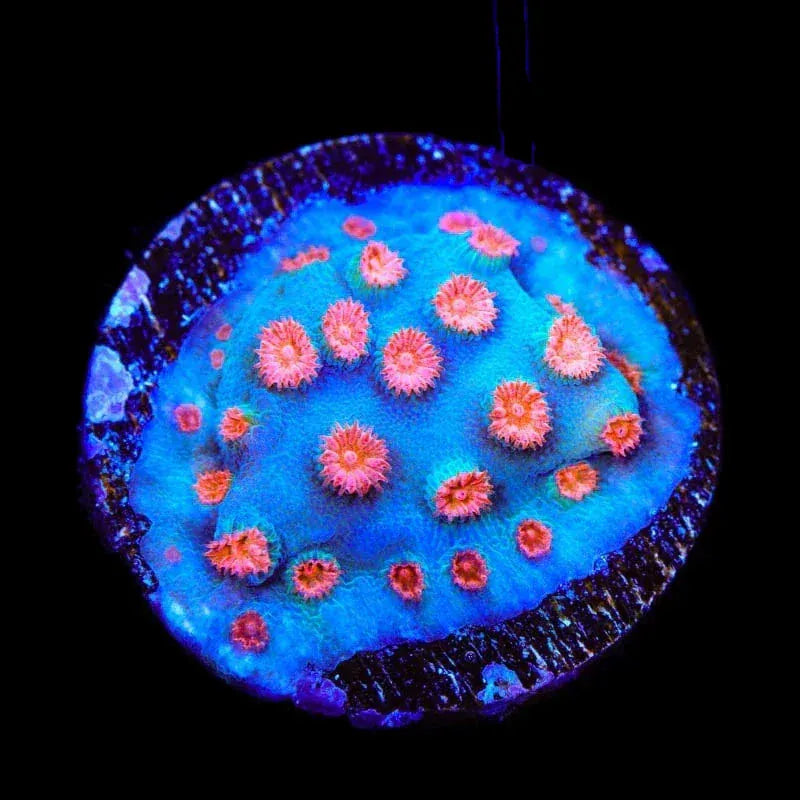
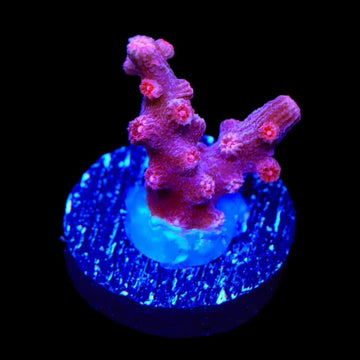
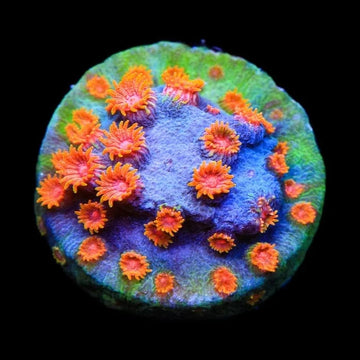
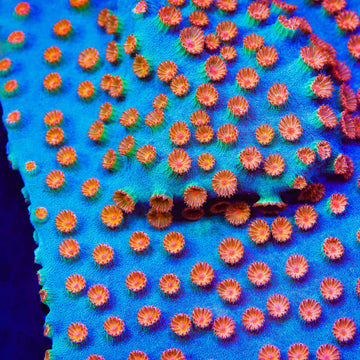
Monet Madness Cyphastrea Coral
Overview
Monet Madness Cyphastrea Coral features small star-like polyps on a speckled, encrusting surface. Cyphastrea sp. is an encrusting stony coral that does well under low to moderate light and moderate, varied water flow. It is photosynthetic through symbiotic algae but will accept fine particulate foods, which can improve growth and color. Place on stable rock away from aggressive neighbors, allow space for slow outward spread, and avoid shading.
Quick Facts
Care
Easy
Lighting
Low–Moderate
Flow
Low–Moderate
Placement
Low–Mid
Temperament
Peaceful (2–3 inches spacing)
Recommended Parameters
Temp
76–80°F
pH
8.1–8.4
Salinity
1.025–1.026
Calcium
400–450 ppm
AlkAlkalinity
8–9.5 dKH
Magnesium
1250–1350 ppm
Feeding
photosynthetic, microplankton, rotifers, cyclops, baby brine shrimp, copepods, coral-specific powdered foods, marine snow
Care & Placement
FAQ
Frequently Asked Questions
About the Monet Madness Cyphastrea Coral
-
Why does my Monet Madness Cyphastrea lose its “paint‑splatter” contrast under new lights?
This morph is sensitive to spectrum and intensity. Under strong white or very high PAR, pigments can mute and polyps may retract, flattening the look. Shift to moderate, blue‑leaning spectrum and acclimate over 2–3 weeks. Keep nutrients non‑zero (e.g., nitrate 5–15 ppm, phosphate 0.03–0.08) to maintain chromoproteins. Amino dosing and very fine particulate feeds at night can restore depth. -
My colony is receding from the edges despite stable parameters—what hidden cause should I check?
Encrusters trap detritus at the growth rim. Grit, vermetid webs, and filamentous algae irritate tissue and halt calcification. Increase cross‑flow to keep the rim clean without blasting polyps. Manually siphon debris, clip nearby vermetids, and spot‑treat nuisance algae with a targeted peroxide swab out of water. A short iodine dip can curb minor bacterial irritation. -
Can Monet Madness overtake nearby corals, or will it get burned in a “coral war”?
It’s assertive as an encruster but has short reach. It can overgrow passive neighbors and frag plugs, yet loses to long‑sweeper LPS and many favias. Give a few centimeters from aggressive stingers; for delicate zoas, a small barrier line of epoxy or a rubble moat helps. If it contacts another encruster, expect a slow stalemate; prune edges to direct growth. -
What surface and placement encourage the fastest growth for this Cyphastrea?
Rough, porous surfaces promote grip and faster encrustment than slick ceramic. Place on vertical or angled faces in moderate flow to reduce sediment buildup; it will happily climb rock and even back glass. Avoid ledges that create shadow pockets with stale water. A perimeter of small rubble pieces around the base provides “stepping stones” to guide spread.