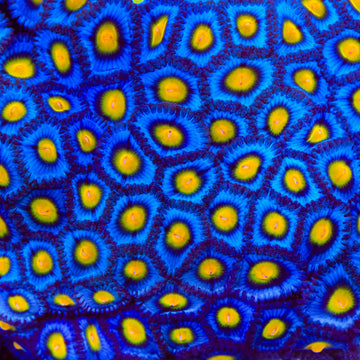
Aquamans Revenge Montipora Coral
Overview
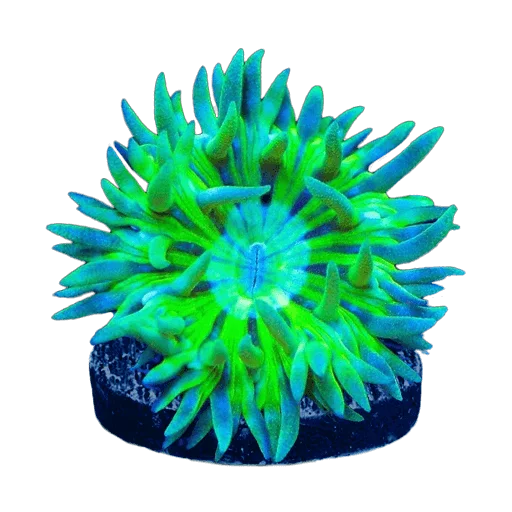
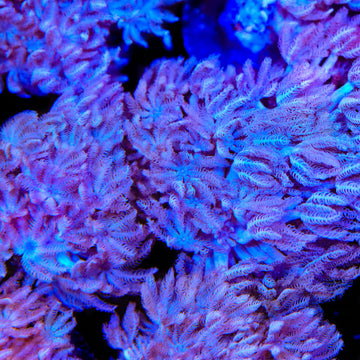
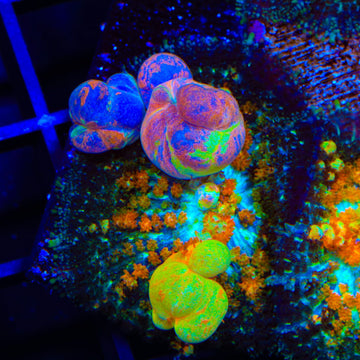
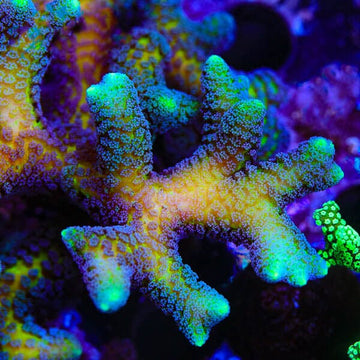
Aquamans Revenge Montipora Coral shows thin plating growth with fine, textured polyps. Montipora sp. Coral is a small-polyp stony coral that grows as plates or encrusting layers; it prefers moderate to strong light and moderate to high, variable water flow. It is photosynthetic via symbiotic algae, and occasional small particle foods can support growth and maintain color. Place on stable rock with room to spread, and keep clear of aggressive, stinging corals to prevent tissue damage.
Quick Facts
Care
Moderate
Lighting
Moderate–High
Flow
Moderate-High
Placement
Mid–High
Temperament
Peaceful (2–3 inches spacing)
Recommended Parameters
Temp
76–80°F
pH
8.1–8.4
Salinity
1.025–1.026
Calcium
400–450 ppm
AlkAlkalinity
7.5–9.0 dKH
Magnesium
1250–1350 ppm
Feeding
photosynthetic, microplankton, phytoplankton, zooplankton, rotifers, copepod nauplii, powdered coral foods, marine snow, amino acid supplements
Care & Placement
FAQ
Frequently Asked Questions
About the Aquamans Revenge Montipora Coral
-
Why does my Aquamans Revenge Montipora Coral shift from aqua/teal to brown or pastel, and how can I keep its color vibrant?
Color swings usually trace to light spectrum and nutrient balance. Keep NO3 around 5–15 ppm and PO4 0.03–0.08 ppm; ultra‑low nutrients can wash it out, while high PO4 dulls it. Favor strong blue/UV (14–20K look) and acclimate slowly. Stable alkalinity (7.8–8.6 dKH) is key. Trace elements like iron/manganese help greens; avoid overdosing—use ICP to confirm. -
How can I guide the growth form of this Montipora sp. Coral to prevent shading and plate sprawl?
Moderate–high, cross‑flow encourages thicker, controlled plates; laminar flow can create thin, sprawling ledges. Mount the initial frag slightly vertical or on a tilted plug to steer upward plating and reduce shadowing. Trim rim edges before they overhang prized neighbors. Provide open space around the colony; once it gains momentum, it can fuse to rock and outpace nearby sticks. -
What’s the best way to detect and deal with Montipora‑eating nudibranchs on Aquamans Revenge?
Check at night with a blue flashlight and orange filter for white frilly nudis and crescent egg spirals under rims. Remove affected pieces, scrape eggs, and dip in a Montipora‑safe coral dip (repeat every 3–4 days for 2–3 weeks to catch hatch cycles). Rinse between dips. A wrasse like Melanurus can help with stragglers, but manual/chemical control is primary. -
Any propagation tips to minimize STN after fragging this coral?
Use clean bone cutters to take small rim sections with a bit of healthy margin. Immediately seal cut edges with thick cyanoacrylate gel to protect exposed skeleton. Dip in iodine‑based solution to reduce bacterial stress, then mount with good flow and moderate light for healing. Keep alk and temp steady for two weeks; even small swings can trigger recession in fresh cuts.