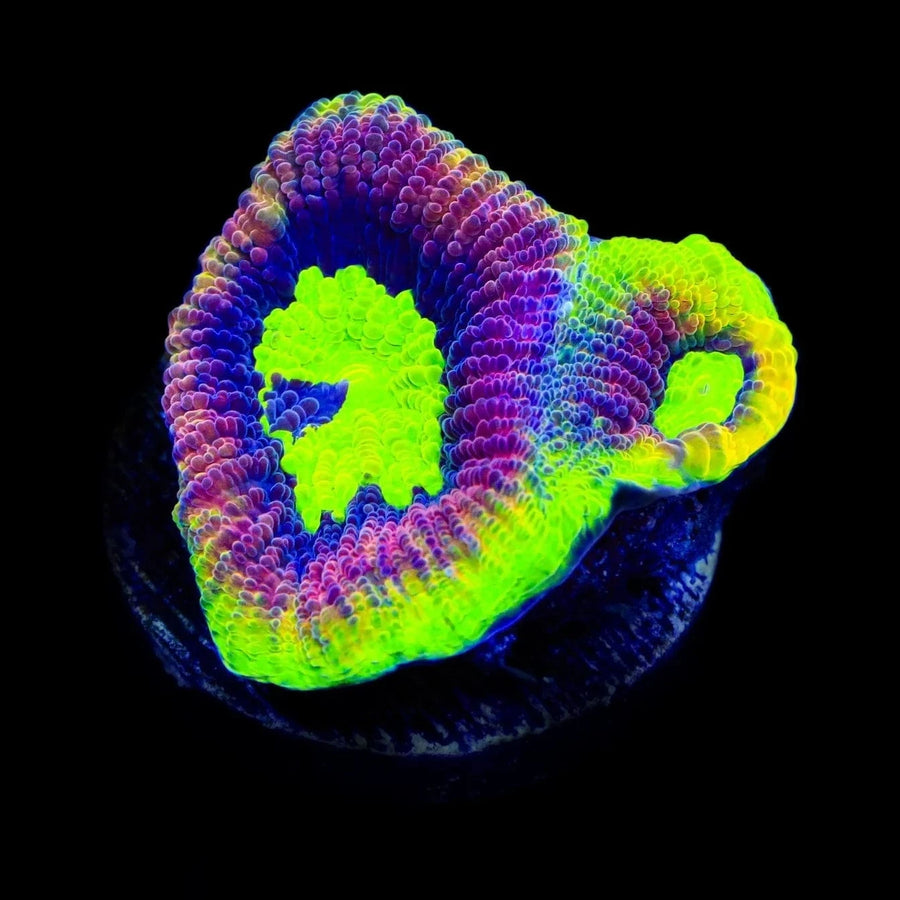
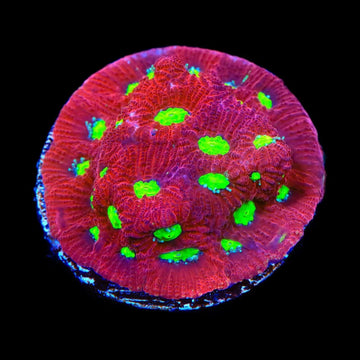
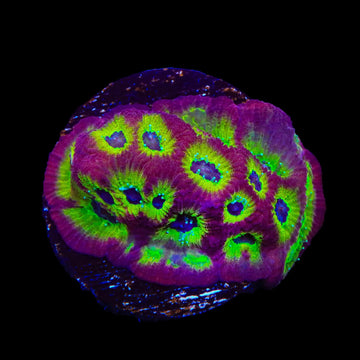
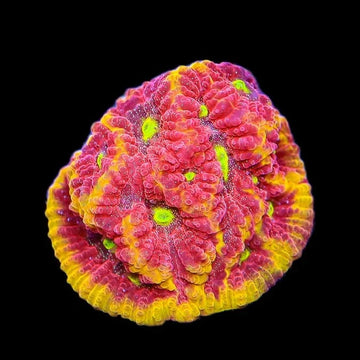
ACI Drunk Monkey Favia Coral
Overview
Drunk Monkey Favia Coral shows a polygonal, honeycomb surface with raised ridges and contrasting mouths. Favia favus is a stony brain coral forming encrusting to dome-shaped colonies; it does best with moderate lighting and gentle to moderate water flow. It is photosynthetic through symbiotic algae but benefits from small meaty feedings after lights out, which can boost growth and color. Place it with space from neighbors, as nighttime sweeper tentacles can sting nearby corals.
Quick Facts
Care
Easy
Lighting
Low–Moderate
Flow
Moderate, indirect
Placement
Low–Mid
Temperament
Semi-aggressive (4–6 inches spacing)
Recommended Parameters
Temp
76–80°F
pH
8.1–8.4
Salinity
1.025–1.026
Calcium
400–450 ppm
AlkAlkalinity
8–10 dKH
Magnesium
1280–1350 ppm
Feeding
photosynthetic, mysis shrimp, enriched brine shrimp, finely chopped seafood, small krill pieces, copepods, zooplankton, microplankton, coral-specific powdered foods (e.g., Reef Roids)
Care & Placement
FAQ
Frequently Asked Questions
About the ACI Drunk Monkey Favia Coral
-
Why does my Drunk Monkey Favia change color under different lighting?
This morph shows dramatic spectral response. Aim for 80–150 PAR with a heavy blue bias (royal/UV) to keep mouths vivid and ring patterns defined. Too much white or PAR spikes wash colors; too little light dulls contrast. Maintain moderate nutrients (nitrate 5–15 ppm, phosphate 0.03–0.10 ppm). Stable alkalinity and low metals help prevent browning. Ramp new LEDs slowly (10–15% weekly) to avoid bleaching and recession. -
How aggressive are its sweepers, and where should I place it?
At night, Favia favus can launch 1–3 inch sweepers with potent sting, especially toward flow direction. Give at least 3–4 inches clearance from fleshy LPS and delicate SPS/zoas. “Island” placement on its own rock helps contain skirmishes as the colony domes. Provide moderate, cross-current flow: enough to keep detritus off valleys without blasting tissue, which can provoke longer sweepers and localized recession. -
What’s the safest way to frag this coral without losing heads?
Use a diamond bandsaw or sharp bone cutters to cut through the skeleton in the valleys between corallites, not across mouths. Rinse, then iodine dip 5–10 minutes. Seal fresh edges with a thin ring of gel glue to deter infection. Mount frags on clean plugs, low flow/low light for 7–14 days, then slowly return to target PAR. Watch for brown jelly; if seen, re-dip, increase flow, and remove necrotic tissue. -
My colony is receding from the base—what’s the likely cause and fix?
Common triggers are alkalinity swings, detritus accumulation at the rim, vermetid snail irritation, or light/flow mismatch. Stabilize dKH (8–9), boost turbulent flow around the base, and gently brush away detritus. Inspect and remove vermetids; cover tubes with glue if needed. Perform an iodine dip, then light-acclimate. Slightly raising nutrients and spot-feeding after lights out can help tissue regrow over exposed skeleton.