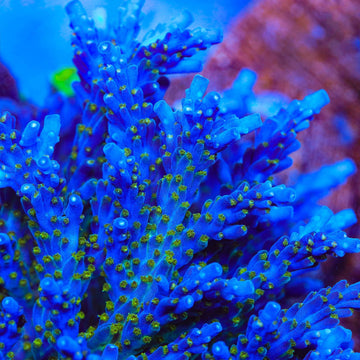
JF Jolt Acropora Coral
Overview
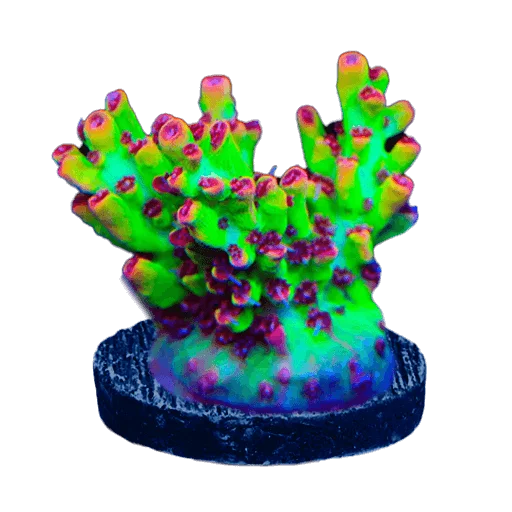
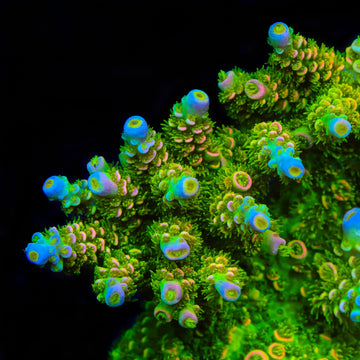
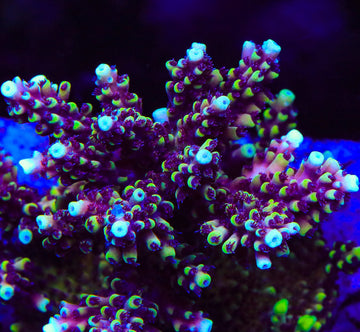
JF Jolt Acropora Coral shows yellow-green branch tips with tightly spaced, bushy branches. Acropora tenuis is a small-polyp stony branching coral that prefers strong light and moderate to strong, turbulent flow. It relies mainly on symbiotic algae for energy, and occasional feedings of fine plankton can aid growth and color. Place high on stable rock with room around it, and keep distance from aggressive corals to avoid tissue damage.
Quick Facts
Care
Difficult
Lighting
High
Flow
High, turbulent
Placement
High
Temperament
Semi-aggressive (3–6 inches spacing)
Recommended Parameters
Temp
76–80°F
pH
8.1–8.4
Salinity
1.025–1.026
Calcium
400–450 ppm
AlkAlkalinity
7.5–9 dKH
Magnesium
1280–1350 ppm
Feeding
photosynthetic, microplankton, zooplankton, rotifers, copepod nauplii, oyster eggs, reef roids (powdered coral foods), amino acid supplements
Care & Placement
FAQ
Frequently Asked Questions
About the JF Jolt Acropora Coral
-
Why does my JF Jolt Acropora (Acropora tenuis) look dull under bright lights when other tenuis keep color?
JF Jolt often needs strong PAR (300–400) but also balanced nutrients; zeroed-out nitrate/phosphate can mute pigments. Favor blue-heavy spectrum for fluorescence, but avoid sudden jumps in intensity. Maintain alk 8–9 dKH with minimal swing, and keep nitrate 5–15 ppm, phosphate 0.03–0.08 ppm. Trace elements like iron and manganese support yellows/greens; avoid rusting magnets and run fresh carbon to prevent metal contamination. -
It encrusts for months without branching—is that normal for this strain?
Yes. JF Jolt commonly lays a thick base before throwing corymbose branches, especially in new systems. Strong, chaotic flow across the base accelerates tissue thickening and sets the stage for vertical shoots. Ensure stable alk and calcium to meet rising demand. Once the base plate is established, slight increases in PAR and consistent nutrient levels often trigger faster vertical growth. -
How can I maximize polyp extension without causing tip burn?
Use high, turbulent flow rather than a laminar blast; aim for alternating gyres and random pulses. Keep PAR high but introduce increases over 2–3 weeks. Tip burn often points to alk overshoot under intense light—test daily when adjusting dosing. Evening amino dosing can boost extension, but reduce if film algae rises. Feed fine particulate foods sparingly; overfeeding clouds water and can reduce extension. -
What are early warning signs of STN/RTN specific to JF Jolt, and how should I respond?
Watch for matte, non-glossy tissue at the base, paling between corallites, and sudden loss of fluorescence at branch tips. Act fast: stabilize alk, perform an iodine or povidone dip, frag 3–5 mm into healthy tissue, and remount on a clean plug. Improve flow around the base and reduce PAR by 10–20% for a week. Check for AEFW bites or red bugs with a magnifier and treat if found.