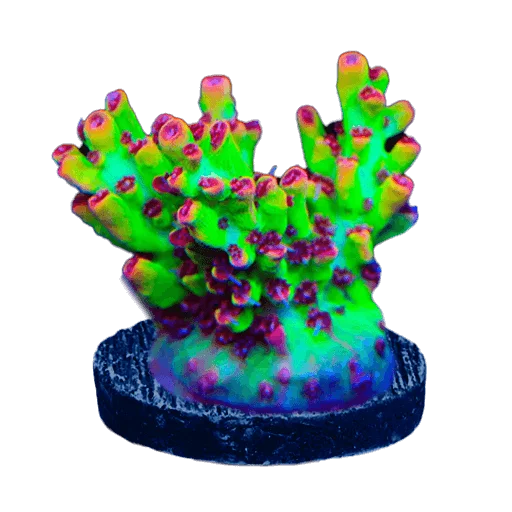
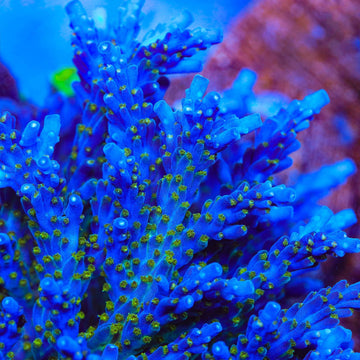
CC Voodoo Majick Acropora Coral
Overview
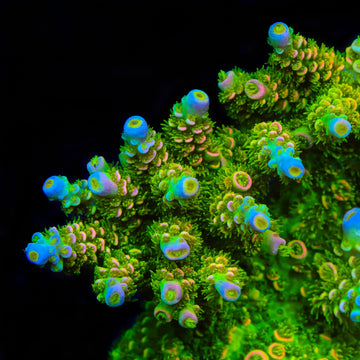
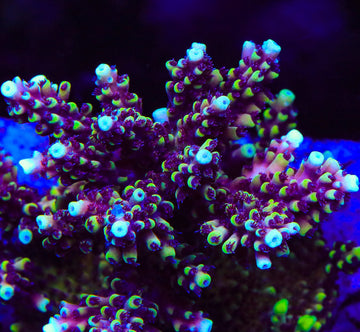
CC Voodoo Majick Acropora Coral shows branching, tightly clustered axial tips with contrasting polyp colors. Acropora tenuis is a small-polyp stony coral that forms arborescent colonies; keep it in strong light and high, turbulent water flow. Primarily photosynthetic via symbiotic algae, it can accept fine particulate foods or amino supplements to support growth and color. Place high on stable rockwork with space from aggressive neighbors, and keep alkalinity and nutrients stable to prevent stress.
Quick Facts
Care
Difficult
Lighting
High
Flow
High
Placement
High
Temperament
Semi-aggressive (3–6 inches spacing)
Recommended Parameters
Temp
76–80°F
pH
8.1–8.4
Salinity
1.025–1.026
Calcium
400–450 ppm
AlkAlkalinity
7.5–9 dKH
Magnesium
1280–1350 ppm
Feeding
photosynthetic (primary), microplankton, rotifers, copepod nauplii, oyster eggs, powdered coral foods, marine snow, dissolved amino acids
Care & Placement
FAQ
Frequently Asked Questions
About the CC Voodoo Majick Acropora Coral
-
Why does my CC Voodoo Majick Acropora (Acropora tenuis) look dull under high PAR, even though other SPS thrive?
Tenuis color saturates with strong blue/UV (400–430 nm) and stable medium nutrients. Under very white-heavy light or ultra-low nutrients, pigments wash out. Aim for 250–350 PAR with a blue-leaning schedule, NO3 around 5–15 ppm, PO4 0.03–0.08 ppm. Increase intensity gradually and avoid abrupt alkalinity shifts; color often rebounds after 2–3 weeks of stability. -
The base is receding while tips still grow—what’s the likely cause?
That pattern points to laminar flow blasting the base, low micro-flow under the colony, or shadowing as branches thicken. Redirect to randomized, turbulent flow and raise the colony slightly to improve underside circulation. Check for pests (AEFW/red bugs) and confirm alkalinity stability. Running a small amount of fresh carbon helps if nearby softies are releasing allelochemicals. -
How can I frag this tenuis to encourage bushy regrowth rather than spindly sticks?
Cut 5–10 mm below an axial tip at branch junctions, leaving a small section of the axial intact on the mother to spark multiple new shoots. Mount frags horizontally or at a slight angle to promote side-branching. Place in strong, chaotic flow for healing, and keep alk/calcium steady. Avoid crushing polyps; use clean bone cutters and a quick iodine dip post-cut. -
My tenuis polys seem withdrawn during the day but extend strongly at night—is that a problem?
That’s normal for many tenuis morphs. Daytime extension improves with stable parameters, higher dissolved food availability, and gentle ramping of light intensity. Nighttime broadcast of fine particulate foods or amino acids can support growth; don’t overfeed. Ensure no polyp-nipping fish or shrimp are harassing it, and verify that flow isn’t a constant jet directly on the colony.