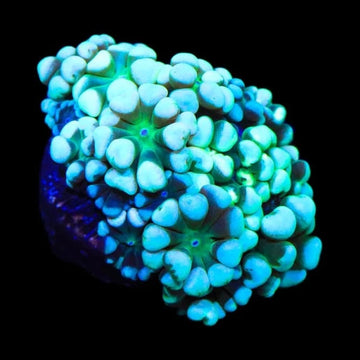
Bright Eye Alveopora Coral
Overview
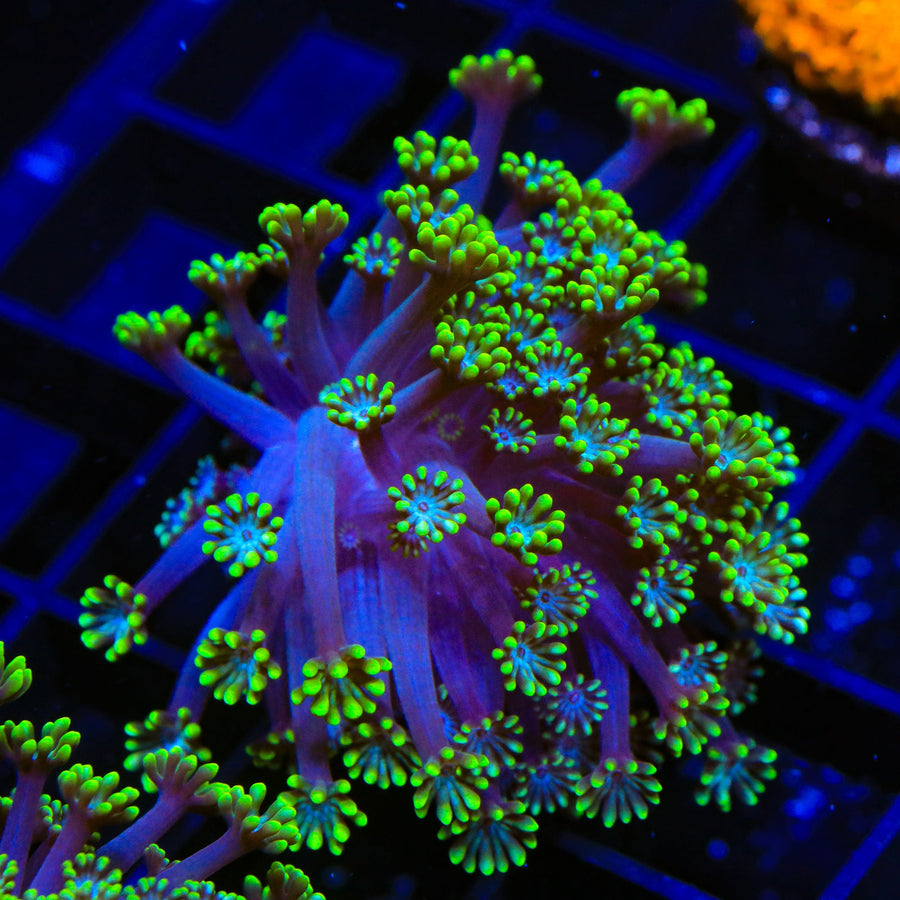
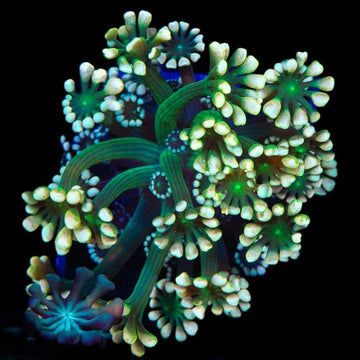
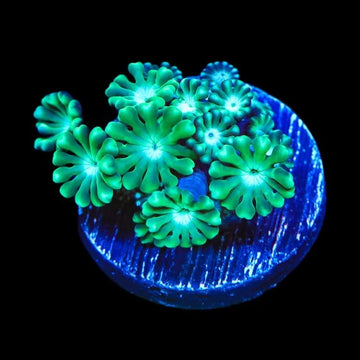
Bright Eye Alveopora Coral features daisy-like polyps with long, delicate tentacles and bright centers. Alveopora sp. is a large-polyp stony coral with a branching skeleton that prefers moderate light and gentle to moderate, indirect water flow. It is photosynthetic via symbiotic algae and benefits from occasional small particulate or meaty feedings, which support growth and polyp extension. Place on stable rock with space from neighbors, as polyps are easily damaged by strong flow and can sting nearby corals.
Quick Facts
Care
Moderate
Lighting
Low–Moderate
Flow
Moderate indirect
Placement
Low–Mid
Temperament
Semi-aggressive (3–6 inches spacing)
Recommended Parameters
Temp
76–80°F
pH
8.1–8.4
Salinity
1.025–1.026
Calcium
400–450 ppm
AlkAlkalinity
8–9 dKH
Magnesium
1280–1350 ppm
Feeding
photosynthetic, phytoplankton, zooplankton, rotifers, oyster eggs, copepod nauplii, cyclops, microplankton, coral-specific powdered foods, marine snow
Care & Placement
FAQ
Frequently Asked Questions
About the Bright Eye Alveopora Coral
-
How can I tell Bright Eye Alveopora from similar Goniopora, and does that change care?
Count tentacles: Alveopora polyps have 12; Goniopora typically have 24. Alveopora generally tolerates slightly lower light and gentler flow, and responds well to regular microplankton feedings. It’s still sensitive to rapid parameter swings—especially alkalinity—so keep stability tight. Placement can be a bit shadier than Goniopora; aim for 50–120 PAR with indirect, laminar flow to show full extension without tissue flutter. -
My colony suddenly retracted for days—what uncommon causes should I check?
Look for vermetid snail webs, sand irritation from burrowing fish, and microalgae or cyanobacteria smothering the base. Check for alk spikes and temperature drifts at night. Inspect for early brown jelly; if present, siphon and perform an iodine or low-dose peroxide dip. Increase gentle flow around the base to keep detritus off, and resume small-particle feedings after stabilization. -
Why is the color fading toward pastel, even though growth looks normal?
Likely excess light or nutrient starvation. Alveopora from turbid habitats can lighten under strong LEDs. Reduce PAR 20–30% and increase shadowing. Raise NO3 to 5–15 ppm and PO4 to 0.03–0.1 ppm. Feed 2–3 times weekly with rotifers, fine zooplankton, and phyto. Ensure trace stability—iron and manganese at balanced reef levels often help maintain greens and yellows. -
Can it live near Euphyllia, clowns, or active sand sifters?
Give 10–15 cm clearance from stinging LPS; Euphyllia can irritate extended polyps. Some clowns will “host” and cause chronic retraction—redirect them with an alternative coral or nem. Avoid direct sand blasts from gobies; elevate the frag and shield from downdrafts. Mixed placement with Goniopora is possible, but leave space to prevent allelopathic stress and shading.