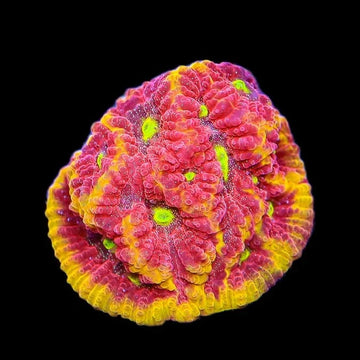
ACI Jinx Favia Coral
Overview
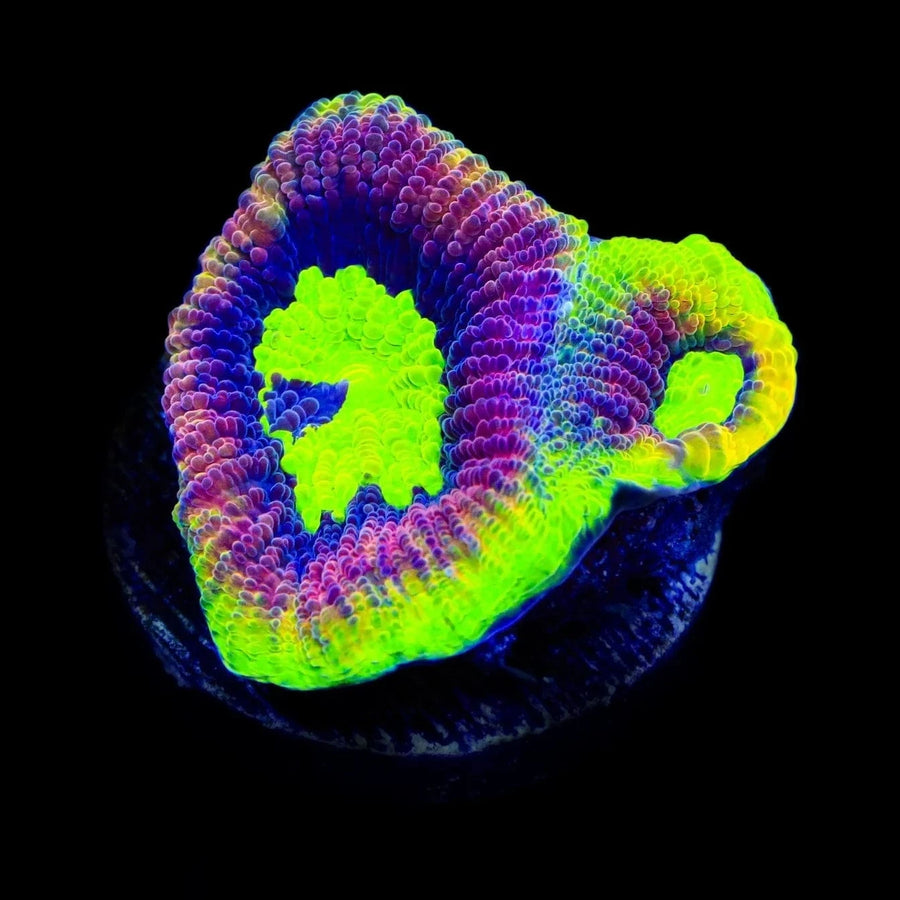
ACI Jinx Favia Coral shows tight honeycomb corallites with raised walls and distinct mouths. Favia favus is a large-polyp stony coral forming dome-like colonies, preferring moderate light and gentle to moderate water flow. It is photosynthetic with symbiotic algae but benefits from occasional small meaty feedings, which support growth and color. Provide several inches of space for nighttime sweeper tentacles and place on stable rockwork.
Quick Facts
Care
Easy
Lighting
Low–Moderate
Flow
Moderate
Placement
Low–Mid
Temperament
Aggressive (3–6 inches spacing)
Recommended Parameters
Temp
76–80°F
pH
8.1–8.4
Salinity
1.025–1.026
Calcium
400–450 ppm
AlkAlkalinity
8–10 dKH
Magnesium
1280–1350 ppm
Feeding
photosynthetic, mysis shrimp, enriched brine shrimp, finely chopped marine meat (krill, clam), zooplankton, microplankton, powdered coral foods (e.g., Reef-Roids)
Care & Placement
FAQ
Frequently Asked Questions
About the ACI Jinx Favia Coral
-
Why does my ACI Jinx Favia inflate at night and send out long sweepers—how much space should I give it?
Favia favus extends feeder and sweeper tentacles after lights out, often 1–3 inches, to capture food and defend territory. Give at least 3–4 inches of clearance from neighbors, more if near aggressive LPS (e.g., Galaxea, torch). Strong, direct flow can cause tentacles to lash farther, so use moderate, indirect flow to limit collateral stings. -
My Jinx Favia’s orange/green colors are fading under strong LEDs—what adjustments preserve its pop without browning?
Start near 80–120 PAR and slowly move to 120–180 PAR if desired. Prioritize blue spectrum for fluorescence but avoid blasting with white channels. Keep nitrate 5–15 ppm and phosphate 0.03–0.08 ppm; ultra-low nutrients wash out pigments. Stable alkalinity (8–9 dKH) and adequate potassium help maintain reds/oranges; iron/manganese support greens. -
It’s receding from the rim in small patches—what uncommon causes should I check besides basic parameters?
Look for vermetid snails irritating tissue with mucous webs, and for chronic laminar flow hitting the same ridge. Check for nocturnal stings from hidden sweepers (yours or neighbors). After fragging or bumps, watch for brown jelly; respond with iodine or broad-spectrum coral dips, siphon decay, increase gentle flow, and reduce organics to curb opportunistic bacteria. -
What’s the safest way to frag a Jinx Favia without triggering polyp bailout or infections?
Use a diamond band saw to cut the skeleton between corallites, avoiding mouths. Make clean, swift cuts; don’t crush with bone cutters. Rinse, then dip in iodine or an antiseptic coral dip. Mount on stable plugs and provide moderate, intersecting flow. Hold PAR on the lower end for a week, and feed lightly at night to speed recovery.