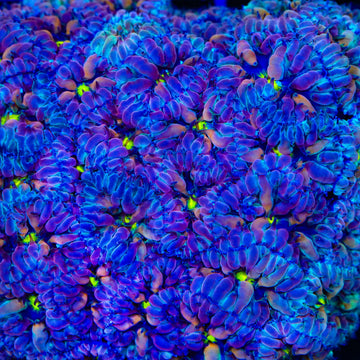
Cinnamon Blastomussa Coral
Overview
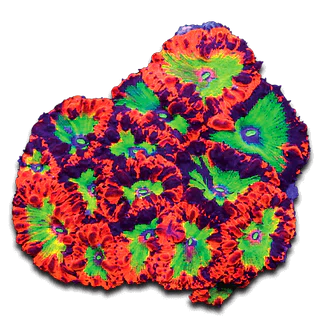
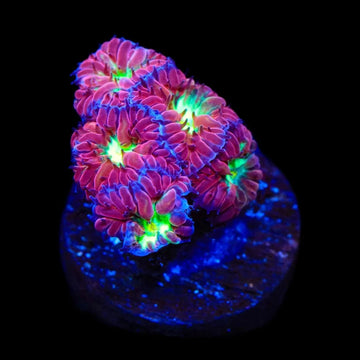
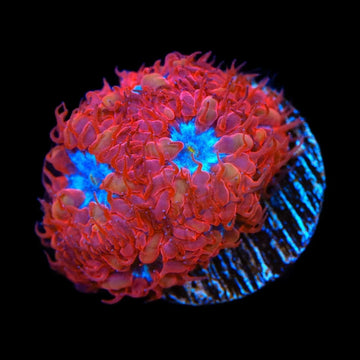
Cinnamon Blastomussa Coral shows fleshy, circular polyps with contrasting ringed mouths. Blastomussa wellsi is a large-polyp stony coral that forms clustered heads; it prefers low to moderate light and gentle to moderate water flow. It is photosynthetic via symbiotic algae but benefits from occasional small meaty feedings, which can improve growth and coloration. Place on stable rock with space around the colony, as tentacles can sting nearby corals when extended at night.
Quick Facts
Care
Moderate
Lighting
Low–Moderate
Flow
Low–Moderate
Placement
Low–Mid
Temperament
Peaceful (2–3 inches spacing)
Recommended Parameters
Temp
76–80°F
pH
8.1–8.4
Salinity
1.025–1.026
Calcium
400–450 ppm
AlkAlkalinity
8–9 dKH
Magnesium
1250–1350 ppm
Feeding
photosynthetic, mysis shrimp, enriched brine shrimp, copepods, rotifers, finely chopped seafood, zooplankton, microplankton, coral-specific powdered foods, marine snow
Care & Placement
FAQ
Frequently Asked Questions
About the Cinnamon Blastomussa Coral
-
Why does my Cinnamon Blastomussa inflate and deflate throughout the day?
Blastomussa wellsi regulates tissue expansion with light and flow. Under moderate, diffuse light and gentle, indirect flow, polyps swell to maximize feeding and gas exchange. Sudden deflation can follow a flow burst, a fish brushing polyps, or pH/alk swings. If deflation persists, check for vermetid snail irritation, recent lighting changes, or salinity drift. Night expansion often increases for feeding. -
My coral’s red tones are dulling—how can I regain color without bleaching it?
This species favors lower PAR (60–120) with a blue-leaning spectrum. If color is browning, slightly increase light or improve water clarity, but do so over weeks. Add small, frequent meaty feedings to support pigments. Keep NO3 5–15 ppm and PO4 0.03–0.1 ppm; ultra-low nutrients wash out color. Avoid blasting it with new LEDs—use diffuse light and acclimation. -
A few heads are receding while others look fine—what targeted steps help?
Isolate the problem heads from direct flow and neighboring stingers. Inspect for vermetids or detritus collecting at the polyp base; siphon debris. Stabilize alkalinity (7.5–9 dKH) and temperature. Target-feed receding heads with finely minced mysis or reef roe at lights-off. If tissue is sloughing, perform a coral dip and trim away dead skeleton to prevent bacterial spread; improve overall stability. -
Why has growth stalled despite good parameters?
Blastomussa often plateaus if energy intake is marginal or flow is too strong for polyp inflation. Increase small, frequent feedings (2–3x weekly) of soft, meaty foods. Ensure gentle, indirect flow and stable calcium/magnesium for skeletal deposition. Consider slightly raising nutrients from ultra-lean levels. Check for shadowing from rockwork or aggressive neighbors; reposition to a calmer, brighter-lateral, lower-PAR zone.