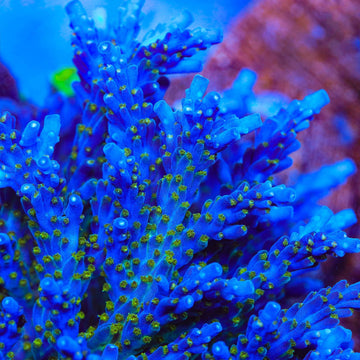
JF Homewrecker Acropora Coral
Overview
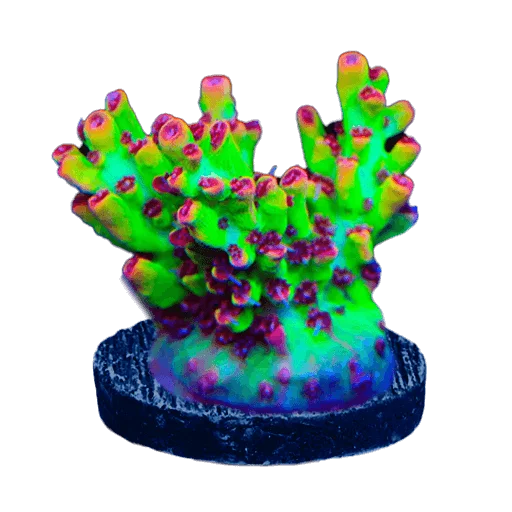
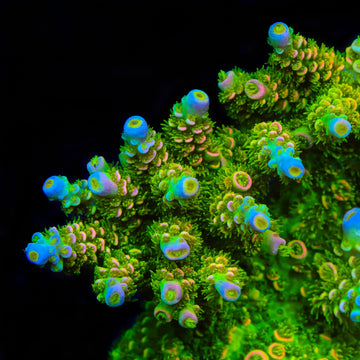
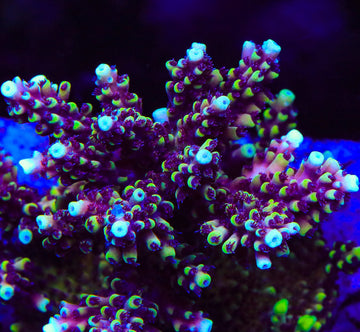
JF Homewrecker Acropora Coral shows branching, tabling growth with contrasting polyp and tip coloration. Acropora tenuis is a small-polyp stony coral that forms open, branching colonies; it prefers strong light and moderate to high, turbulent flow. It is primarily photosynthetic via symbiotic algae, but fine particulate foods or amino acids can support growth and color. Place high on stable rockwork with ample space from aggressive neighbors, and maintain stable alkalinity and low nutrients to avoid tissue loss.
Quick Facts
Care
Difficult
Lighting
High
Flow
High
Placement
High
Temperament
Peaceful (1–2 inches spacing)
Recommended Parameters
Temp
76–80°F
pH
8.1–8.4
Salinity
1.025–1.026
Calcium
420–450 ppm
AlkAlkalinity
7–9 dKH
Magnesium
1280–1350 ppm
Feeding
photosynthetic, microzooplankton, rotifers, copepod nauplii, cyclops, oyster eggs, reef-specific powdered coral foods (e.g., Reef Roids), amino acid supplements
Care & Placement
FAQ
Frequently Asked Questions
About the JF Homewrecker Acropora Coral
-
Why did my JF Homewrecker Acropora fade from rainbow pastels to dull green/brown?
Color shifts usually trace to light spectrum, nutrient balance, and traces. Aim for 250–400 PAR with strong blue/actinic; whites too high wash colors. Keep NO3 around 5–15 ppm and PO4 0.03–0.08 ppm—too low starves, too high browns. Maintain alk 8–9 dKH with minimal swing. Potassium 380–420 ppm supports blues; small iron/manganese additions boost greens but dose carefully and test. -
How should I place and prune it to prevent self-shading and keep growth colorful?
Mount high with room for outward branching and random, high flow. Angle the frag so new branches don’t overshadow the base; rotate the plug a quarter turn weekly until growth direction sets. As colonies thicken, trim inward-facing branches to open light paths. Encourage encrusting before vertical growth for stability. Avoid nearby aggressive LPS with long sweepers; run carbon to reduce chemical stress. -
What’s the best way to detect and deal with Acropora pests on this coral?
Watch for tiny bite marks, polyp retraction, dust-like flatworms dislodging when you turkey-baste, or delayed PE despite stable parameters. Inspect at night with a flashlight. Quarantine new pieces; use systematic dips (e.g., Bayer/IPA-based coral dips for adults) every 5–7 days for several rounds. Eggs aren’t affected by dips—manual inspection and scraping of bases, and fragging above egg clusters, are key. Treat red bugs with in-tank interceptor under guidance. -
How do I acclimate it to high light without triggering RTN/STN or alk burn?
Start at ~150 PAR and step up 50–75 PAR weekly using shortened photoperiods, raised lights, or mesh screens. Avoid increasing PAR while raising alkalinity—pick one variable at a time. Keep alk changes under 0.2 dKH/day and maintain strong, chaotic flow to reduce heat and boundary-layer stress. If tissue lightens at tips without polyp loss, pause light increases and feed fine particulates or aminos sparingly.