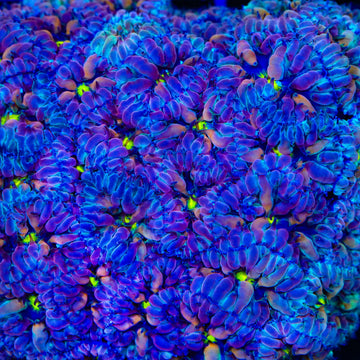
Candy Apple Blastomussa Coral
Overview
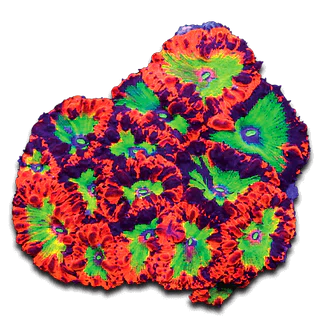
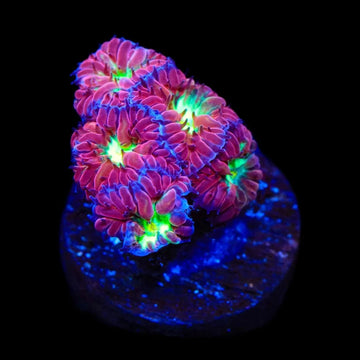
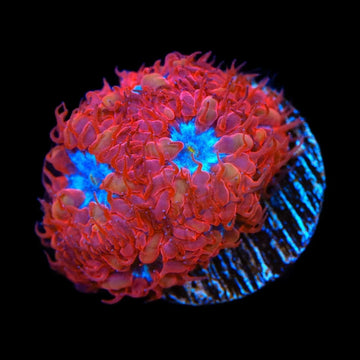
Candy Apple Blastomussa Coral shows large, fleshy polyps with domed, clustered heads and distinct central mouths. Blastomussa wellsi is a large-polyp stony coral that prefers moderate light and low to moderate water flow. It relies on symbiotic algae for energy but benefits from occasional small meaty foods, which can support faster growth and stable color. Place on the sandbed or low rock with space around it, as sweeper tentacles can sting nearby corals.
Quick Facts
Care
Moderate
Lighting
Low–Moderate
Flow
Moderate, indirect
Placement
Low–Mid
Temperament
Peaceful (2–3 inches spacing)
Recommended Parameters
Temp
76–80°F
pH
8.1–8.4
Salinity
1.025–1.026
Calcium
400–450 ppm
AlkAlkalinity
8–10 dKH
Magnesium
1280–1350 ppm
Feeding
photosynthetic, mysis shrimp, enriched brine shrimp, finely chopped seafood (clam, shrimp), zooplankton, microplankton, coral-specific powdered foods (Reef Roids), marine snow
Care & Placement
FAQ
Frequently Asked Questions
About the Candy Apple Blastomussa Coral
-
How do I keep the “candy apple” reds and greens from fading under LEDs?
Aim for moderate PAR (80–120) with strong blue/violet (420–470 nm) and restrained white. Avoid sudden light increases; ramp changes over 2–3 weeks. Keep nutrients non-zero (NO3 5–15 ppm, PO4 0.03–0.10 ppm). Stable alkalinity (7.8–8.6 dKH), adequate iodine, and iron help maintain pigments. Too much flow or grit irritation also dulls color—use gentle, indirect flow. -
My Blastomussa wellsi is receding from the base—what’s the likely cause and fix?
Common triggers: excess light, sharp alkalinity swings, vermetid snail irritation, or bacterial issues (brown jelly). Move to lower light/softer flow, stabilize KH and salinity, and inspect for vermetids to remove/epoxy over. Siphon necrotic tissue, perform an iodine dip, and if a head is compromised, cut it away with clean margins. Prevent polyp bailout by avoiding rapid salinity changes. -
What’s the safest way to frag a Candy Apple Blastomussa colony?
Use a diamond saw/Dremel to cut the skeleton between corallites from the underside; avoid slicing through shared tissue. Chill the cut area with tank water to limit heat. Immediately rinse, then iodine dip. Heal in low light, gentle flow, and stable parameters for 1–2 weeks. Target feed small portions to support recovery. Handle by the plug/rock, not the polyp. -
How should I space it relative to other LPS, and where does it grow best?
B. wellsi forms thick, dome-like heads with large daytime inflation and short sweepers. Give 2–3 inches clearance from aggressive LPS (favia, acanthastrea, euphyllia). It does well on a flat ledge or low rockwork; sand bed works if grit isn’t blowing onto tissue. Moderate, indirect flow prevents detritus buildup without abrading the polyps.