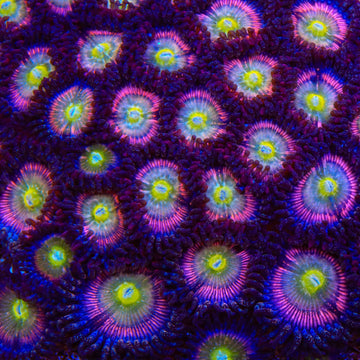
Little Shop of Horror Zoanthids Coral
Overview
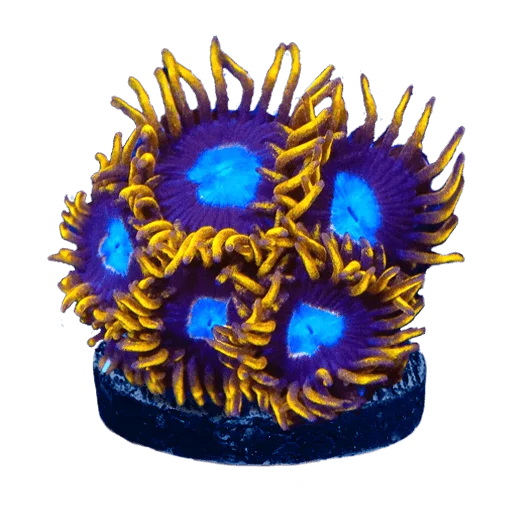
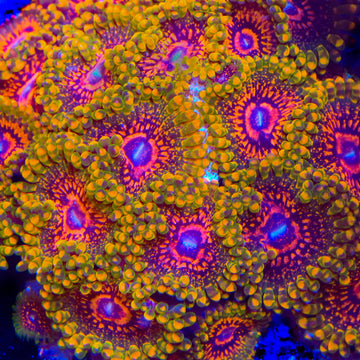
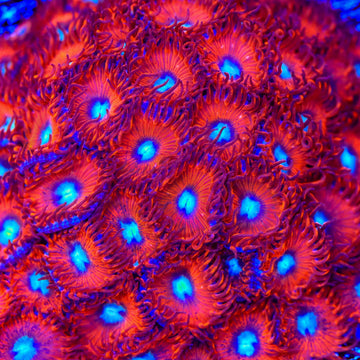
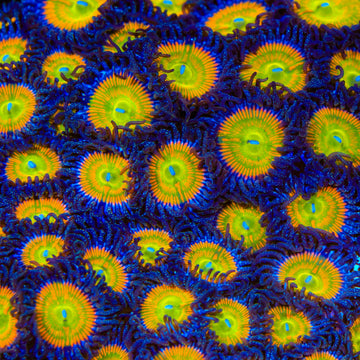
Little Shop of Horror Zoanthids Coral displays compact button-like polyps with contrasting centers and skirts. Zoanthus sp., a colonial soft polyp coral, forms matting clusters and does well under moderate light and low to moderate water flow. It is photosynthetic via symbiotic algae but accepts small meaty foods, which can support faster growth and deeper color. Place on isolated rock to control spreading, and keep space from aggressive stinging corals.
Quick Facts
Care
Easy
Lighting
Low–Moderate
Flow
Moderate indirect
Placement
Low–Mid
Temperament
Peaceful to semi-aggressive (fast encruster; 2–3 inches spacing)
Recommended Parameters
Temp
76–80°F
pH
8.1–8.4
Salinity
1.025–1.026
Calcium
380–450 ppm
AlkAlkalinity
8–10 dKH
Magnesium
1250–1350 ppm
Feeding
photosynthetic (primary), phytoplankton, rotifers, copepod or brine shrimp nauplii, microplankton, marine snow, powdered coral foods, amino acids
Care & Placement
FAQ
Frequently Asked Questions
About the Little Shop of Horror Zoanthids Coral
-
How do I keep Little Shop of Horror Zoanthids from browning or washing out?
Aim for a blue-heavy spectrum with moderate PAR (80–150). Keep nutrients non-zero (NO3 ~5–15 ppm, PO4 ~0.03–0.1) and stable alkalinity. Too white or intense light can bleach centers; too low light/nutrients dulls skirts. Increase light slowly over weeks. Good flow to keep detritus off skirts also helps maintain crisp patterning. -
Why do some polyps suddenly “melt” or stay closed while neighbors look fine?
Often localized issues: bacterial film, detritus trapping, or a pest targeting one patch. Boost flow to the colony’s base, turkey-baste debris, and inspect undersides at night for nudibranchs or spiders. An iodine-based dip can help. If shading from nearby corals developed, reposition to restore even light and reduce micro-dead spots. -
Can they overrun rockwork, and how do I contain them in a mixed reef?
Yes, they can carpet and overshadow slower growers. Mount them on an “island” rock separated by sand or bare glass. Trim runners monthly with a blade. Keep space from sweeper-tentacle corals. Run fresh activated carbon and maintain good export to dilute allelochemicals during heavy pruning or after major disturbances. -
What pests or rare ailments are specific risks, and how do I spot them early?
Watch for zoa-eating nudibranchs (ruffled slugs) and their crescent egg spirals under skirts, sundial snails with black-and-white shells, and tiny “zoa spiders.” Night inspections are best. Zoa pox shows as small beige pustules; treat with targeted antibiotic dips (e.g., Furan-based) in a separate container. Consistent flow and cleanliness reduce recurrence.