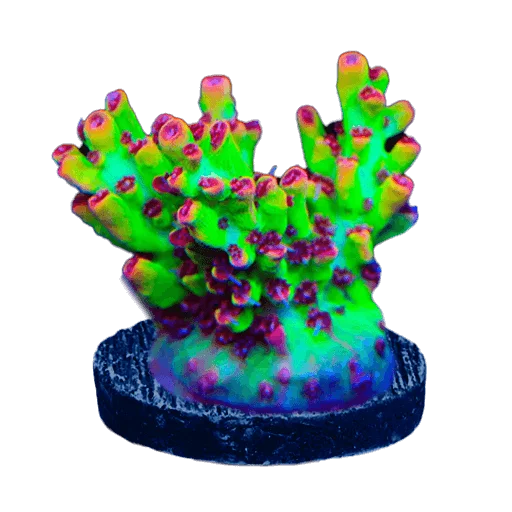
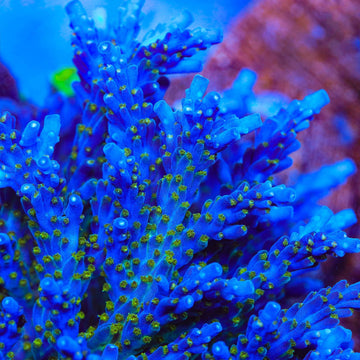
CB Birthday Cake Acropora Coral
Overview
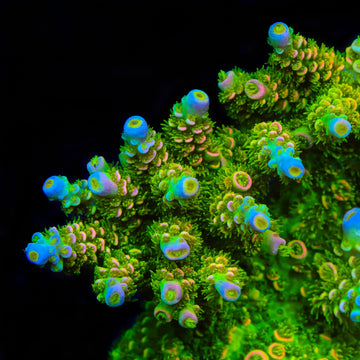
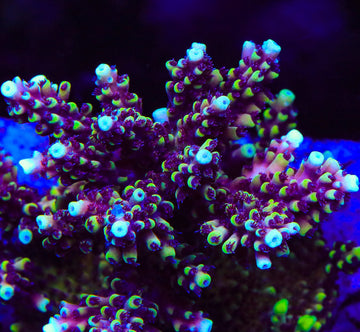
CB Birthday Cake Acropora Coral displays tight, upright branching with small polyps and contrasting tip coloration. Acropora sp. Coral is a small-polyp stony branching coral that prefers high light and strong, varied water flow in stable reef conditions. It is primarily photosynthetic via symbiotic algae but benefits from occasional small-particle foods, which can support growth and color. Place high on rockwork with space from aggressive neighbors, and maintain stable alkalinity, calcium, and low nutrients.
Quick Facts
Care
Difficult
Lighting
High
Flow
High, turbulent
Placement
High
Temperament
Peaceful (2–3 inches spacing)
Recommended Parameters
Temp
76–80°F
pH
8.1–8.4
Salinity
1.025–1.026
Calcium
400–450 ppm
AlkAlkalinity
7.5–8.5 dKH
Magnesium
1280–1350 ppm
Feeding
photosynthetic (primary), microplankton, rotifers, copepod nauplii, oyster eggs, powdered coral foods, marine snow, amino acids
Care & Placement
FAQ
Frequently Asked Questions
About the CB Birthday Cake Acropora Coral
-
How do I keep the signature pastel “Birthday Cake” colors from browning or washing out?
Target 250–350 PAR with strong, chaotic flow and stable parameters: alk 7.5–8.3 dKH, Ca 420–460 ppm, Mg 1300–1400 ppm, NO3 5–15 ppm, PO4 0.03–0.08 ppm. Let it fully encrust before pushing PAR. Blue-heavy spectrum (14–20K) supports pink tips and mint/cream bases. If colors fade despite nutrients, check trace elements via ICP; iodine, iron, and manganese often restore pinks and blues when deficient. -
Why do new tips scorch while the base looks healthy?
Tip burn happens when high PAR meets elevated alkalinity or abrupt nutrient drops. Reduce PAR 15–20% for two weeks, lower alk toward 8 dKH, and stabilize NO3/PO4 within target range. Increase random flow to dissipate oxygen radicals around axial tips. Avoid large amino/carbon dosing swings. Once growth stabilizes, slowly raise light 5% per week. -
What’s the best way to frag this coral without losing its tidy branching structure?
Cut just below axial tips on secondary branches with clean bone cutters, leaving at least one radial corallite ring on each frag. Mount frags upright to preserve growth direction, and allow a flat, encrusted base before peak light. Use thick gel cyanoacrylate on roughened plugs. Dip for pests post-cut, and quarantine 4–6 weeks to monitor healing and growth form. -
My polyps retract during the day but extend at night—normal for this variety?
Yes. Many Acropora sp. show stronger nocturnal extension, especially in high-energy conditions. Daytime retraction can increase with intense light or nearby flow jets. If extension declines overall, check for predators (AEFW, red bugs), excess laminar flow, or fish nipping. Slightly diffuse the flow, increase random patterns, and perform targeted dips if pests are suspected.