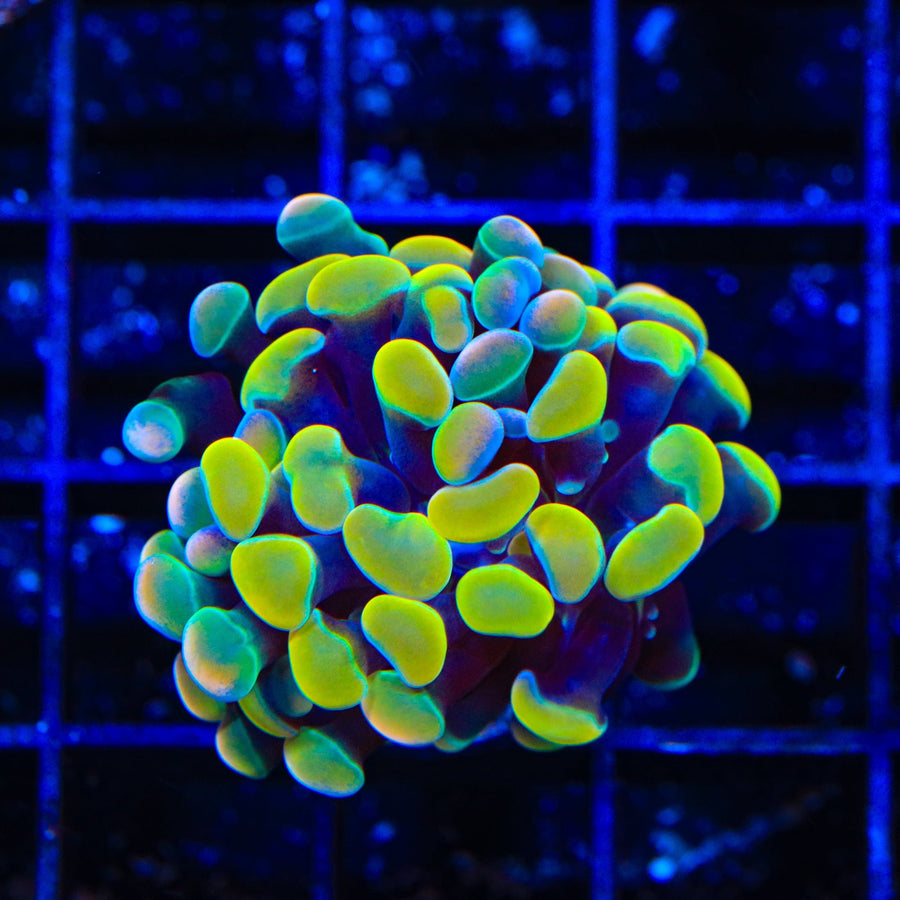
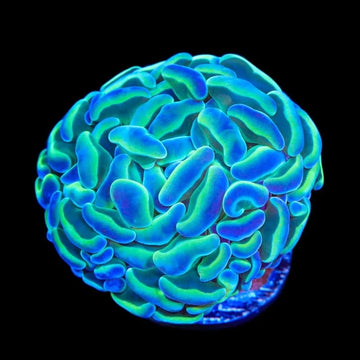
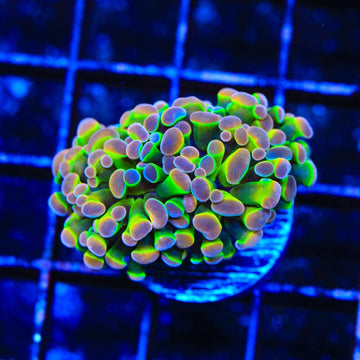
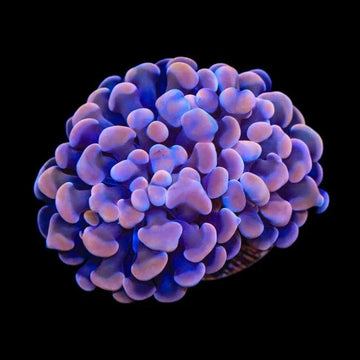
Holy Grail Hammer Coral
Overview
Holy Grail Hammer Coral shows bright gold-green branching heads with hammer-shaped tentacle tips. Fimbriaphyllia paraancora is a large-polyp stony coral; it prefers moderate lighting and gentle to moderate, indirect water flow. It is primarily photosynthetic via symbiotic algae but will accept small meaty foods or coral foods, which can support growth and maintain color. Place with space around it, as sweeper tentacles can sting nearby corals and the skeleton is easily damaged if moved roughly.
Quick Facts
Care
Moderate
Lighting
Moderate
Flow
Moderate, indirect
Placement
Mid–Low
Temperament
Semi-aggressive (6–8 inches spacing)
Recommended Parameters
Temp
76–80°F
pH
8.1–8.4
Salinity
1.025–1.026
Calcium
400–450 ppm
AlkAlkalinity
8–9 dKH
Magnesium
1250–1350 ppm
Feeding
photosynthetic, mysis shrimp, enriched brine shrimp, finely chopped krill, finely chopped clam or shrimp, zooplankton, microplankton, marine snow, coral-specific powdered foods
Care & Placement
FAQ
Frequently Asked Questions
About the Holy Grail Hammer Coral
-
How does the Holy Grail Hammer’s branching form (Fimbriaphyllia paraancora) affect placement and flow compared to wall hammers?
Branching heads flex independently, so aim for moderate, cross-current flow that keeps tentacles gently swaying without folding over the branch tips. Too much direct flow causes tissue abrasion where flesh meets the septa, leading to recession. Mount the colony slightly off the rock to prevent chafing and allow sway, leaving 2–3 inches around heads for splitting and future growth. -
What lighting and nutrients best maintain the “Holy Grail” golden coloration without washing it out?
Strong blue spectrum (peak 420–460 nm) with moderate PAR (120–180 at the polyp) preserves gold tonality while avoiding bleaching. Keep nutrients non-zero—nitrate 5–15 ppm, phosphate 0.03–0.08 ppm. Ultra-low nutrients pale the tissue; excess fuels algae on the skeleton. Regular, modest trace element replenishment (iodine, iron) supports pigment expression, but avoid chasing numbers—stability matters more than exact values. -
My hammer is extending but losing tissue at the branch base—what’s the likely cause and fix?
This pattern points to mechanical shear or bacterial ingress at a micro-tear. Reduce direct flow, rotate the colony so polyps aren’t dragged across branch edges, and inspect for detritus pockets. Siphon debris, increase gentle, random flow, and consider a broad-spectrum coral dip if you see film or odor. Maintain alk 8–9 dKH and steady salinity; swings compound tissue loss. -
Can I keep Holy Grail Hammers with torches or frogspawns, and how far apart should they be?
Keep a clear buffer from torches; their sweepers and potent sting often outcompete hammers. Frogspawns are usually less aggressive but still risky. Provide 6–8 inches minimum clearance and a flow pattern that prevents tentacle contact during nighttime extension. Avoid chemical warfare zones near leathers; run carbon and perform regular water changes if mixing with allelopathic soft corals.