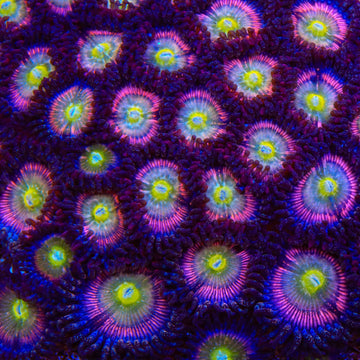
Charmander Zoanthids Coral
Overview
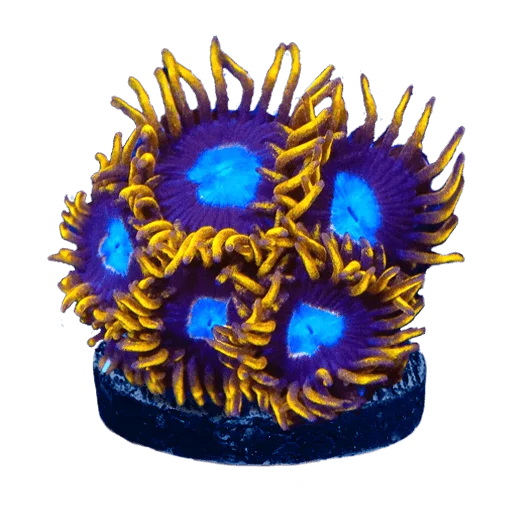
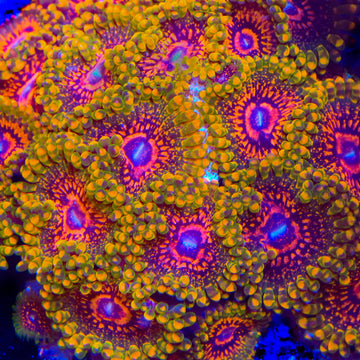
Charmander Zoanthids Coral features bright orange to red polyps with contrasting centers and short tentacles. Zoanthus sp., a soft colonial polyp coral, grows as mats and prefers moderate light and moderate, variable flow. Primarily photosynthetic with symbiotic algae, it benefits from occasional small meaty or planktonic foods, which can speed growth and deepen color. Place on isolated rock to manage spread, and keep distance from aggressive stinging corals.
Quick Facts
Care
Easy
Lighting
Moderate
Flow
Moderate-High
Placement
Low–Mid
Temperament
Semi-aggressive (2–3 inches; can overgrow neighbors)
Recommended Parameters
Temp
76–82°F
pH
8.1–8.4
Salinity
1.025–1.026
Calcium
400–450 ppm
AlkAlkalinity
8–10 dKH
Magnesium
1250–1350 ppm
Feeding
photosynthetic, dissolved nutrients from water column, phytoplankton, zooplankton, rotifers, microplankton, powdered coral foods (e.g., Reef-Roids), marine snow, amino acids
Care & Placement
FAQ
Frequently Asked Questions
About the Charmander Zoanthids Coral
-
How do I maintain the vivid orange of Charmander Zoanthids without washing them out or browning?
Aim for moderate light with a blue-leaning spectrum (around 14–20K). Too much white can fade orange, while excessive PAR can cause paling. Keep nutrients detectable (nitrate 5–15 ppm, phosphate 0.03–0.1 ppm) to avoid starvation browning. Stabilize alkalinity and trace elements; minor iodine/iron availability supports zoanthid pigmentation. Gradually acclimate to any lighting change over 2–3 weeks to preserve color. -
My colony grows a dense mat that shades itself. What’s the best strategy to promote even growth?
Increase cross-flow to reduce detritus buildup between polyps and rotate the frag 90° every few weeks to expose edges. Trim or frag the central mat when it thickens to encourage lateral spread. Mount on a slightly convex plug or island rock so new polyps receive light around the rim. Avoid placing under overhangs where upward polyps outcompete shaded skirts. -
The polyps stay closed despite stable parameters. What uncommon pests should I check for with Zoanthus sp.?
Inspect at night with a flashlight for zoanthid-eating nudibranchs and their egg spirals; dip and manually remove for several weeks to break the lifecycle. Look for sundial snails and tiny “zoa spiders” under skirts. If tissue specks appear, consider zoa pox—improve flow and perform targeted antibacterial dips. Also check for chemical irritation from nearby softies; run fresh carbon to reduce allelopathy. -
Can I target-feed Charmander Zoanthids, and does it noticeably impact growth?
They benefit primarily from dissolved nutrients and fine particulates. Occasional feeds with very small particle foods (e.g., reef roids, rotifers) under moderate flow can increase polyp size and bud frequency. Feed lightly to avoid film algae on skirts. Consistent nitrate/phosphate and amino-rich foods often show more impact than large meaty items, which are typically ignored or blow off and pollute.