Mint Frogspawn Coral
Overview
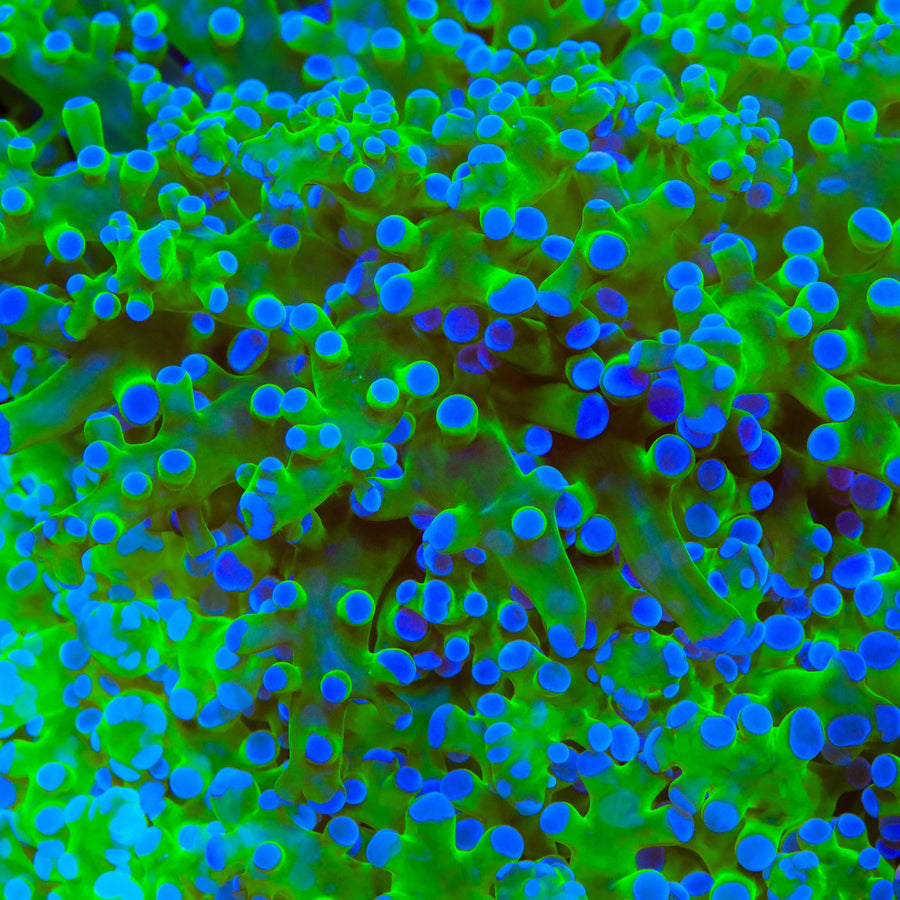
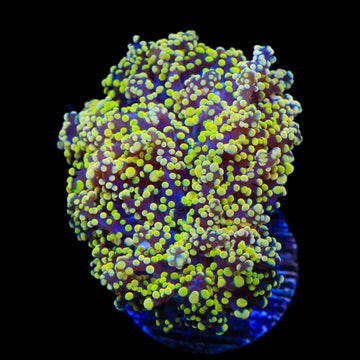
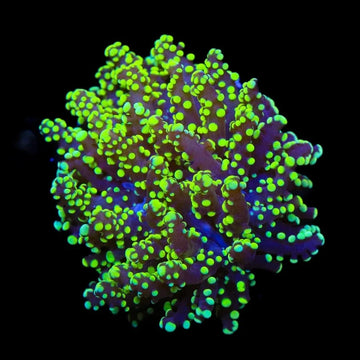
Mint Frogspawn Coral shows plump, mint-tinted branching heads with split, frog-toe tips. Fimbriaphyllia paradivisa is a branching large-polyp stony coral that prefers moderate light and gentle to moderate, varied flow. It is photosynthetic with symbiotic algae but also accepts small meaty foods, which can speed growth and support strong color. Place it with space from neighbors, as sweeper tentacles can sting nearby corals, and avoid high flow that collapses the polyps.
Quick Facts
Care
Moderate
Lighting
Moderate
Flow
Moderate, indirect
Placement
Mid–Low
Temperament
Semi-aggressive (6–8 inches spacing)
Recommended Parameters
Temp
77–80°F
pH
8.1–8.4
Salinity
1.025–1.026
Calcium
400–450 ppm
AlkAlkalinity
8–9 dKH
Magnesium
1280–1350 ppm
Feeding
photosynthetic, zooplankton, microplankton, mysis shrimp, enriched brine shrimp, finely chopped seafood, coral-specific powdered foods
Care & Placement
FAQ
Frequently Asked Questions
About the Mint Frogspawn Coral
-
Why did my Mint Frogspawn Coral lose its mint hue and look dull or brown?
Color shifts often come from excess light or very low nutrients. Aim for 80–150 PAR with good blue spectrum and acclimate over 1–2 weeks. Keep nitrates 5–15 ppm and phosphates 0.03–0.1 ppm; ultra-clean water washes out pigments, while too much light triggers browning. Stable alk 8–9 dKH, Ca 420–460 ppm, Mg 1300–1400 ppm. Occasional small-feedings support color. -
How far should I place it from other corals, and can it touch hammers or torches?
Give 6–8 inches of space; at night it extends long sweepers that can burn neighbors. Even within Fimbriaphyllia, contact can lead to tissue loss, with torches often winning. Hammers are usually less aggressive but still risky. Angle flow so sweepers don’t blow directly into other corals. Watch for delayed stings that show up as pale, receding edges a day later. -
What’s the safest way to frag this branching species?
Only frag healthy, inflated heads. Use bone cutters or a diamond saw to cut the branch well below the fleshy base, never through living tissue. Rinse, then dip in iodine or a broad-spectrum coral dip, and mount so the branch is stable and upright. Moderate, indirect flow prevents slime buildup. Expect 1–3 weeks for polyp extension and 4–8 weeks for firm recovery and new growth. -
My Mint Frogspawn stays retracted and produces excess slime—what should I check?
Rule out vermetid snails, flatworms, and stinging neighbors first. Then verify flow: aim for gentle, rhythmic sway, not a blast. Check for parameter swings—alkalinity drops are a common trigger. If tissue looks cloudy or jelly-like, siphon immediately and use an iodine dip; increase aeration and flow around the head. Stabilize temp and salinity, and avoid large lighting changes for several days.