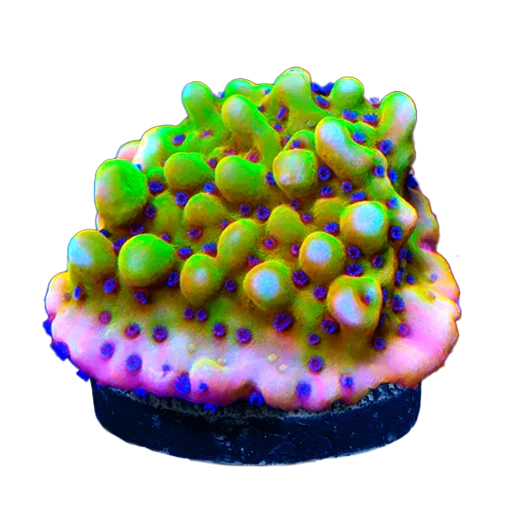
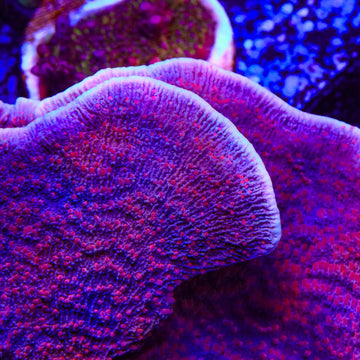
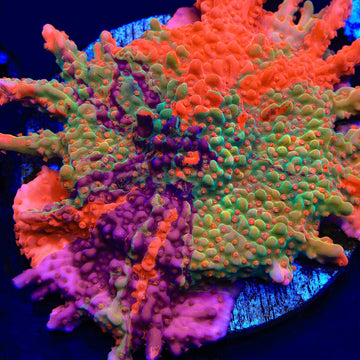
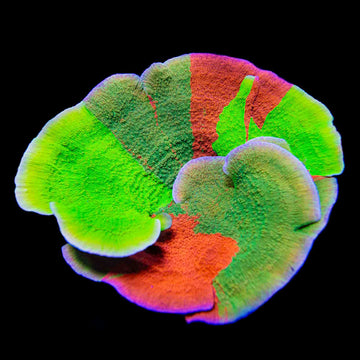
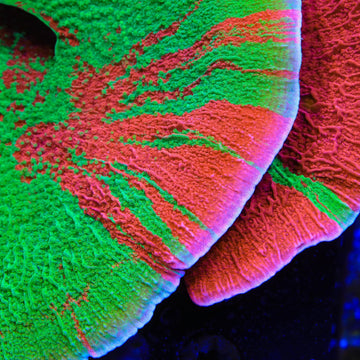
Neon Green Digitata Montipora Coral
Overview
Neon Green Digitata Coral features bright lime, finger-like branches that grow upward and branch densely. Montipora digitata is a small-polyp stony branching coral that prefers moderate to strong light and moderate, turbulent water flow. It is primarily photosynthetic with symbiotic algae but can take small particulate foods, supporting faster growth and stable coloration. Place high on secure rockwork with space from aggressive neighbors, and prevent shading from larger corals.
Quick Facts
Care
Moderate
Lighting
Moderate–High
Flow
Moderate–High
Placement
Mid–High
Temperament
Peaceful (2–3 inches spacing)
Recommended Parameters
Temp
77–80°F
pH
8.1–8.4
Salinity
1.025–1.026
Calcium
400–450 ppm
AlkAlkalinity
8–9 dKH
Magnesium
1280–1350 ppm
Feeding
photosynthetic (primary), microplankton, phytoplankton, zooplankton, rotifers, copepod nauplii, coral-specific powdered foods, amino acid supplements
Care & Placement
FAQ
Frequently Asked Questions
About the Neon Green Digitata Montipora Coral
-
Why does my Neon Green Digitata grow thin, crowded branches that shade themselves, and how can I guide a better shape?
Strong, random flow and balanced light encourage thicker, spaced branching. Rotate the colony monthly so all sides get similar PAR, and trim inward-facing or crossing branches to open the structure. Mount it where upward growth won’t hit the surface. Keep PAR around 200–350 and avoid stagnant zones; alternating flow helps prevent dead spots and self-shading. -
My neon green is fading to pale or brown. What specific tweaks restore color without bleaching?
Aim for stable alkalinity (8–9 dKH) and non-zero nutrients: nitrate 5–15 ppm, phosphate 0.03–0.08 ppm. Too lean systems wash out pigment; too high nutrients brown it. Provide strong blue/UV spectrum and acclimate slowly to higher PAR. Avoid abrupt carbon dosing or large water changes that swing nutrients. Consistent feeding of fine particulates can help polyp vigor. -
The tips burned after an alkalinity swing—can the colony rebound, and what’s the best rescue approach?
Halt progression by stabilizing alk, calcium, and magnesium first. If necrosis is localized, clip 5–10 mm into healthy tissue beyond the dead edge and remount frags with fresh glue on clean plugs. Increase turbulent flow to the tips to deter bacterial film. Keep nutrients steady for two weeks; avoid additional light increases until new growth skins over. -
How do I detect and eradicate Montipora-eating nudibranchs on this coral?
Inspect at night with a flashlight for tiny white slugs on undersides and along branch bases; look for crescent-shaped egg ribbons. Isolate affected colonies, perform repeated dips (e.g., iodine or appropriate coral dips) every 3–4 days to break egg cycles, and manually remove eggs. Consider a temporary Montipora “fallow” period in the display and quarantine new frags diligently.