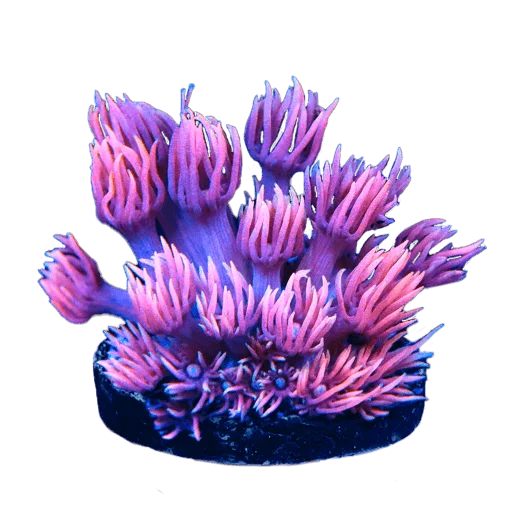
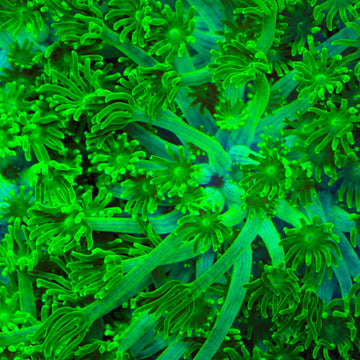
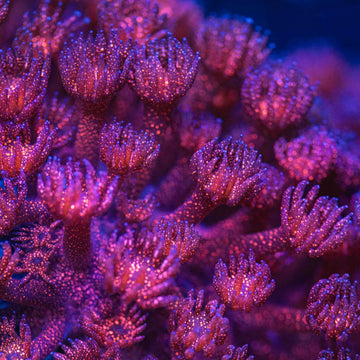
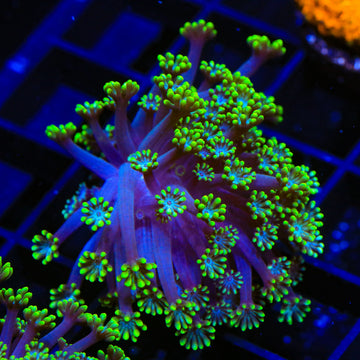
Flaming Unicorn Goniopora Coral
Overview
Flaming Unicorn Goniopora Coral shows long, flower-like polyps with bright red to orange tentacles. Goniopora sp. is a large-polyp stony coral that forms rounded colonies; it prefers moderate light and gentle to moderate water flow. It hosts symbiotic algae for photosynthesis but benefits from small particle foods target-fed a few times per week, which can support growth and color. Give it space for tentacle extension and avoid placing it near aggressive stingers or high-traffic areas to prevent tissue damage.
Quick Facts
Care
Difficult
Lighting
Moderate
Flow
Moderate, indirect
Placement
Low–Mid
Temperament
Semi-aggressive (3–6 inches spacing)
Recommended Parameters
Temp
76–82°F
pH
8.1–8.4
Salinity
1.025–1.026
Calcium
420–450 ppm
AlkAlkalinity
8–9 dKH
Magnesium
1280–1350 ppm
Feeding
photosynthetic, phytoplankton, zooplankton, microplankton, rotifers, copepod nauplii, oyster eggs, reef-specific powdered coral foods, baby brine shrimp, finely minced mysis shrimp
Care & Placement
FAQ
Frequently Asked Questions
About the Flaming Unicorn Goniopora Coral
-
My Flaming Unicorn Goniopora thrived for months, then slowly retracted. What’s the likely cause and fix?
This “slow fade” often stems from instability and subtle deficiencies. Keep nutrients detectable (nitrate 5–15 ppm, phosphate 0.03–0.1), alkalinity steady (8–9 dKH), and provide gentle, random flow. Feed fine particulate foods 2–3 times weekly. Test/dose trace metals (iron, manganese) if low—an ICP test helps. Check for irritants like vermetid snails or abrasive sand. Avoid aggressive neighbors and sudden light or parameter changes. -
How do I keep its flaming reds and turquoise mouths without bleaching or browning?
Target PAR around 120–180 with a blue-leaning spectrum (14–20K). Light-acclimate over 2–3 weeks; watch for pale tips (too much) or muddy tones (too little). Maintain moderate nutrients; ULNS systems often wash out color. Provide indirect, randomized flow to keep polyps clean without flattening them. Periodic amino/trace supplementation and consistent feeding help sustain fluorescence and tissue thickness. -
What’s the safest way to frag Goniopora sp. without losing the colony?
Use a diamond saw to make micro-frags at the skeletal base, cutting between polyp calices—never through their centers. Dip frags in iodine, mount firmly to plugs, and cure in low-to-moderate flow with stable parameters. Avoid air exposure during cutting when possible. Quarantine for a week to monitor for recession. Feeding very fine foods during recovery improves survival. Large, crude cuts have poor outcomes. -
Can clownfish host this coral, and which tankmates are risky?
Clownfish often irritate Goniopora, causing recession from constant rubbing; discourage hosting or provide alternative anemone-like substitutes. Give 3–4 inches of space from torches, hammers, and other long-sweeper LPS. Goniopora’s sting is modest, but it’s easily damaged by aggressive neighbors, sand-shifting wrasses, and nippy crabs. Keep it off abrasive sand and away from vermetid snails that sling mucus threads.