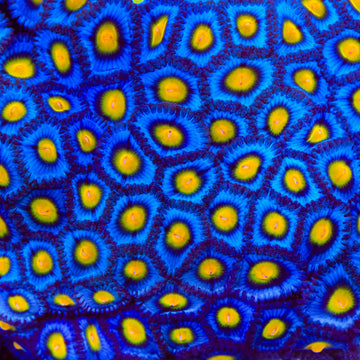
Alien Antivenom Zoanthids Coral
Overview
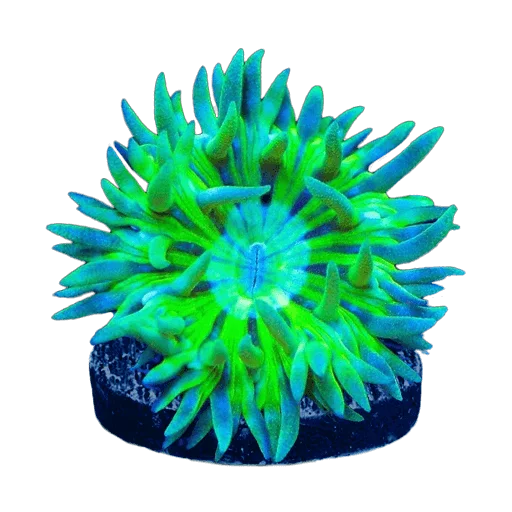
Alien Antivenom Zoanthids Coral features bright green oral discs with contrasting skirts on compact polyps. Zoanthus sp., a soft colonial polyp coral, does well in moderate light and low to moderate water flow. It is mainly photosynthetic with symbiotic algae but will accept small meaty foods, which can support faster growth and color retention. Place on an isolated rock to manage spreading and keep space from stinging neighbors.
Quick Facts
Care
Easy
Lighting
Low–Moderate
Flow
Moderate Indirect
Placement
Low–Mid
Temperament
Peaceful to Semi-aggressive (allow 2–3 inches spacing; may overgrow slower neighbors)
Recommended Parameters
Temp
76–82°F
pH
8.1–8.4
Salinity
1.025–1.026
Calcium
380–430 ppm
AlkAlkalinity
8–10 dKH
Magnesium
1250–1350 ppm
Feeding
photosynthetic, microplankton, zooplankton, phytoplankton, rotifers, baby brine shrimp, finely chopped mysis, powdered coral foods
Care & Placement
FAQ
Frequently Asked Questions
About the Alien Antivenom Zoanthids Coral
-
Why do my Alien Antivenom Zoanthids shift from neon to duller tones under the same PAR?
This morph is sensitive to spectrum and nutrients. Heavy blue/actinic brings out fluorescence, while whiter spectra can mute it. Ultra-low nutrients often shrink polyps and wash colors; modest nitrate (5–15 ppm) and phosphate (0.03–0.1 ppm) deepen tones. Stable salinity/alk and trace iron/iodine via water changes help pigments. Avoid rapid light changes; acclimate over 1–2 weeks. -
My colony stopped opening and looks “melted,” but parameters test fine—what should I check?
Inspect for zoa-eating nudibranchs and their egg spirals, sundial snails, spider-like amphipods, and vermetid snail mucus. Also check for shadowing from overgrowth and detritus trapped at the mat’s base. Increase random flow, turkey-baste debris, and perform targeted dips (iodine or commercial coral dip). If bacterial film is suspected, a short, diluted H2O2 dip can help—test on a small frag first. -
How can I keep fast growth from overrunning neighboring corals without hurting this morph?
Mount on an isolated “island” rock with a sand moat, or use a removable frag tile perimeter you can prune. Trim the mat edge with a sharp scalpel and immediately glue the cut margin to seal tissue. Run fresh carbon to buffer chemical warfare, and maintain space from slow encrusters. Regular, small prunes are less stressful than infrequent major cuts. -
What lighting and flow profile keeps polyps tight and prevents stretching or bleaching?
Aim for moderate PAR (80–150) with strong blue content and moderate, cross-flow turbulence. If polyps stretch on long stalks, increase light slightly or reduce spectrum white. If skirts retract and colors pale, reduce intensity by 15–25% and increase nutrition. Avoid direct laminar jets; use alternating or gyre flow to keep the mat clean without slamming the polyps.