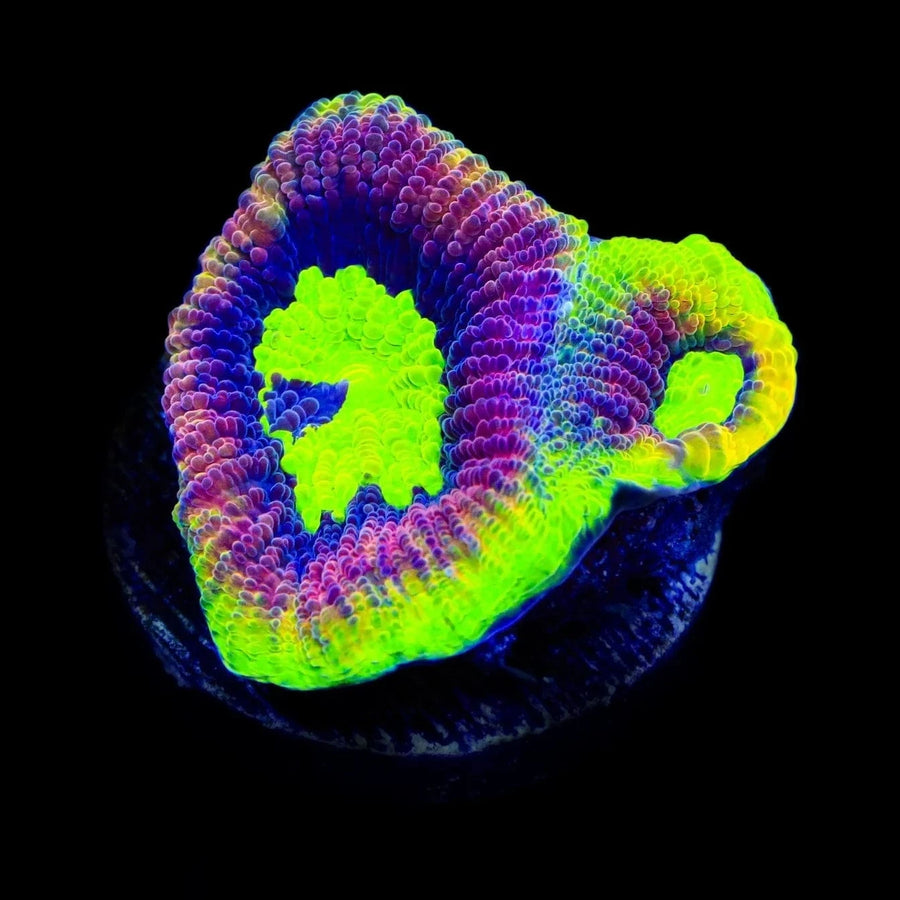
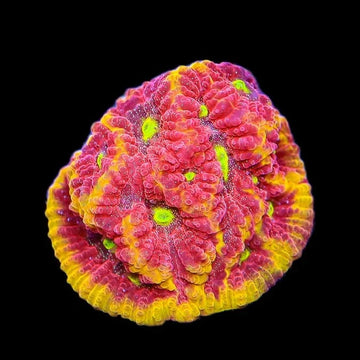
CB Bloodbath Favia Coral
Overview
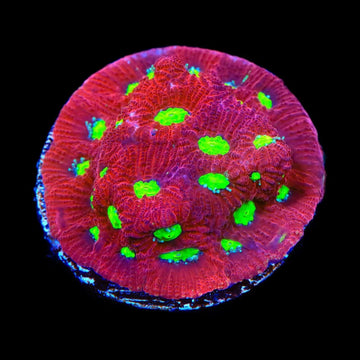
CB Bloodbath Favia Coral displays deep red to burgundy polygonal corallites with contrasting mouths. Favia favus is a large-polyp stony, dome-forming brain coral that does well under moderate lighting and low to moderate, steady water flow. It is photosynthetic via symbiotic algae but benefits from occasional small meaty feedings at night, which can boost growth and color. Place on stable rock with space around it, as nighttime sweeper tentacles can sting nearby corals.
Quick Facts
Care
Moderate
Lighting
Low–Moderate
Flow
Moderate, indirect
Placement
Low–Mid
Temperament
Semi-aggressive (6 inches spacing)
Recommended Parameters
Temp
76–80°F
pH
8.1–8.4
Salinity
1.025–1.026
Calcium
400–450 ppm
AlkAlkalinity
8–10 dKH
Magnesium
1280–1350 ppm
Feeding
photosynthetic, mysis shrimp, enriched brine shrimp, finely chopped krill or clam, zooplankton, microplankton, coral-specific powdered foods (e.g., Reef-Roids), marine snow, LPS pellets
Care & Placement
FAQ
Frequently Asked Questions
About the CB Bloodbath Favia Coral
-
Why does my CB Bloodbath Favia fade from deep crimson to dull brick tones under strong light?
Favia favus morphs can downregulate pigments under high PAR or overly blue-heavy spectrums. Target moderate PAR (80–150) with a balanced blue/white mix and gradual acclimation. If fading occurs, lower intensity 15–20% weekly and extend dark period by 30 minutes. Stable nitrate 5–15 ppm and phosphate 0.03–0.1 ppm support richer coloration; ultra-low nutrients often wash out reds. -
My colony shows night-time feeder extension but minimal daytime polyp activity—normal or problem?
Normal. This species is a crepuscular/nocturnal feeder. Encourage stronger daytime extension by establishing a predictable feeding cue 15–30 minutes before lights out (amino solution or diluted oyster/rotifer mix). Keep flow laminar-to-moderate so tentacles can capture food without folding. Sudden swings in alkalinity or salinity suppress extension; verify stability before assuming pests or disease. -
How do I prevent “valley recession” where tissue retracts between corallites while mouths look fine?
This pattern often signals chronic low flow under the colony or detritus accumulation. Elevate the frag/colony to increase underside turnover, and adjust flow to sweep across valleys. Supplement small, frequent feedings to support tissue between septa. Check for hidden vermetids or spicules irritating the coenosteum. Maintain alkalinity 8–9.5 dKH and magnesium 1300–1400 ppm to promote steady calcification across ridges. -
Are “sweeper” stings from this coral stronger than typical Favias, and how should I place it?
Many Bloodbath morphs throw 2–4 inch sweepers with potent nematocysts, especially after target feeding. Give a 3–5 inch buffer from fleshy LPS and softies downcurrent. Avoid placing near similarly pigmented Favids to limit aggression. If neighboring corals show blistering, shift flow to deflect sweepers at night and reduce heavy feeding frequency, which can trigger longer, more aggressive extension.