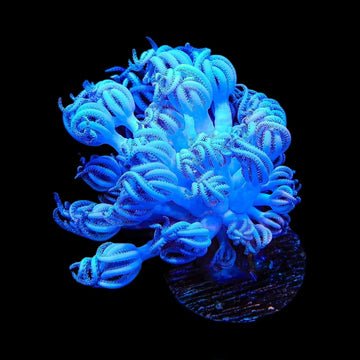
JF Sunkist Bounce Mushroom Coral
Overview
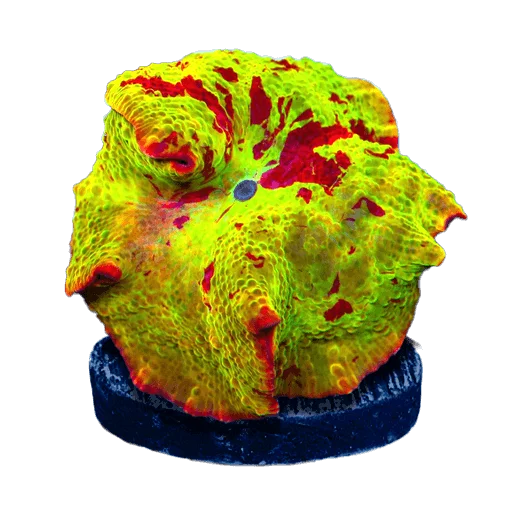
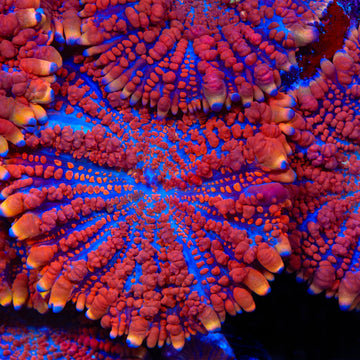
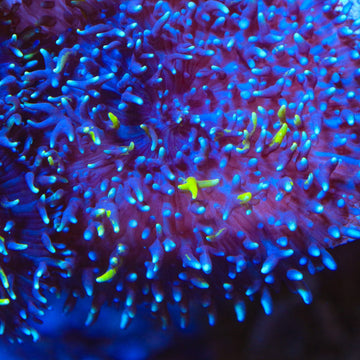
JF Sunkist Bounce Mushroom Coral shows bright orange bubble-like vesicles on a fleshy disk. Rhodactis sp., a soft corallimorph (mushroom coral), prefers low to moderate light and low to moderate, indirect flow. It is photosynthetic with symbiotic algae and can take occasional small meaty foods, which can support faster growth and fuller bubbles. Place on stable rock with room to expand, and keep distance from other corals it may sting or overgrow.
Quick Facts
Care
Moderate
Lighting
Low–Moderate
Flow
Low–Moderate
Placement
Low–Mid
Temperament
Semi-aggressive (3–6 inches spacing)
Recommended Parameters
Temp
76–80°F
pH
8.1–8.4
Salinity
1.025–1.026
Calcium
380–430 ppm
AlkAlkalinity
8–9 dKH
Magnesium
1250–1350 ppm
Feeding
photosynthetic (primary), microplankton, zooplankton, finely chopped mysis shrimp, brine shrimp, finely minced marine seafood, powdered coral foods, marine snow
Care & Placement
FAQ
Frequently Asked Questions
About the JF Sunkist Bounce Mushroom Coral
-
Why do the “bounce” vesicles on my JF Sunkist shrink or stop inflating?
Most often it’s excess light or flow, or a system that’s too lean. Aim for low–moderate PAR (50–120), gentler, indirect flow, and a slightly “dirty” tank (detectable nitrate/phosphate). Blue-heavy spectrum promotes color and vesicle size; strong white can flatten the bubbles. Avoid rapid parameter swings, and don’t starve it—occasional small-particle feeds help. Improvements can take weeks. -
My Sunkist is bleaching at the edges while the center looks fine—what’s going on?
This “halo” fade often follows abrupt light increases. Rhodactis tissue at the rim is most exposed and can blanch first. Reduce intensity or add shading mesh, extend photoperiod changes gradually, and boost nutrition. Maintain stable alkalinity and trace levels (including iodide at NSW range). Tissue typically recolonizes the margin once stressors are removed. -
The polyp keeps loosening its grip and “wandering.” How do I get it to attach?
Provide a rough, porous surface in a cup or basket with rubble, low flow, and minimal light. A loose mesh or bridal-veil wrap keeps contact without smothering. Avoid high PAR during attachment. Once the foot lays down new fibers, gradually increase light and flow. If it detaches repeatedly, reassess light intensity and nearby chemical competition. -
Are there compatibility concerns unique to this morph compared to other mushrooms?
It’s less aggressive than many LPS but can still irritate neighbors by slow encroachment and occasional sweeper-like filaments. Keep space around it; avoid direct contact with acros and fleshy LPS. Persistent clownfish attention can deform vesicles. Vermetid snails and hydroids nearby can trigger retraction; remove them. Carbon and regular water changes help manage soft coral allelopathy.