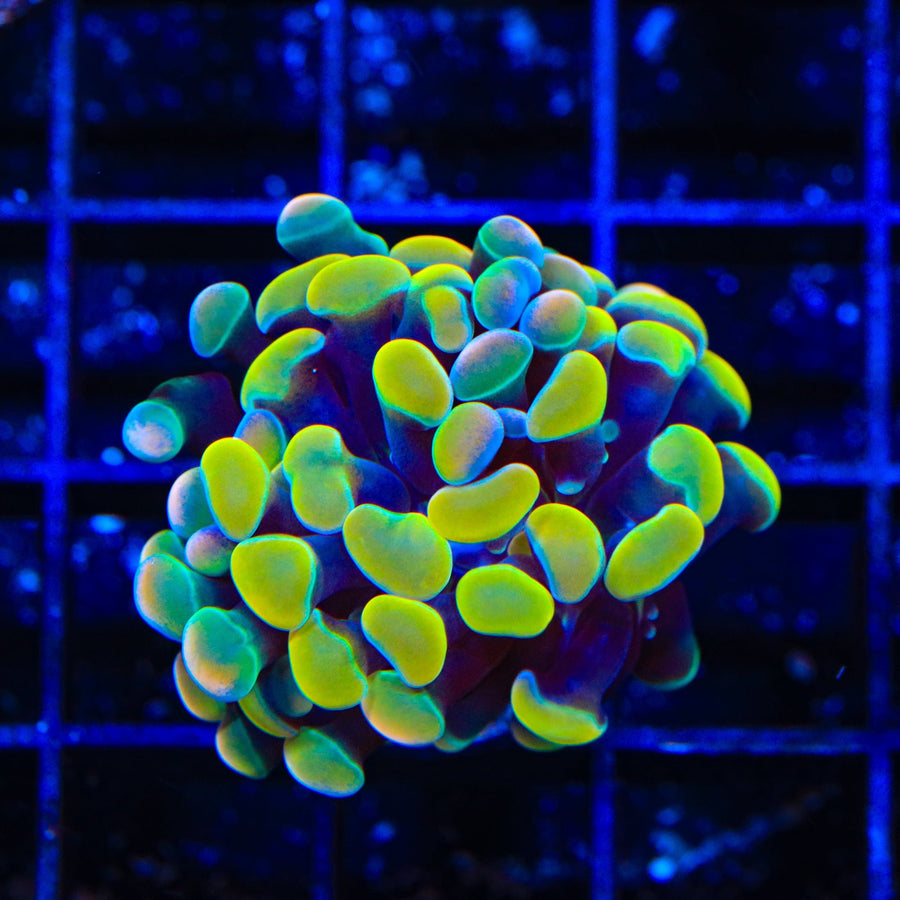
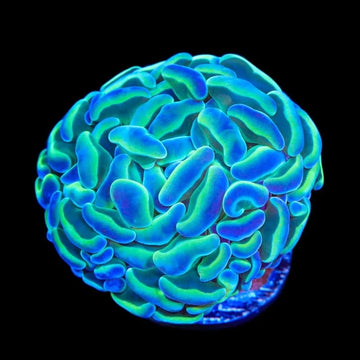
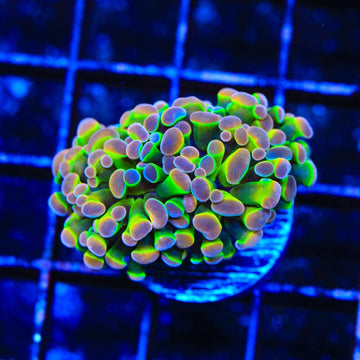
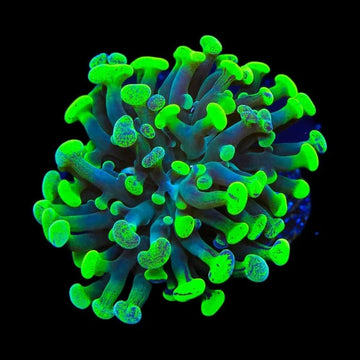
Gold Rainbow Hammer Coral
Overview
Gold Rainbow Hammer Coral features fleshy, branching heads with hammer-shaped tips showing gold and multicolor hues. Scientifically Fimbriaphyllia paraancora, it is a branching LPS coral; keep under moderate light and gentle to moderate, indirect flow. It relies on symbiotic algae for most nutrition but benefits from occasional small meaty feedings, which can improve growth and color. Give it ample space from neighbors due to stinging sweeper tentacles, and place where the polyps can sway without being blasted by flow.
Quick Facts
Care
Moderate
Lighting
Moderate
Flow
Moderate, indirect
Placement
Mid–Low
Temperament
Aggressive (6–8 inches spacing)
Recommended Parameters
Temp
76–80°F
pH
8.1–8.4
Salinity
1.025–1.026
Calcium
400–450 ppm
AlkAlkalinity
8–10 dKH
Magnesium
1250–1350 ppm
Feeding
photosynthetic (primary), mysis shrimp, enriched brine shrimp, finely chopped shrimp or clam, zooplankton, microplankton, LPS pellet foods, coral-specific particulate foods
Care & Placement
FAQ
Frequently Asked Questions
About the Gold Rainbow Hammer Coral
-
Why does my Gold Rainbow Hammer (Fimbriaphyllia paraancora) lose its gold hues over time?
Gold tones often wash out under very bright, white-heavy light. Aim for moderate PAR (80–150) with a blue-leaning spectrum to retain warmth and rainbow tips. Keep nutrients non-zero (NO3 2–10 ppm, PO4 0.03–0.1) and stable alkalinity (8–9 dKH). Rapid swings or ultra-low nutrients stress pigments. Gradually acclimate to any lighting changes over 2–3 weeks. -
How can I safely propagate this branching hammer without causing tissue recession?
Only cut true branches, leaving a margin of bare skeleton below flesh. Use bone cutters or a band saw, wear eye protection, and follow with an iodine or antiseptic dip. Place frags in low-to-moderate flow to prevent tearing and allow a slime coat to form. Avoid cutting stressed colonies or during active recession, which increases brown jelly risk. -
My hammer retracts in moderate flow but droops in low flow. What’s the sweet spot?
Target a gentle, indirect, rolling movement of the tentacles—enough to prevent detritus settling without collapsing polyps. Point pumps past, not at, the colony. If flesh contacts sharp skeleton or sways violently, reduce flow or redirect. If detritus collects at the base or tissue looks “puffy” and stagnant, slightly increase flow. -
Can I place it near torches or frogspawn to create a mixed Euphyllia garden?
Keep good spacing. Hammers generally cohabit with other hammers and many frogspawn, but torches often out-sting them and trigger slow recession. Provide several inches of clearance and consider alternating directions of flow to limit contact. Watch for nighttime extension and chemical warfare; activated carbon and regular water changes help if allelopathy signs appear.