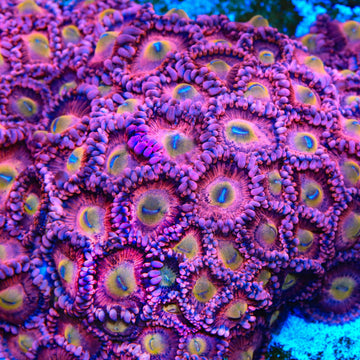
Jingle Bells Cyphastrea Coral
Overview
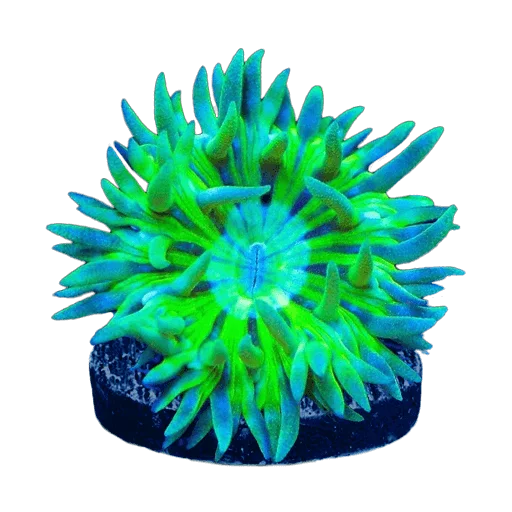
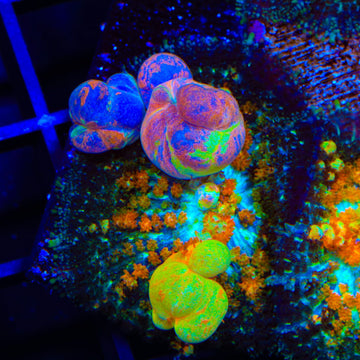
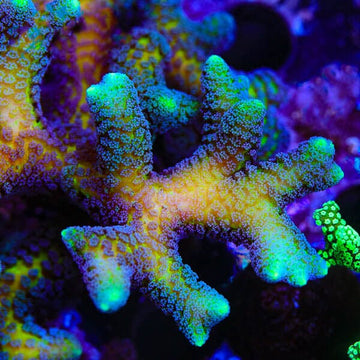
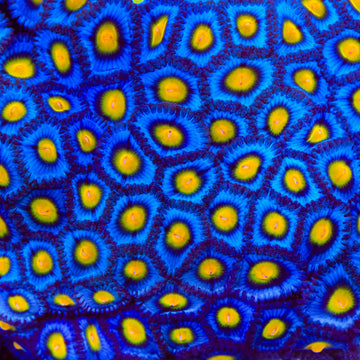
Jingle Bells Cyphastrea Coral forms a tight encrusting mat with small star-like polyps and contrasting polyp and base colors. Cyphastrea sp. Coral is an encrusting small-polyp stony coral that prefers low to moderate light and gentle to moderate, indirect flow. It is photosynthetic via symbiotic algae but will take very small meaty foods or powdered coral foods, which can improve growth and color. Mount on stable rockwork with space to encrust and keep clear of aggressive stingers; avoid shading it under fast-growing corals.
Quick Facts
Care
Easy
Lighting
Low–Moderate
Flow
Moderate, indirect
Placement
Low–Mid
Temperament
Peaceful (2–3 inches spacing)
Recommended Parameters
Temp
76–80°F
pH
8.1–8.4
Salinity
1.025–1.026
Calcium
400–450 ppm
AlkAlkalinity
8–9.5 dKH
Magnesium
1280–1350 ppm
Feeding
photosynthetic (primary), microzooplankton, rotifers, copepods (Cyclops), baby brine shrimp, finely minced mysis, oyster eggs, powdered coral foods, marine snow
Care & Placement
FAQ
Frequently Asked Questions
About the Jingle Bells Cyphastrea Coral
-
Why does my Jingle Bells Cyphastrea lose its red-on-green contrast under bright lights?
This coral is a low-light encruster; excessive PAR washes pigments and pushes zooxanthellae density up, muting colors. Aim for 50–120 PAR with blue-heavy spectrum. Increase light slowly over weeks if needed. Keep nutrients non-starved (nitrate 5–15 ppm, phosphate 0.03–0.1). If faded, move to shade, stabilize alkalinity, and allow 2–4 weeks for recovery. -
Can it overgrow nearby corals even though it’s considered peaceful?
Yes—its short tentacles limit stinging, but the mat will steadily sheet over any surface it contacts, including slow SPS or zoas. Leave 1–2 inches of hardscape gap or use rubble “firebreaks.” Trim edges with bone cutters or a scalpel. Avoid placing fast-growing encrusters directly adjacent on the same plane. -
I’m seeing slow tissue recession from the base despite stable parameters—what’s the likely cause?
Cyphastrea often recedes after rapid alkalinity changes or sustained high flow blasting the rim, allowing biofilm and cyanobacteria to creep in. Verify daily alk swing <0.3 dKH, redirect flow to gentle, random patterns, and siphon detritus from the margin. A short iodine dip can help if bacterial, followed by low-light recovery. -
Will it encrust vertical surfaces like overflow boxes or the back glass?
Yes, given a glue “bridge.” Mount a small tile or epoxy patch, then attach the frag. It spreads readily across plastics and painted glass under low–moderate flow. Keep the lower edge clean to prevent detritus trapping. Periodically trim to protect equipment teeth and maintain access for cleaning.