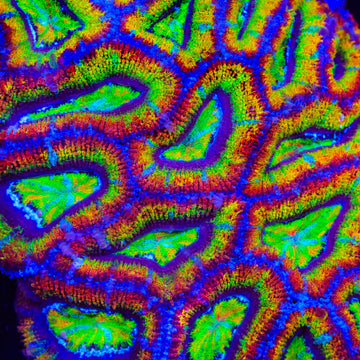
Bright Eye Micromussa Acan Coral
Overview
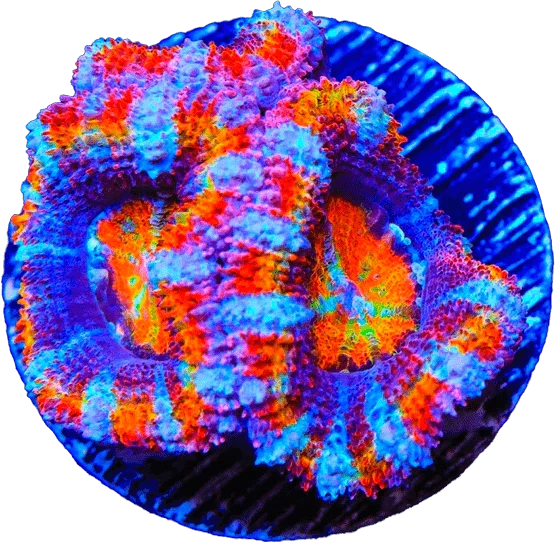
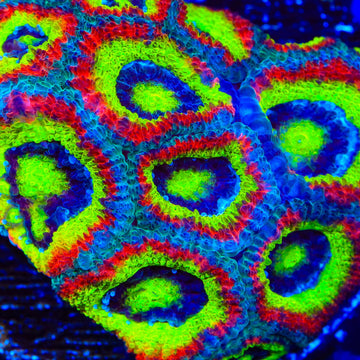
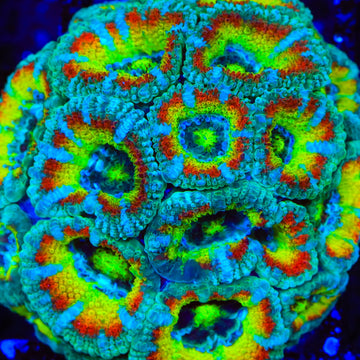
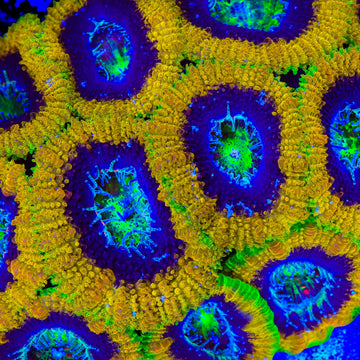
Bright Eye Micromussa Acan Coral shows fleshy, round polyps with prominent central mouths and ringed coloration. Micromussa lordhowensis is a stony, colony-forming LPS coral that prefers low to moderate light and gentle to moderate water flow. It relies on symbiotic algae but accepts small meaty foods, which can support growth and color stability. Place on stable rock with space, as its sweeper tentacles can sting nearby corals.
Quick Facts
Care
Moderate
Lighting
Low–Moderate
Flow
Moderate Indirect
Placement
Low–Mid
Temperament
Semi-aggressive (2–3 inches spacing)
Recommended Parameters
Temp
76–80°F
pH
8.1–8.4
Salinity
1.025–1.026
Calcium
400–450 ppm
AlkAlkalinity
8–9.5 dKH
Magnesium
1250–1350 ppm
Feeding
photosynthetic, mysis shrimp, enriched brine shrimp, chopped shrimp/clam, copepods, cyclops/calanus, rotifers, microplankton, powdered coral foods
Care & Placement
FAQ
Frequently Asked Questions
About the Bright Eye Micromussa Acan Coral
-
Why does my Bright Eye Micromussa inflate some days and stay tight on others?
M. lordhowensis shifts between feeding and protective postures. Gentle, indirect flow lets polyps inflate and extend feeders, while too much velocity keeps tissue tight. Normal diurnal cycles are fine, but persistent deflation often flags instability (especially alkalinity), pest irritation, or vermetid/snail stings. Check after lights out for feeder extension; adjust flow to a lazy sway and stabilize parameters to restore plumpness. -
My coral’s “bright eye” centers are fading. Is this a light issue or nutrients?
Usually both. Lords prefer moderate PAR (80–150) with strong blue/violet (420–450 nm). High white or sudden PAR spikes wash colors. Keep nutrients non-zero (NO3 ~5–15 ppm, PO4 ~0.03–0.1 ppm); ultra-lean systems pale tissue and centers. Gradually reduce PAR 15–20% and shift spectrum bluer. Target-feed small meaty foods 1–2x weekly to rebuild pigments. -
How close can I place it to other LPS if its sweepers are short?
Sweepers are short (often <2 cm) but potent. Lords can burn neighbors and even different Micromussa morphs. Allow 3–5 cm space minimum, more in variable flow. Watch for mesenterial filaments during skirmishes. Use carbon and regular water changes to temper chemical warfare. Colonies from the same mother often fuse; unrelated colonies typically fight at the boundary. -
I’m seeing slow tissue recession from the base upward. What causes it?
Common culprits are detritus trapped under the rim, vermetid snail irritation, or a shaded, stagnant base. Blast the underside with a turkey baster weekly, remove/neutralize vermetids, and ensure gentle flow reaches the skirt. If bacterial, perform an iodine dip and improve stability (alk 8–9 dKH). Rarely, severe stress triggers polyp bailout—stabilize conditions immediately to prevent it.