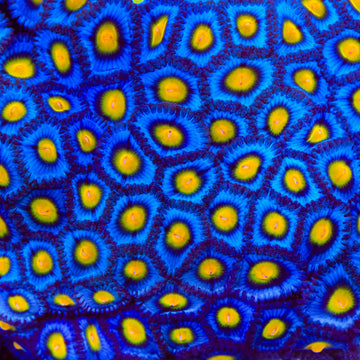
Armor of God Zoanthids Coral
Overview
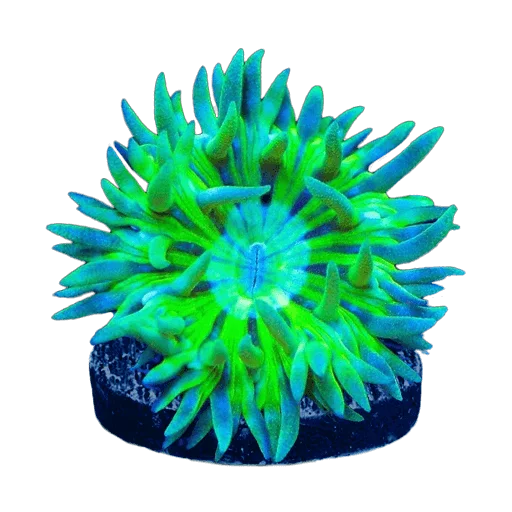
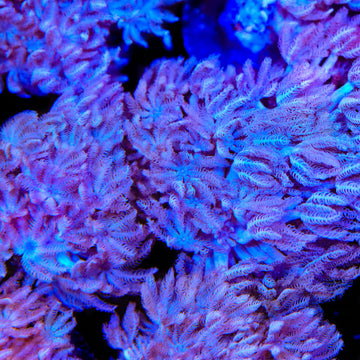
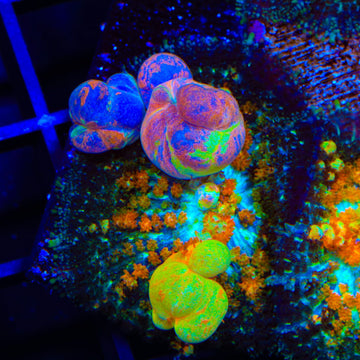
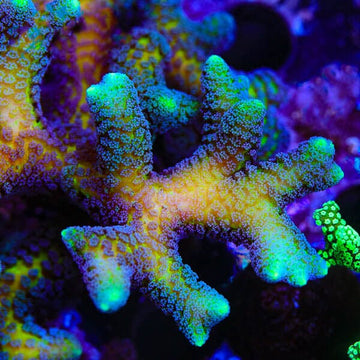
Armor of God Zoanthids Coral shows small button-like polyps with contrasting centers and short skirts. Zoanthus sp., a soft colonial polyp coral, does well under moderate light and gentle to moderate water flow. It is primarily photosynthetic with symbiotic algae, but occasional small meaty or planktonic foods can support faster growth and maintain color. Place on an isolated rock to manage spreading and keep space from aggressive neighbors.
Quick Facts
Care
Easy
Lighting
Low–Moderate
Flow
Moderate, indirect
Placement
Low–Mid
Temperament
Semi-aggressive (2–3 inches spacing)
Recommended Parameters
Temp
76–82°F
pH
8.1–8.4
Salinity
1.025–1.026
Calcium
400–450 ppm
AlkAlkalinity
8–10 dKH
Magnesium
1250–1350 ppm
Feeding
photosynthetic, microplankton, phytoplankton, zooplankton, rotifers, baby brine shrimp, powdered coral foods (e.g., Reef-Roids), marine snow
Care & Placement
FAQ
Frequently Asked Questions
About the Armor of God Zoanthids Coral
-
Why do my Armor of God Zoanthids shift from deep reds to duller tones under new lights?
This morph is highly spectrum-sensitive. Heavy blue/UV brings out the red/orange face and bright skirts, while whiter spectra wash them out. Keep PAR moderate (80–150) and avoid rapid intensity jumps—ramp over 2–3 weeks. Stable nutrients (nitrate 5–15 ppm, phosphate 0.03–0.1) maintain saturation; ultra-low nutrients drain color. A short photoperiod increase often helps more than cranking intensity. -
They’re open but not spreading—what slows mat growth on this morph?
Armor of God tends to pause growth when detritus accumulates at the mat edge. Increase random flow to keep the base clean, and turkey-baste weekly. Keep alkalinity stable (7.8–8.6 dKH) and avoid big swings after water changes. A small bump in nitrate from near-zero to 5–10 ppm often restarts budding. Check for low iodine; a modest, tested dose can help, but avoid blind dosing. -
How do I safely frag this morph without losing the pattern or causing “melt”?
Cut the mat between polyps, not through mouths. Use eye protection and gloves; Zoanthus can contain dangerous toxins. Make shallow, precise cuts on a clean board and rinse frags in fresh saltwater. Dip gently (low-strength povidone-iodine or a zoa-safe dip) for 2–3 minutes. Mount on clean plugs with gel glue, moderate flow, and lower light for a week. Stable nutrients prevent post-frag recession. -
My colony stays closed after lights-on, then opens late—what’s the likely cause?
This morph often reacts to pest activity at dawn. Inspect at night with a red light for zoa-eating nudibranchs, sundial snails, or spiders near the skirt. Remove manually and follow with targeted dips over 10–14 days to catch hatch cycles. Also check for shadowing by algae at the mat edge; a gentle brush and improved flow usually restore punctual polyp extension.