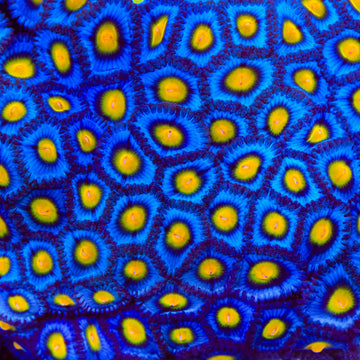
CB Rainbow Infusion Zoanthids Coral
Overview
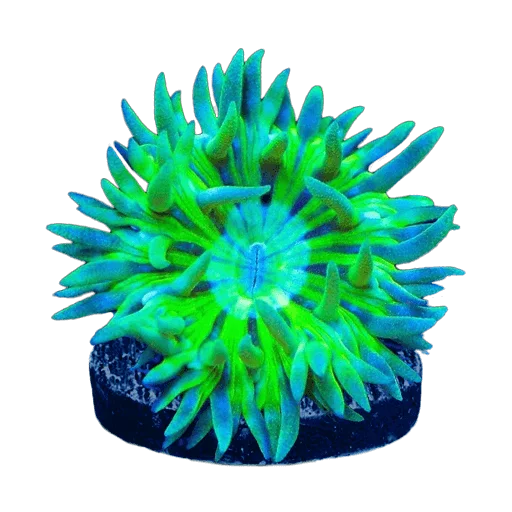
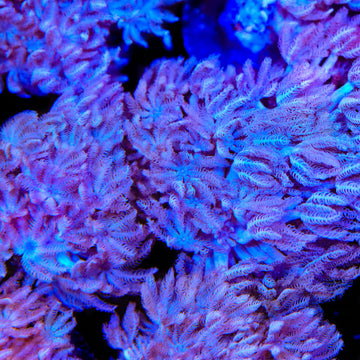
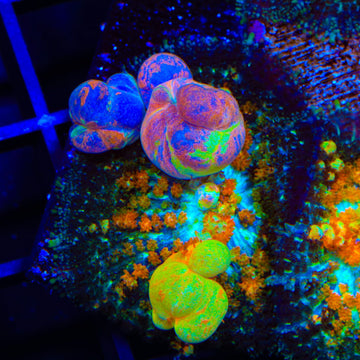
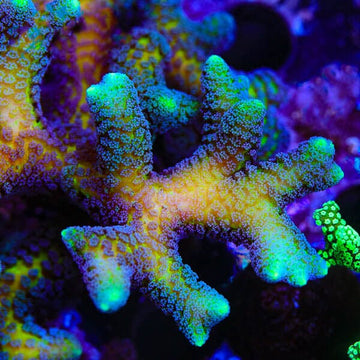
CB Rainbow Infusion Zoanthids Coral displays multi-colored polyps with bright centers and short fringe tentacles. Zoanthus sp., a soft colonial polyp, adapts well to moderate lighting and low to moderate water flow. It is photosynthetic through symbiotic algae, but occasional small particulate foods can support faster growth and maintain coloration. Place on an isolated rock to limit spreading and give space from stinging or fast-growing neighbors.
Quick Facts
Care
Easy
Lighting
Moderate
Flow
Moderate
Placement
Low–Mid
Temperament
Semi-aggressive (fast grower—allow 2–4 inches spacing)
Recommended Parameters
Temp
76–80°F
pH
8.1–8.4
Salinity
1.025–1.026
Calcium
400–440 ppm
AlkAlkalinity
8–9 dKH
Magnesium
1250–1350 ppm
Feeding
photosynthetic, microplankton, phytoplankton, zooplankton, rotifers, cyclops/copepods, oyster eggs, powdered coral foods (e.g., Reef-Roids), marine snow
Care & Placement
FAQ
Frequently Asked Questions
About the CB Rainbow Infusion Zoanthids Coral
-
Why do my CB Rainbow Infusion Zoanthids shift from rainbow to mostly green under new lights?
This morph is spectrum-sensitive. Heavy blue (420–460 nm) brings out reds/oranges, while strong white or very high PAR pushes green/brown zooxanthellae pigments. Target moderate PAR (80–150), reduce whites, and acclimate slowly. Keep nutrients non-zero (NO3 5–15 ppm, PO4 0.03–0.1) to prevent washing out. Stable trace elements (iodine, potassium) support vibrant skirts and centers. -
The colony is growing skirts long but polyps look stretched. What’s causing this?
That “umbrella” look usually means low flow and/or suboptimal spectrum. Increase random, moderate flow so polyps sway but don’t fold. Reassess PAR (often too low or too white). Check NO3/PO4 balance; ultra-low nutrients cause elongation and smaller heads. Verify alkalinity stability; big swings can distort growth and slow mat extension. -
How can I control overgrowth without hurting neighboring corals?
Mount the frag on an isolated rock “island” with a sand moat to slow mat creep. Trim the mat edge with a sharp scalpel; remove small strips rather than big chunks to reduce stress. Run fresh carbon and perform a water change afterward to address toxins. Avoid placing near slow LPS—zoas can crowd them over time. -
Polyps stay closed even though parameters look fine—what should I check next?
Inspect at night for zoa-eating nudibranchs and their egg spirals; also look for sundial snails and spiders. A gentle turkey baster blast can reveal pests. Try a targeted dip (iodine or coral-safe) and repeat in 5–7 days to break life cycles. Rule out chemical warfare—refresh carbon and increase water changes if nearby softies are thriving.