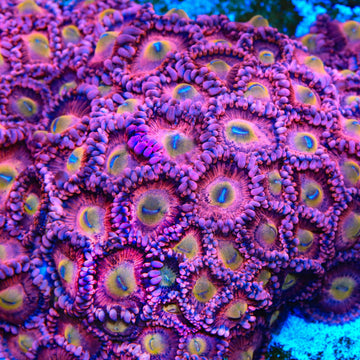
Anthelia Coral
Overview
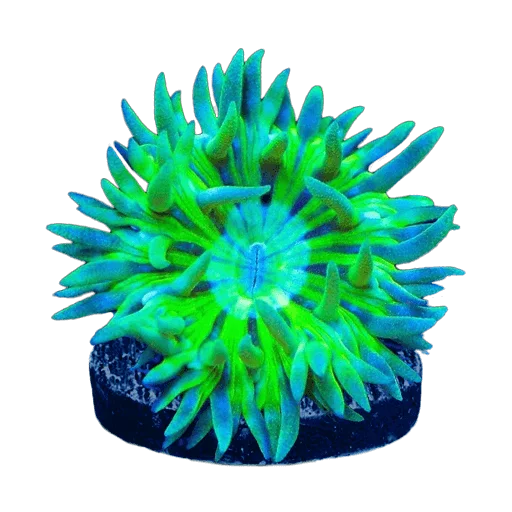
Anthelia Coral forms waving mats of soft, feathery polyps on a creeping base. Anthelia sp. is a soft, encrusting colonial coral that does best under moderate light and moderate to strong, indirect flow. It is primarily photosynthetic via symbiotic algae, but may accept fine particulate foods, which can support growth and fuller polyp extension. Place it on isolated rock to control spread, and keep space from aggressive or stinging neighbors.
Quick Facts
Care
Easy
Lighting
Moderate
Flow
Moderate, indirect
Placement
Low–Mid
Temperament
Semi-aggressive (rapid spread—maintain 4–6 inches spacing)
Recommended Parameters
Temp
76–80°F
pH
8.1–8.4
Salinity
1.025–1.026
Calcium
400–450 ppm
AlkAlkalinity
8–10 dKH
Magnesium
1250–1350 ppm
Feeding
photosynthetic (primary), phytoplankton, microplankton, marine snow, rotifers, copepod nauplii
Care & Placement
FAQ
Frequently Asked Questions
About the Anthelia Coral
-
Why did my Anthelia Coral suddenly shrink or “melt” after months of growth?
Rapid decline often follows instability or ultra-low nutrients. Check alkalinity swings, temperature spikes, and nitrate/phosphate bottoming out. Anthelia prefers stable parameters and a mildly “fed” system. Increase consistency, slightly raise nutrients, and run fresh carbon to counter chemical warfare from leathers. Inspect for pests and avoid large water chemistry corrections; recover with small, frequent adjustments. -
How can I prevent Anthelia from taking over rockwork?
Mount it on an isolated “island” rock with sand gaps around it. Regularly trim the advancing stolon with a razor and siphon fragments to stop reseeding. Aim moderate, variable flow at edges so new runners struggle to attach. If it climbs neighboring rock, scrape the mat down to bare surface; repeat weekly until it stops returning. -
Does Anthelia pulse like Xenia?
Some Anthelia strains show subtle or no pulsing. Weak pulsing can appear under moderate flow and steady nutrients, but it’s not a reliable trait. Don’t chase pulsing by starving the tank or cutting flow; prioritize stability, moderate light, and good water movement that keeps polyps swaying without pinning them closed. -
What’s a reliable way to frag Anthelia without losing pieces in the tank?
Cut a section of the mat with a sharp blade, place it on rubble, and secure with bridal veil mesh or a loose rubber band. Alternatively, set rubble and the fragment in a shallow cup in low–moderate flow for a week. Avoid glue on soft tissue. Once attached, move to higher flow to prevent detritus buildup.