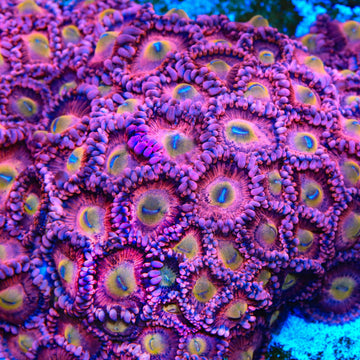
ACI Sunrise Cyphastrea Coral
Overview
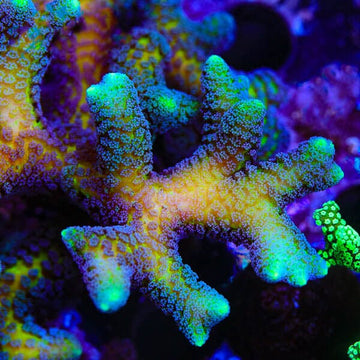
ACI Sunrise Cyphastrea Coral features an encrusting surface with small star-like polyps over a warm orange to yellow base. Cyphastrea sp. is an encrusting small-polyp stony coral suited to low to moderate light and gentle to moderate water flow. It is photosynthetic with symbiotic algae but accepts occasional small particulate foods to support growth and maintain color. Mount on stable rock with space to expand, and keep distance from aggressive stony corals to prevent tissue damage.
Quick Facts
Care
Easy
Lighting
Low–Moderate
Flow
Low-Moderate
Placement
Low–Mid
Temperament
Peaceful (2–3 inches spacing)
Recommended Parameters
Temp
76–80°F
pH
8.1–8.4
Salinity
1.025–1.026
Calcium
400–450 ppm
AlkAlkalinity
8–9 dKH
Magnesium
1280–1350 ppm
Feeding
photosynthetic (primary), microplankton, rotifers, cyclops/Calanus, oyster eggs, reef roids/powdered coral foods, baby brine shrimp nauplii
Care & Placement
FAQ
Frequently Asked Questions
About the ACI Sunrise Cyphastrea Coral
-
Why does my ACI Sunrise Cyphastrea fade or brown under strong lighting when other SPS thrive?
Cyphastrea prefers lower PAR (about 60–120). High intensity or too much red/white can wash the blue/purple base and mute the yellow/orange polyps. Light-acclimate from shaded spots, extend blue spectrum, and keep nutrients non-zero (NO3 5–15 ppm, PO4 0.03–0.1). If edges pale first, reduce PAR and increase indirect flow to prevent film buildup. -
The encrusting edge is receding while polyps look fine—what’s the likely cause?
Receding margins often stem from alkalinity swings, sand abrasion, or detritus/cyano smothering the growth rim. Keep alk stable (8–9 dKH), redirect gentle, indirect flow across the base, and lift the colony off sanded areas. Check for vermetid snails or spirorbid worms irritating tissue; removing them typically restores spread. -
How can I keep the vivid “sunrise” contrast long-term?
Maintain moderate PAR heavy in blue, stable parameters, and slightly “fed” water. Ultra-low nutrients can desaturate the warm polyps; modest nitrate/phosphate preserves color. Avoid elevated temperatures and rapid changes. Target-feed fine particulate foods after lights dim when polyps extend, 1–2x weekly, to support tissue without driving algae. -
Best placement to manage its encrusting growth without it overrunning neighbors?
Mount on isolated islands, vertical walls, or magnetic tiles to direct growth. Cyphastrea’s sting is mild and can be outcompeted or stung by aggressive LPS, so give a buffer from favias, euphyllia, and palythoa. Epoxy micro-barriers help contain the rim. Regularly trim with bone cutters where it approaches other corals.