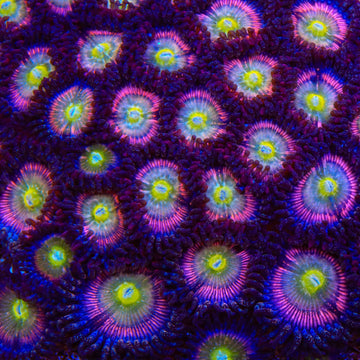
Grand Master Krak Zoanthids Coral
Overview
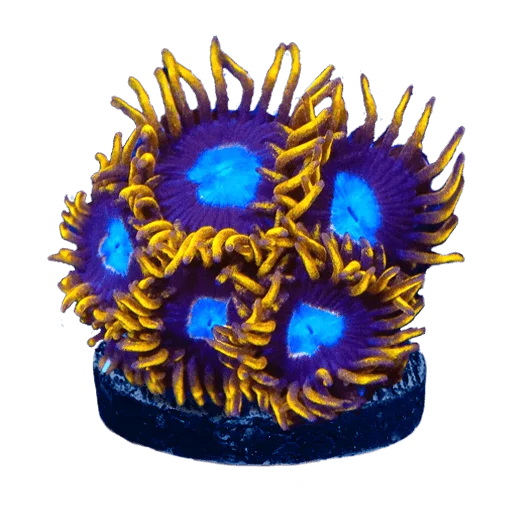
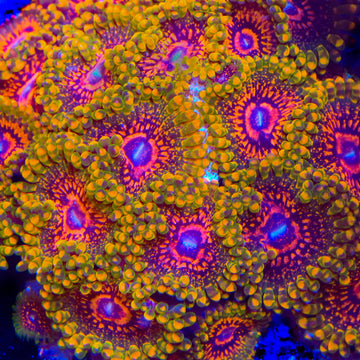
Grand Master Krak Zoanthids Coral shows large, contrasting polyps with orange centers and green, frilled skirts. Zoanthus sp., a soft colonial polyp, does well under moderate light and low to moderate water flow. It is photosynthetic via symbiotic algae but also accepts occasional small particulate or meaty foods to support growth and color. Place on an isolated rock to control spread, give space from slower corals, and handle with care due to potential toxins.
Quick Facts
Care
Moderate
Lighting
Moderate
Flow
Moderate, indirect
Placement
Low–Mid
Temperament
Semi-aggressive (2–3 inches spacing)
Recommended Parameters
Temp
76–82°F
pH
8.1–8.4
Salinity
1.025–1.026
Calcium
380–450 ppm
AlkAlkalinity
8–10 dKH
Magnesium
1250–1350 ppm
Feeding
photosynthetic, microplankton, phytoplankton, zooplankton, rotifers, copepods, marine snow, powdered coral foods (e.g., Reef-Roids), finely minced meaty foods
Care & Placement
FAQ
Frequently Asked Questions
About the Grand Master Krak Zoanthids Coral
-
How do I keep Grand Master Krak colors from shifting or washing out under LEDs?
Aim for moderate PAR (80–150) with blue-heavy spectrum (royal blue/violet) and limited cool whites. Acclimate slowly to new lights. Keep nutrients non-zero (nitrate 5–15 ppm, phosphate 0.03–0.1 ppm) and alkalinity stable. Excessive light or ultra-low nutrients often push greens to dominate and mute the orange/pink rings. Stable salinity and temperature further support pigment stability. -
Why do my Grand Master Kraks “melt” while other Zoanthus sp. are fine?
This morph is touchy about swings and pests. Check for zoa-eating nudibranchs, spiders, and sundial snails; inspect at night and dip new additions. Address bacterial issues (iodine-based dips) and run fresh carbon to reduce allelopathy from LPS/soft corals. Increase but don’t blast flow to keep detritus off. Avoid rapid Alk/salinity changes and big light jumps. -
My GMKs are stretching with long skirts and tiny centers—what’s the fix?
That often signals low light or shaded placement. Increase PAR gradually or move them to a brighter, still blue-leaning zone. Ensure random, moderate flow; too little allows detritus to settle, too much keeps polyps tight. Check for film algae on the mat and nibbling pests. Occasional fine particulate foods can help bulk up tissue once conditions are corrected. -
Will Grand Master Kraks overrun rockwork or lose ground to neighbors?
Growth is moderate compared to common zoas, so they rarely run rampant, but an isolated “island” rock makes control easy. Keep distance from aggressive LPS (favia, galaxea, torches) and anemones that can burn polyps. They tolerate soft coral zones better when carbon is used and flow is adequate. Trim mats periodically to prevent under-rock creep.