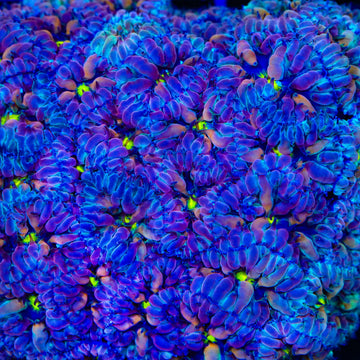
Hot Ring Blastomussa Coral
Overview
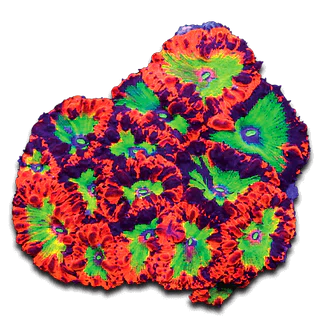
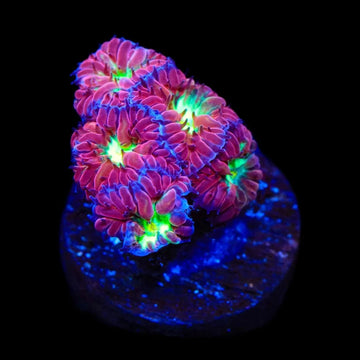
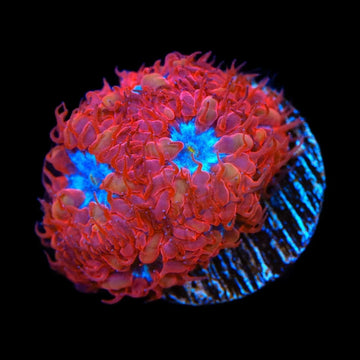
Hot Ring Blastomussa Coral shows fleshy, round polyps with bright ringed mouths. Blastomussa wellsi is a large-polyp stony coral forming clustered heads; it prefers moderate light and gentle to moderate water flow. It is photosynthetic with symbiotic algae but benefits from occasional small meaty foods, which can support faster growth and stronger color. Place on stable rock or sand with space around it, as feeder tentacles can sting nearby corals.
Quick Facts
Care
Moderate
Lighting
Low–Moderate
Flow
Low–Moderate
Placement
Low–Mid
Temperament
Peaceful (2–3 inches spacing)
Recommended Parameters
Temp
76–80°F
pH
8.1–8.4
Salinity
1.025–1.026
Calcium
400–450 ppm
AlkAlkalinity
8–9 dKH
Magnesium
1250–1350 ppm
Feeding
photosynthetic, mysis shrimp, enriched brine shrimp, finely chopped marine meat, zooplankton, microplankton, Cyclops/Calanus, reef-specific powdered coral foods
Care & Placement
FAQ
Frequently Asked Questions
About the Hot Ring Blastomussa Coral
-
Why does my Hot Ring Blastomussa lose its vivid ring colors over time even with good nutrients?
B. wellsi often comes from deeper, blue-leaning habitats. Excess white intensity or sudden PAR increases can wash pigments. Shift placement to lower light or slightly shaded areas, and run a bluer spectrum (14–20K). Increase intensity gradually over 2–3 weeks. Maintain stable alk (8–9 dKH) and detectable PO4/NO3. Target-feed small meaty foods at night to support pigment recovery. -
My colony is inflating but not adding new heads—am I missing something?
Large, puffy heads don’t always indicate rapid skeletal growth. B. wellsi buds from the skeleton’s margins and between septa, which is slow. Ensure gentle, indirect flow so tissue isn’t abraded, keep stable alkalinity and calcium, and feed 1–2x weekly. Avoid frequent moves; consistency drives budding. Watch for baby mouths forming at the base—a better growth cue than inflation. -
What causes sudden tissue recession on one or two heads while others look fine?
Local irritation is common: laminar flow blasting a single polyp, vermetid snail webs, sand abrasion from burrowers, or stings from nearby LPS. Check for hidden pests and redirect flow to be diffuse. If recession advances, frag away healthy heads with a clean diamond saw and iodine dip the cut. Tighten salinity stability and avoid big alk corrections during recovery. -
Are Blastomussa wellsi aggressive, and what should I keep at a distance?
They have short sweepers and are generally mild, but can be damaged by torches, favias, and certain chalices. Give a few inches of space and avoid direct flow that could carry nematocyst threads onto the tissue. Keep sand-sifters that kick grit (e.g., some wrasses, gobies) from burying the mantle. Avoid clownfish “hosting,” which can cause chronic irritation to fleshy heads.