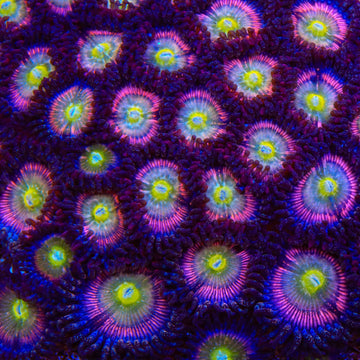
Circus Freak Zoanthids Coral
Overview
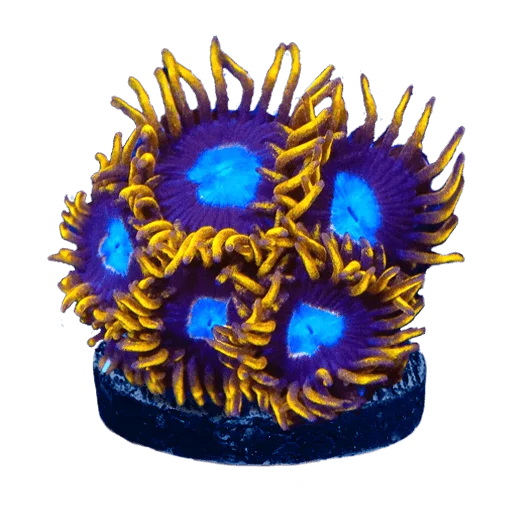
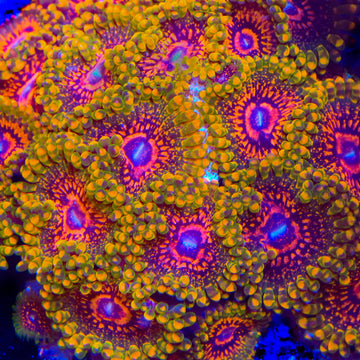
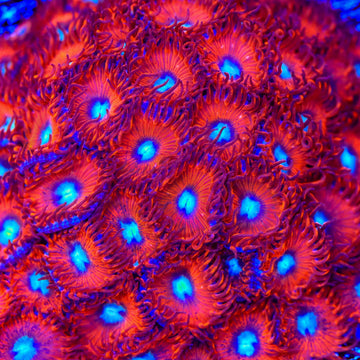
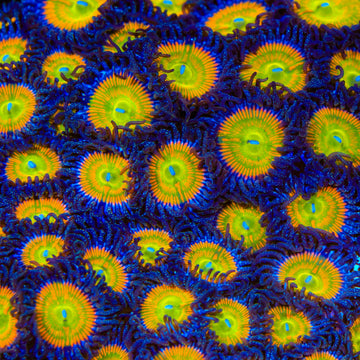
Circus Freak Zoanthids Coral features small button polyps with patterned centers and contrasting skirts. Zoanthus sp., a colonial soft polyp coral, does well under moderate light and moderate to low water flow. It is primarily photosynthetic with symbiotic algae, but will accept occasional small meaty foods; supplemental feeding can speed growth and intensify color. Place on isolated rock to manage spreading and keep space from aggressive corals.
Quick Facts
Care
Easy
Lighting
Moderate
Flow
Moderate indirect
Placement
Mid–Low
Temperament
Peaceful to semi-aggressive (2–3 inches spacing)
Recommended Parameters
Temp
76–82°F
pH
8.1–8.4
Salinity
1.025–1.026
Calcium
380–430 ppm
AlkAlkalinity
8–10 dKH
Magnesium
1250–1350 ppm
Feeding
photosynthetic (primary), microplankton, phytoplankton, zooplankton, rotifers, cyclops, powdered coral foods, reef roids, marine snow
Care & Placement
FAQ
Frequently Asked Questions
About the Circus Freak Zoanthids Coral
-
Why do my Circus Freak Zoanthids stretch tall or shrink close to the rock within days?
Rapid polyp “posture” changes usually reflect light and flow shifts. Tall, skinny stalks suggest chasing light; tight, compact skirts indicate enough PAR or too much flow. Aim for moderate, indirect flow and ~80–150 PAR. Ramp LEDs slowly after acclimation. If colors dull or skirts fray, reduce white channels and boost blues; if brown film builds, increase flow and export nutrients. -
My colony stopped spreading despite stable parameters—what hidden factors slow Zoanthus sp. growth?
Subtle chemical warfare and ultra-low nutrients often stall mats. Run fresh carbon and keep NO3 ~5–15 ppm, PO4 ~0.03–0.1 ppm. Space them 2–3 inches from leathers or palys. Remove film algae at the base with a soft brush. Target feed fine foods weekly to encourage new polyps, and maintain alk stability to avoid mid-mat recession. -
How do I keep the bold rings and fluorescence on the Circus Freak morph?
This morph holds color best under blue-heavy spectrum with moderate PAR. Increase blues/violets (420–470 nm) while keeping whites modest; sudden high white can wash reds/oranges. Keep iodine and trace within normal reef ranges via water changes. Avoid prolonged high nutrients that mute rings; equally, don’t strip nutrients to zero, which leads to pale skirts and poor growth. -
Which pests target Circus Freak Zoanthids, and how do I confirm and treat without over-dipping?
Watch for zoa-eating nudibranchs, sundial snails, and spiders; inspect at night with a red light. Look for eggs on mat undersides. Use a focused approach: manual removal, a gentle iodine dip, and a turkey baster to dislodge pests. Repeat every few days through a full egg cycle. Avoid harsh, long dips that can trigger polyp shutdown or bacterial issues.