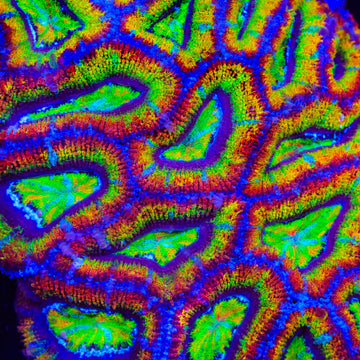
Deep Water Acan Coral
Overview
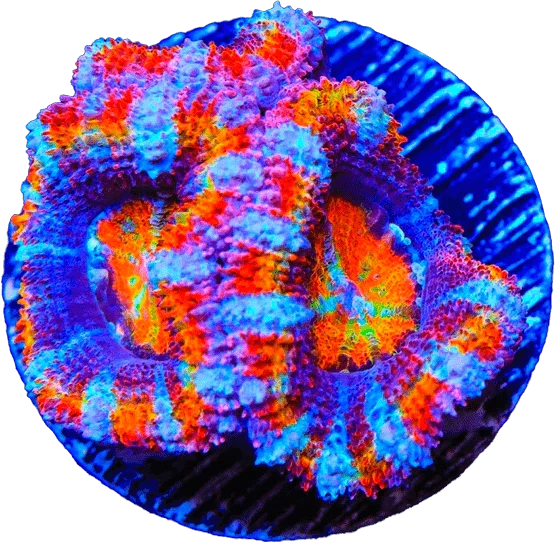
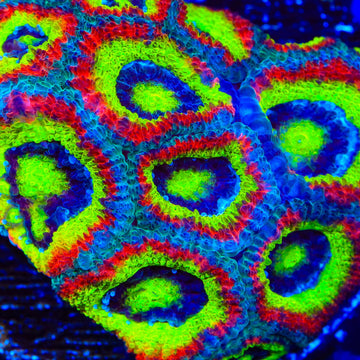
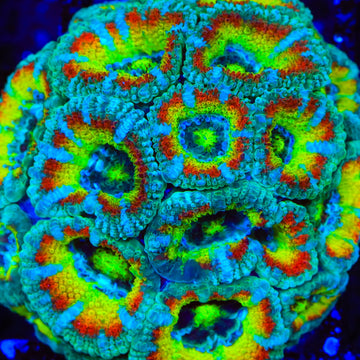
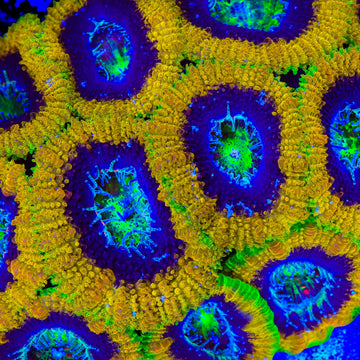
Deep Water Acan Coral shows thick, fleshy polyps with raised ridges and contrasting ringed mouths. Scientifically Micromussa amakusensis, it is a small-polyp stony coral forming low, encrusting colonies; it prefers low to moderate light and gentle to moderate water flow. It is photosynthetic via symbiotic algae but accepts small meaty foods, which can speed growth and deepen color. Place on stable rock with space from neighbors, as short sweeper tentacles can sting nearby corals.
Quick Facts
Care
Moderate
Lighting
Low–Moderate
Flow
Low–Moderate
Placement
Low–Mid
Temperament
Semi-aggressive (2–3 inches spacing)
Recommended Parameters
Temp
76–80°F
pH
8.1–8.4
Salinity
1.025–1.026
Calcium
400–450 ppm
AlkAlkalinity
7.5–8.5 dKH
Magnesium
1250–1350 ppm
Feeding
photosynthetic, mysis shrimp, enriched brine shrimp, copepods, zooplankton, microplankton, finely minced seafood (shrimp, clam, fish), powdered coral foods (e.g., Reef-Roids)
Care & Placement
FAQ
Frequently Asked Questions
About the Deep Water Acan Coral
-
How is Deep Water Acan Coral different from the common Acan Lord?
Micromussa amakusensis has tighter, smaller corallites and thinner tissue, giving it a more “micro-lobe” look. It prefers dimmer light (PAR ~50–90) and gentle, indirect flow, grows more slowly, and reacts poorly to rapid lighting changes compared with M. lordhowensis. Expect shorter sweepers but surprisingly strong sting. It often colors best under heavy blue spectrum at low PAR with stable, moderate nutrients. -
My polyps stay deflated even in low light—what’s the likely cause?
Persistent deflation usually points to stress from flow that’s too direct, recent alkalinity or temperature swings, vermetid snail webs, or light that’s still stronger than it seems. Shade the colony, redirect flow to be diffuse, and target-feed after lights dim to stimulate expansion. Aim for NO3 5–15 ppm and PO4 0.03–0.1 ppm. Inspect at night for pests and consider an iodine dip if tissue looks irritated. -
How can I maintain rich coloration without bleaching or browning?
Keep PAR modest (50–90) with a blue-heavy spectrum and acclimate changes over weeks. Target moderate nutrients rather than “ultra-clean” water. Stabilize salinity and alkalinity; swings fade colors. If paling, reduce light and increase feeding frequency slightly. If browning, improve gas exchange, check PO4 isn’t creeping high, and verify flow is gentle but prevents detritus from settling on the tissue. -
Does it need extra space from neighbors despite short sweepers?
Yes. Give 5–8 cm clearance; at night it can still sting nearby flesh. It’s also easily irritated by long-sweeper corals (e.g., Euphyllia) and vermetid webs. Place it on stable rock with diffuse flow so mucous and food aren’t blasted off. On sandbeds, ensure clean, fine substrate; grains trapped under the rim can start recession. Feed small meaty foods at dusk to keep neighbors less attractive.