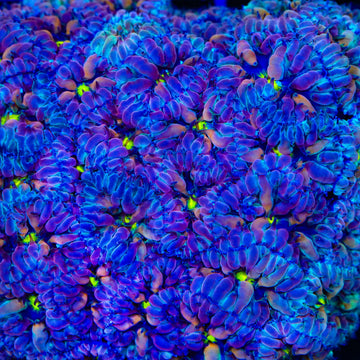
Cherry Pie Blastomussa Coral
Overview
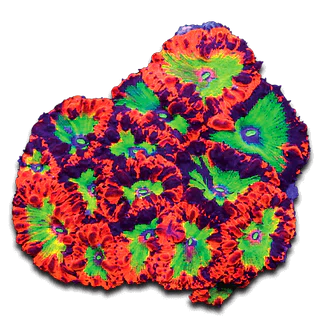
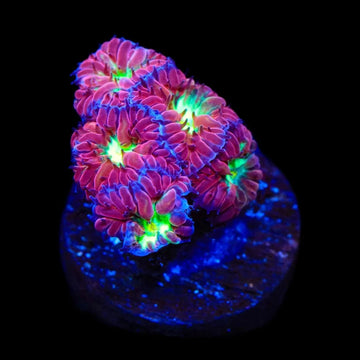
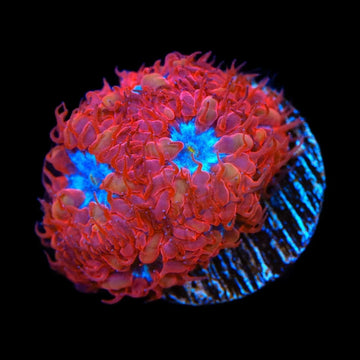
Cherry Pie Blastomussa Coral features fleshy, round polyps with bright red and green centers. Blastomussa wellsi is a large-polyp stony coral that forms clustered heads; it prefers low to moderate light and gentle to moderate water flow. It is photosynthetic via symbiotic algae but benefits from occasional small meaty foods, which can improve growth and coloration. Place on stable rock or sand with space around it, as its sweeper tentacles can sting nearby corals.
Quick Facts
Care
Moderate
Lighting
Low–Moderate
Flow
Low–Moderate
Placement
Low–Mid
Temperament
Peaceful (2–3 inches spacing)
Recommended Parameters
Temp
76–80°F
pH
8.1–8.4
Salinity
1.025–1.026
Calcium
400–450 ppm
AlkAlkalinity
8–9 dKH
Magnesium
1280–1350 ppm
Feeding
photosynthetic, mysis shrimp, enriched brine shrimp, finely chopped seafood (clam, krill), zooplankton, microplankton, coral-specific powdered foods
Care & Placement
FAQ
Frequently Asked Questions
About the Cherry Pie Blastomussa Coral
-
My Cherry Pie Blastomussa deflates during the day and swells at night—normal or a warning sign?
Moderate day deflation is normal as polyps manage light and flow; they often swell after lights dim to feed. If tissue stays shrunken for days, check for excess PAR (>120), direct flow, or alkalinity swings. Aim for low–moderate light (50–120 PAR), gentle indirect flow, stable alk 8–9 dKH, and target feed small meaty foods at dusk to encourage recovery. -
How do I keep the vivid cherry-red coloration from washing out?
This morph holds best color under blue-heavy spectrum, moderate PAR, and non-starved nutrients. Avoid ultra-low nutrients; keep nitrate 5–15 ppm, phosphate 0.03–0.1 ppm. Too much white light or sudden nutrient drops can push browning or green shift. Maintain iodine and trace via regular water changes, and shield from direct high intensity to prevent bleaching of red pigments. -
The heads look fine but the edges are receding—what’s usually to blame?
Edge recession often traces to chronic irritation or instability: vermetid snail webs, sand abrasion, direct laminar flow, or alk swings. Inspect for vermetids and filamentous worms; manually remove or glue over offenders. Redirect flow to be diffuse. Keep alk swings under 0.3 dKH/day. If tissue is sloughing, siphon debris, dip in iodine, and increase gentle aeration/flow to deter bacterial buildup. -
Is sandbed placement better than rockwork for growth and feeding?
Sandbed suits B. wellsi if clean and low flow; it reduces shadowing and makes target feeding easier. Use a small tile or disc under the colony to prevent sand abrasion and detritus packing. On rock, choose a sheltered ledge with indirect flow. In both cases, guard feedings from shrimp with a dome, and rotate placement slightly if you notice chronic tissue rubbing or sediment accumulation.