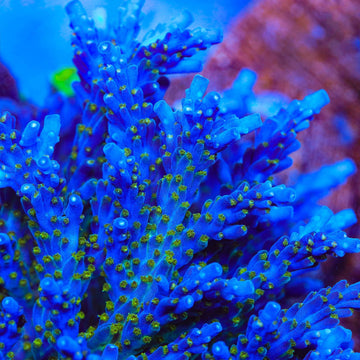
ASD Rainbow Millepora Acropora Coral
Overview
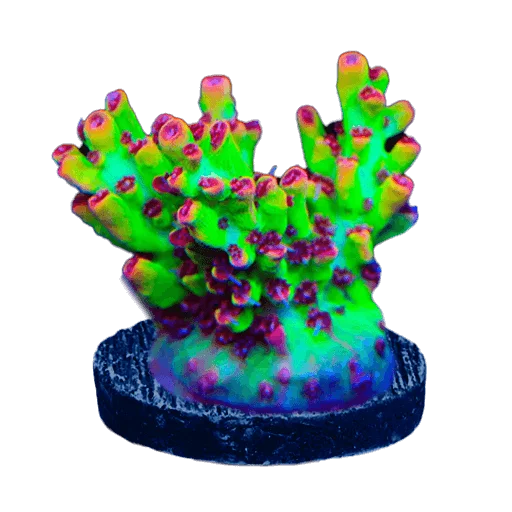
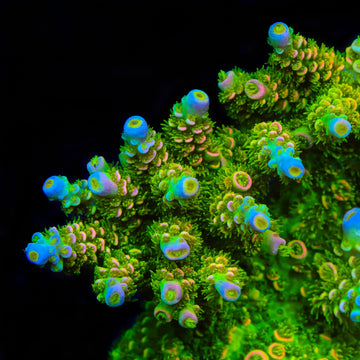
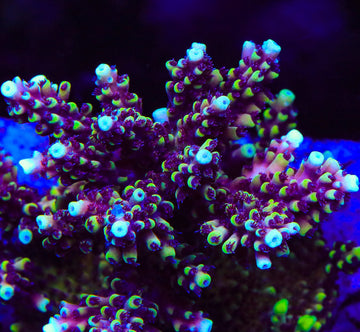
ASD Rainbow Millepora Acropora Coral shows densely packed, spiky branchlets with multicolor tips. Acropora millepora is a branching stony coral that forms compact colonies; it prefers strong lighting and high, turbulent water flow. It is photosynthetic through symbiotic algae but benefits from occasional small-particle foods, which can support growth and color. Place high on stable rock with ample space from aggressive neighbors, and maintain pristine, stable water to avoid tissue loss.
Quick Facts
Care
Difficult
Lighting
High–Very High
Flow
High
Placement
High
Temperament
Peaceful (weak sting; allow moderate spacing)
Recommended Parameters
Temp
76–80°F
pH
8.1–8.4
Salinity
1.025–1.026
Calcium
400–450 ppm
AlkAlkalinity
7–9 dKH
Magnesium
1280–1350 ppm
Feeding
photosynthetic, microplankton, rotifers, copepod nauplii, oyster eggs, coral-specific micro foods, amino acids
Care & Placement
FAQ
Frequently Asked Questions
About the ASD Rainbow Millepora Acropora Coral
-
Why does my ASD Rainbow Millepora change colors under different lighting and nutrients?
A. millepora expresses multiple pigments; blue-heavy spectrum (14–20K) tends to bring out pinks, reds, and blues, while excess white/green can wash them out. Keep nitrate around 5–15 ppm and phosphate 0.03–0.08 ppm; ultra-low nutrients often mute reds and cause pastel tips. Acclimate to 250–400 PAR and avoid sudden jumps. Stable alkalinity (7.5–8.5 dKH) and strong, random flow support vibrant, stable coloration. -
My millepora shows great polyp extension but is receding at the base—what’s causing it?
This “shadowing STN” often follows insufficient flow deep in the colony or light only hitting the tips. Increase cross-flow to purge detritus, prune or reposition to open the interior, and ensure alkalinity swings are minimized. Check for pests (AEFW, red bugs) with a dip and magnification. Slightly raise nutrients if near-zero. If recession continues, cut above the dying margin and remount healthy tips. -
How can I frag and mount millepora to guide its growth shape?
Cut clean 1–2 inch branches with bone cutters. Mount vertical for bushier, corymbose branching; mount horizontal or at a shallow angle to encourage plating and dense radial branchlets. Use fresh, high-porosity plugs and high, random flow to speed encrustation. Keep frags at PAR similar to the mother colony and avoid shading from neighboring acros while they base out. -
Is this the same as “fire coral” Millepora that stings?
No. The hobby name “millepora” refers to Acropora millepora, a stony coral with short, shaggy polyps. Fire corals are hydrozoans in the genus Millepora and deliver painful stings. A. millepora has short-range aggression; it’s more likely to be damaged by nearby LPS sweepers. Provide several inches of space and avoid direct contact with euphylliids or favids.