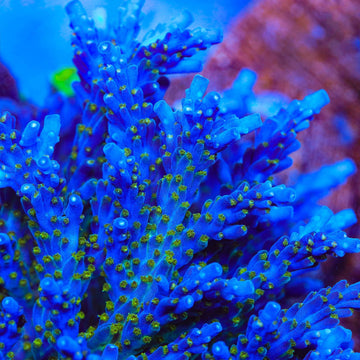
BC Bubblebath Unicorn Acropora Coral
Overview
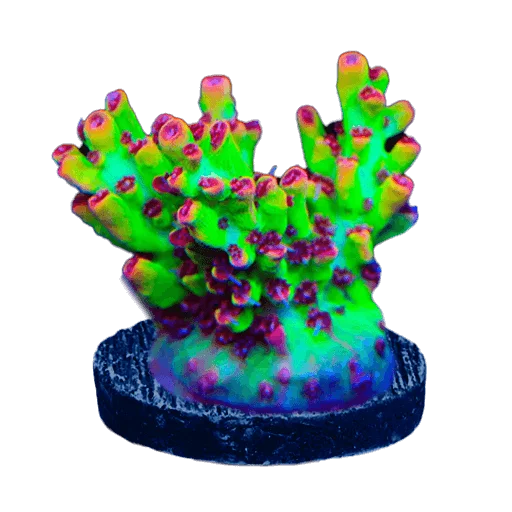
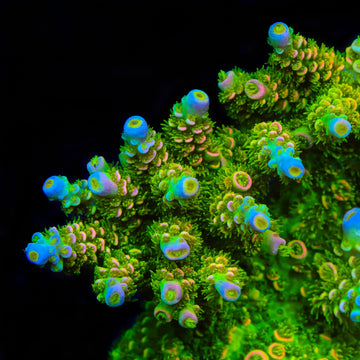
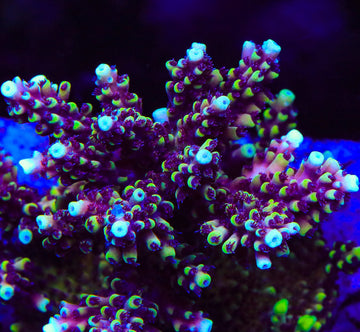
BC Bubblebath Unicorn Acropora Coral shows branching growth with tightly spaced corallites and distinct colored tips. Classified as Acropora sp., it is a small-polyp stony coral that prefers strong lighting and high, turbulent water flow. It relies mainly on symbiotic algae for energy, but occasional small-polyp foods can support growth and maintain color. Place high on stable rockwork with space from aggressive neighbors, and keep alkalinity and nutrients stable.
Quick Facts
Care
Difficult
Lighting
High
Flow
High
Placement
High
Temperament
Peaceful (2–3 inches spacing)
Recommended Parameters
Temp
76–80°F
pH
8.1–8.4
Salinity
1.025–1.026
Calcium
400–450 ppm
AlkAlkalinity
7–9 dKH
Magnesium
1280–1350 ppm
Feeding
photosynthetic (primary), microplankton, rotifers, copepod nauplii, oyster eggs, coral-specific powdered foods (e.g., Reef Roids), amino acid supplements, broadcast phytoplankton
Care & Placement
FAQ
Frequently Asked Questions
About the BC Bubblebath Unicorn Acropora Coral
-
Why does my BC Bubblebath Unicorn lose its pastel “bubblebath” look and shift to brown or neon green?
Color shifts usually track light and nutrients. Aim for PAR ~300–350 with a blue-heavy spectrum and modest whites. Keep NO3 at 5–15 ppm and PO4 at 0.03–0.07 ppm; ULNS can wash out pastels, while excess nutrients brown it. Hold alkalinity steady (7.5–8.5 dKH). Provide strong, random flow and avoid rapid changes—stability brings the shimmer back. -
What placement helps this coral maintain even growth without shadowing itself?
It forms dense, bubbly branch clusters that easily shade their base. Mount the frag at an angle on an open rock face with 6–8 inches of clearance. Use cross-flow or alternating gyres to push water through the interior skeleton. Rotate the colony every few weeks during early growth to distribute light until it develops a more open structure. -
I’m seeing pale, burnt tips but the base looks fine—what’s the likely cause?
Tip burn in this Acropora often results from a combo of high PAR and sudden alkalinity rise. Test daily; keep dKH changes under 0.2 per day. If tips glow then necrose, lower PAR 10–15% and reduce white channels temporarily. Verify phosphate isn’t bottoming out. Resume full light only after a week of stable parameters and visible recovery. -
How can I spot and manage pests that target BC Bubblebath Unicorn specifically?
Watch for AEFW crescent bite marks, sand-like egg clusters on shaded bases, and hesitant polyp extension. Red bugs cause persistent polyp pinching. Quarantine new frags; inspect under white light and a magnifier. Use a sequence of dips (iodine and commercial AEFW-targeting dips) over several weeks, brushing bases gently. Hosting acro crabs can improve polyp extension and deter micro-predators.