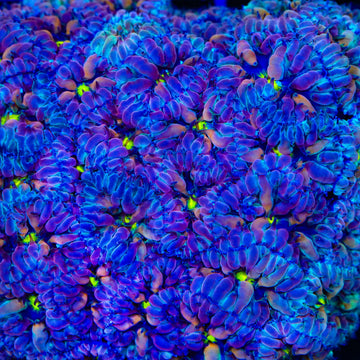
Blue Raspberry Blastomussa Coral
Overview
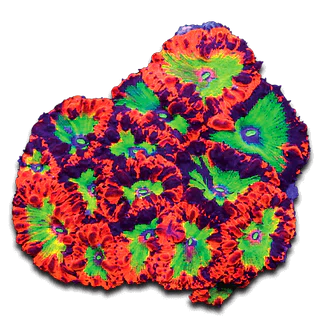
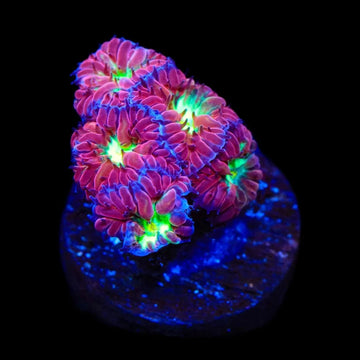
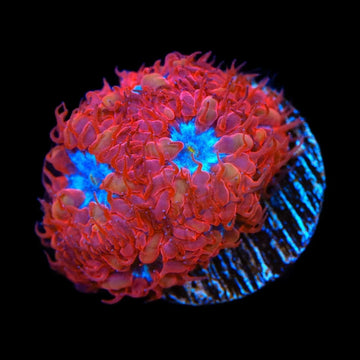
Blue Raspberry Blastomussa Coral has thick, fleshy polyps with circular ridges and contrasting mouths. Blastomussa wellsi is a large-polyp stony coral forming dome-shaped colonies; it prefers low to moderate lighting and gentle, low to moderate water flow. It is photosynthetic with symbiotic algae but benefits from occasional small meaty foods, which support growth and color. Place on the sandbed or a stable lower rock and leave space from nearby corals to avoid stings.
Quick Facts
Care
Easy
Lighting
Low–Moderate
Flow
Low–Moderate
Placement
Low–Mid
Temperament
Semi-aggressive (2–3 inches spacing)
Recommended Parameters
Temp
76–80°F
pH
8.1–8.4
Salinity
1.025–1.026
Calcium
400–450 ppm
AlkAlkalinity
8–9 dKH
Magnesium
1280–1350 ppm
Feeding
photosynthetic, mysis shrimp, enriched brine shrimp, finely chopped seafood (clam, shrimp, fish), zooplankton, copepods, microplankton, powdered coral foods
Care & Placement
FAQ
Frequently Asked Questions
About the Blue Raspberry Blastomussa Coral
-
Why does my Blue Raspberry Blastomussa lose its blue/pink pop over time even though it looks healthy?
Color shift usually follows spectrum and nutrient balance rather than health alone. Aim for blue-heavy lighting (14–20K) at low PAR (50–120), stable alkalinity 8–9 dKH, nitrate 2–10 ppm, phosphate 0.02–0.08 ppm. Excess white light or very low nutrients can mute reds; elevated nutrients can brown blues. Reduce direct light, increase blue channels, and keep trace elements stable through regular water changes. -
My B. wellsi retracts for days after a move—how can I tell stress from disease?
Temporary deflation with intact, glossy tissue is typical stress. Disease shows jelly-like sloughing, foul odor, and rapid tissue loss. For stress, reduce light by 20–30%, lower flow to gentle, and pause feeding 24–48 hours. For suspected brown jelly, remove necrotic areas, perform an iodine dip, raise flow slightly to prevent stagnation, and maintain high oxygenation. Stability usually restores extension within a week. -
How can I propagate a Blue Raspberry Blastomussa without damaging the heads?
Use a diamond saw to cut between corallite walls, not through them. Make a single, clean pass with slow feed rate, then dip in iodine and place in low light, low–moderate flow. Mount so fleshy rims don’t rub. Wait 7–10 days before feeding; then offer small mysis or reef roids at night. Healing is faster with stable alk/Ca and minimal detritus on the cut. -
What’s the best feeding strategy to increase polyp size without causing problems?
Target feed small, meaty foods once or twice weekly after lights down, when tentacles extend. Use fine particle foods or minced mysis; avoid large chunks that tear tissue. Stop flow briefly, feed lightly, then restore gentle flow to clear leftovers. Overfeeding can drive nutrient spikes and invite bacterial issues; watch for film on tissue or stink—both signal it’s time to reduce portions.