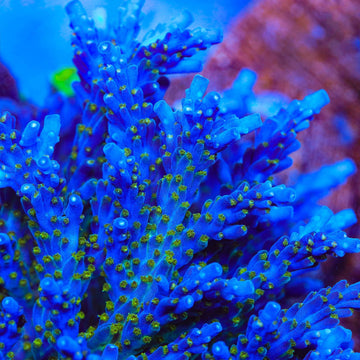
Garf Bonsai Acropora Coral
Overview
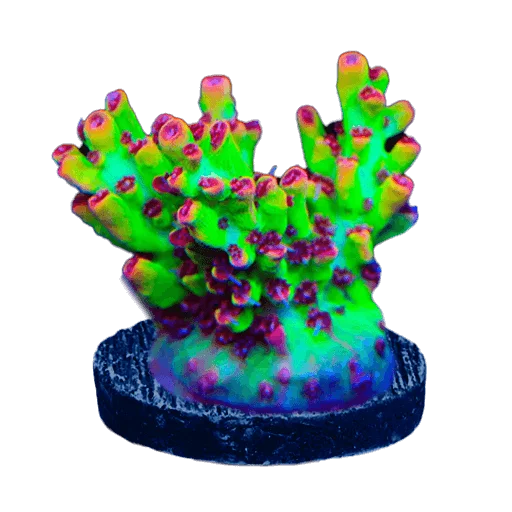
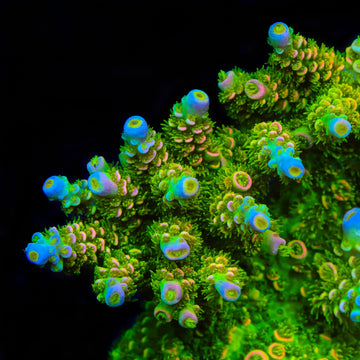
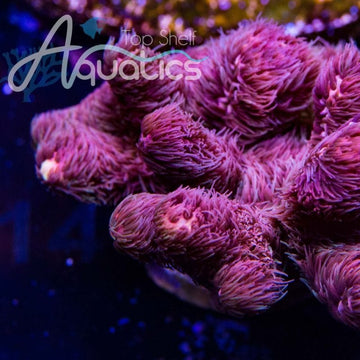
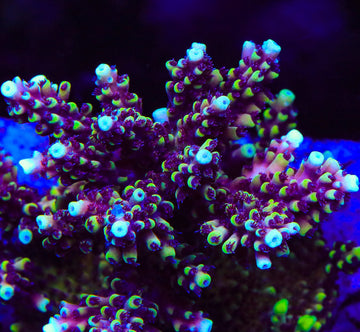
GARF Bonsai Acropora Coral shows tight, upward-branching sticks with purple branches and green polyps. Acropora valida is a small-polyp stony branching coral that prefers strong light and high, turbulent flow. It is primarily photosynthetic through symbiotic algae, but occasional very fine planktonic foods can support growth and color. Place high on stable rock with strong flow, allow room for encrusting base and outward growth, and keep distance from aggressive corals.
Quick Facts
Care
Difficult
Lighting
Moderate–High
Flow
High
Placement
High
Temperament
Semi-aggressive (3–6 inches spacing)
Recommended Parameters
Temp
76–80°F
pH
8.1–8.4
Salinity
1.025–1.026
Calcium
400–450 ppm
AlkAlkalinity
7–9 dKH
Magnesium
1280–1350 ppm
Feeding
photosynthetic (primary), microplankton, rotifers, copepod nauplii, oyster eggs, marine snow, amino acid supplements, coral-specific powdered foods
Care & Placement
FAQ
Frequently Asked Questions
About the Garf Bonsai Acropora Coral
-
Why does my GARF Bonsai lose its deep purple tips and neon green polyps after a few weeks?
Color loss usually stems from imbalanced nutrients and spectrum. Keep phosphate detectable (0.02–0.08 ppm) and nitrate 2–10 ppm; zeroed nutrients wash out pigments and burn tips with high light. Maintain alk 7.5–8.5 dKH with minimal swing. Blue-heavy spectrum (420–470 nm) sustains purple; excess white shifts to brown. Potassium 380–420 ppm supports purple; iron affects green—dose carefully and test. -
My frag is encrusting but not branching—should I change lighting or flow?
Encrusting first is normal for Acropora valida and builds a base for fast vertical growth. Resist moving it if polyp extension is good. Provide strong, turbulent flow (random 20–40x turnover) to keep tissue clean and support calcification. PAR 250–350 is a sweet spot; above 400 can stall growth if nutrients are low. Stable alkalinity and temperature matter more than chasing PAR. -
How can I tell pest damage (AEFW or red bugs) from nutrient/light issues on this coral?
AEFW leave irregular bite marks and pale patches between polyps; look for tan flatworms or egg spirals on the underside. Red bugs reduce polyp extension and make colors dull without obvious bite marks. Nutrient/light problems cause uniform paling or tip burn. Use a turkey baster blast test—AEFW dislodge. Treat with appropriate dips (e.g., Bayer/CoralRX for AEFW, Interceptor for red bugs) and quarantine frags. -
Why does base STN appear after I increased flow and light for faster growth?
Rapid parameter shifts can outpace the coral’s energy budget, especially if nutrients are low. Base STN often follows combined changes: higher PAR, stronger flow, alk rise, or carbon dosing. Roll back one variable at a time—lower PAR by 15–20%, ease flow angle, and stabilize alk. Check for shading detritus at the base and ensure phosphate isn’t bottomed out. Frag above the recession if it progresses.