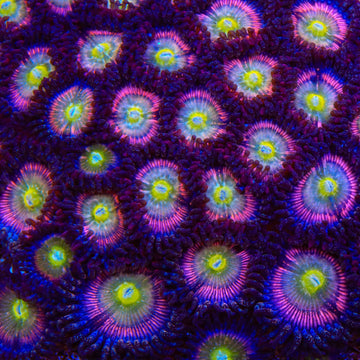
My Clementine Zoanthids Coral
Overview
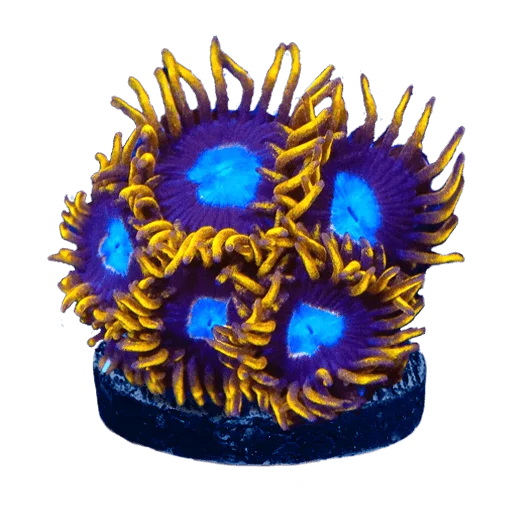
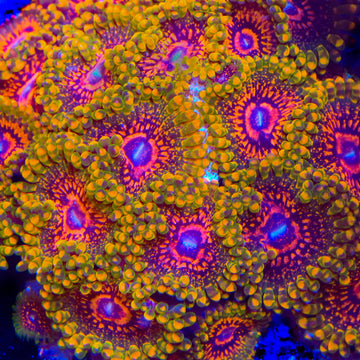
My Clementine Zoanthids Coral features small button-like polyps with orange centers and contrasting skirts. Classified as Zoanthus sp., it is a soft, mat-forming colonial polyp that thrives under moderate light and low to moderate water flow. Primarily photosynthetic with symbiotic algae, it accepts occasional small meaty or powdered foods, which can support faster growth and maintain color. Place on isolated rock to control spreading and keep space from aggressive neighbors, as it can overgrow nearby corals.
Quick Facts
Care
Easy
Lighting
Low–Moderate
Flow
Moderate
Placement
Low–Mid
Temperament
Semi-aggressive (fast-growing; may overgrow neighbors; 2–3 inches spacing)
Recommended Parameters
Temp
76–82°F
pH
8.1–8.4
Salinity
1.025–1.026
Calcium
400–450 ppm
AlkAlkalinity
8–10 dKH
Magnesium
1250–1350 ppm
Feeding
photosynthetic (primary), phytoplankton, microplankton, zooplankton, rotifers, cyclops, oyster eggs, brine shrimp nauplii, powdered coral foods, marine snow
Care & Placement
FAQ
Frequently Asked Questions
About the My Clementine Zoanthids Coral
-
Why do My Clementine Zoanthids stretch or “reach,” and how can I keep their orange pop?
Stretching usually means low PAR or too much white light. Aim for moderate PAR (80–150) and strong blue/violet spectrum (420–450 nm) to keep the orange vivid. Ramp light changes slowly over 2–3 weeks. If polyps narrow and elongate, increase blue intensity and flow slightly. Too much nutrient stripping can dull color; allow a bit of nitrate (5–15 ppm) and low phosphate (0.02–0.08 ppm). -
My colony is “melting” from the mat inward—what’s the likely cause and fix?
Rapid tissue loss often follows bacterial stress or detritus trapped at the base. Increase turbulent flow to keep the mat clean, turkey-baste debris, and trim away necrotic tissue. Do an iodine or nitrofurazone-based dip, repeat every 24–48 hours for several days. Stabilize alkalinity and temperature, reduce organics with fresh carbon, and avoid major parameter swings during recovery. -
What pests target this morph, and what signs should I watch for?
Look for zoa-eating nudibranchs (and eggs on the mat’s underside), sundial snails, and spiders. Symptoms include sudden closed polyps, bite marks, or missing skirts. Nighttime inspections with a blue flashlight help. Remove adults manually and dip with a coral-safe product; repeat dips every 3–4 days to break egg cycles. Maintain good flow to discourage detritus-loving infections like zoa pox. -
Can My Clementine Zoanthids irritate neighbors or be affected by chemical warfare?
Yes—zoanthids can overgrow and also react to allelochemicals from softies and mushrooms. Give them an “island” rock with space on all sides. Run fresh activated carbon and change it regularly, especially after fragging or large maintenance. Avoid placing them directly downcurrent from aggressive leathers or euphyllia. If they stay closed near certain corals, increase spacing and adjust flow paths.