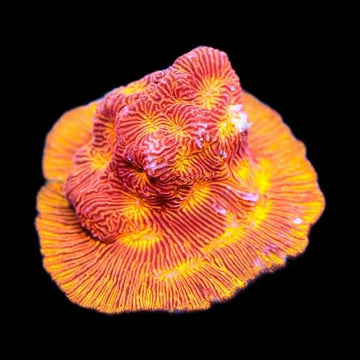
24k Gold Leptoseris Coral
Overview
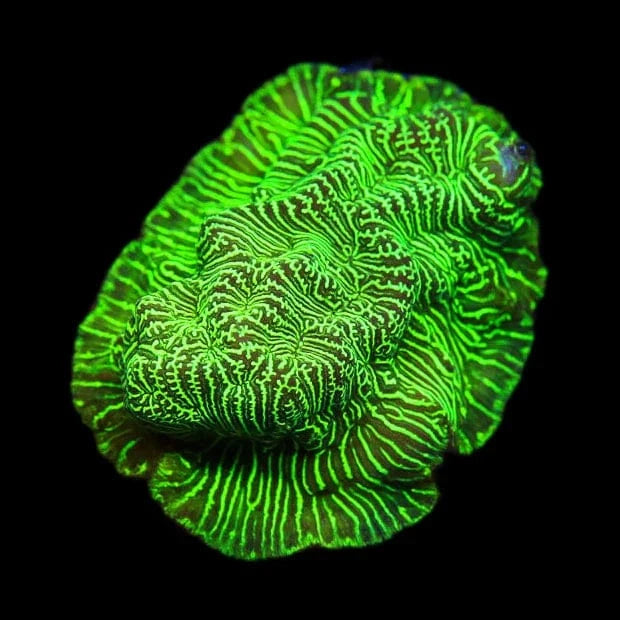
24K Gold Leptoseris shows a bright golden coloration with thin, concentric ridges on its plating surface. Leptoseris sp. is a hard plating coral that prefers low to moderate light and gentle, indirect water flow. It relies on symbiotic algae for most nutrition but can accept fine particulate foods at night, which may support growth and maintain color. Place on stable rockwork with space around the edges, as its thin plates can shade neighbors and frags break easily.
Quick Facts
Care
Moderate
Lighting
Low–Moderate
Flow
Low-Moderate
Placement
Low
Temperament
Peaceful (2–3 inches spacing)
Recommended Parameters
Temp
76–80°F
pH
8.1–8.4
Salinity
1.025–1.026
Calcium
400–450 ppm
AlkAlkalinity
7.5–9 dKH
Magnesium
1280–1350 ppm
Feeding
photosynthetic (primary), microplankton, phytoplankton, rotifers, marine snow, powdered coral foods, amino acid supplements
Care & Placement
FAQ
Frequently Asked Questions
About the 24k Gold Leptoseris Coral
-
Why is my 24K Gold Leptoseris (Leptoseris sp.) losing its gold and looking pale or greenish?
It’s likely too much light or too rapid acclimation. This coral prefers low-to-moderate PAR (about 50–150), with a blue-heavy spectrum. Start it in shaded areas and increase light slowly over weeks. Keep nutrients non-zero (e.g., low nitrate/phosphate) to support coloration. Watch for photoinhibition: washed-out tissue, retracted polyps, and bright skeleton edges. Reduce intensity and stabilize alkalinity to help color rebound. -
What placement encourages plating growth without shading neighbors?
Mount it on lower rockwork, vertical faces, or the underside of ledges so plates grow outward without blanketing other corals. Leave space beneath for flow to clear detritus. The coral’s sting is modest, but its shade can suppress nearby light-loving species. Consider isolating on small “islands” and periodically trimming plate edges to control overhangs while preserving the colony’s form. -
How can I get better feeding response from my 24K Gold Leptoseris?
Target nighttime or lights-down periods when polyps extend. Use gentle, cross-flow to keep food suspended, then reduce flow briefly during feeding. Offer fine particulate foods (e.g., rotifers, reef microfoods, powdered blends) and amino acids 1–2 times weekly. Avoid blasting the tissue; a light cloud works best. Consistent, small feedings support growth and color without driving nutrient spikes. -
I’m seeing slow tissue recession from the edges. What should I check first?
Verify stable alkalinity and pH; swings often show first at the thin growing rim. Inspect for vermetid snails or detritus trapped under the plate irritating tissue. Improve underside flow, baste debris regularly, and consider an iodine-based dip if bacterial involvement is suspected. Keep PAR moderate; high light accelerates stress. If needed, trim a failing edge back to healthy tissue to stop progression.