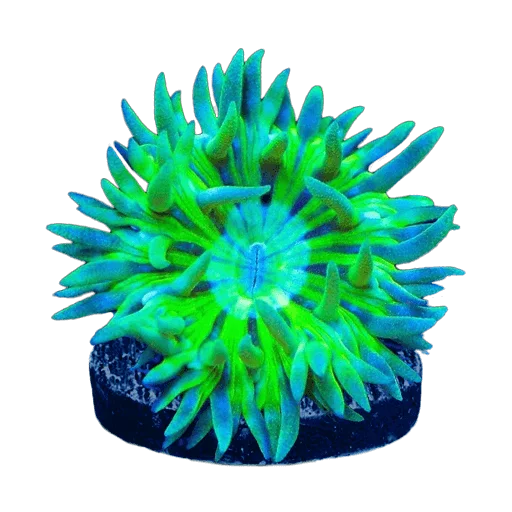
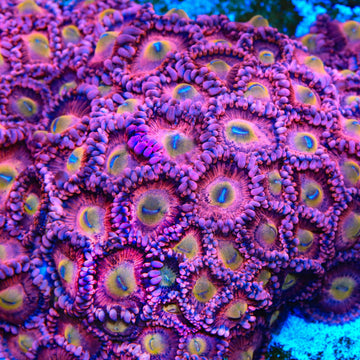
Highlighter Toadstool Leather Coral
Overview
Highlighter Toadstool Leather Coral shows a bright neon cap with extended polyps forming a toadstool shape. Sarcophyton sp. is a soft leather coral that prefers moderate light and moderate to strong, variable water flow. It is photosynthetic with symbiotic algae but can take occasional fine particulate foods to support growth and color. Place it with room to expand and avoid contact with other corals, as it can shed and release irritants into the water.
Quick Facts
Care
Easy
Lighting
Moderate–High
Flow
Moderate–High
Placement
Mid–High
Temperament
Semi-aggressive (chemical warfare—6–8 inches spacing)
Recommended Parameters
Temp
76–80°F
pH
8.1–8.4
Salinity
1.025–1.026
Calcium
380–430 ppm
AlkAlkalinity
8–10 dKH
Magnesium
1250–1350 ppm
Feeding
photosynthetic (primary), phytoplankton, microplankton, marine snow, powdered coral foods
Care & Placement
FAQ
Frequently Asked Questions
About the Highlighter Toadstool Leather Coral
-
Why does my Highlighter Toadstool stay closed for a week or more?
Sarcophyton regularly “sheds” a waxy film to clear algae and detritus. During this, it can stay closed for days. Increase random, moderate–strong flow to lift the film, and keep surfaces clean. If closure exceeds two weeks, check for chemical stress from nearby corals, run fresh carbon, verify stable alkalinity/salinity, and rule out pests or tissue damage at the base. -
My coral’s neon glow is fading—what should I adjust?
Color dulls with weak spectrum, unstable nutrients, or excessive PAR. Target moderate PAR (150–250) with strong blue/violet for fluorescence. Keep nutrients detectable (nitrate 2–10 ppm, phosphate 0.03–0.1 ppm); ultra-low nutrients can pale leathers. Avoid sudden light jumps; ramp LEDs slowly. Improve flow so the surface stays clean—film buildup can mute color. -
How do I manage chemical aggression from this coral?
Sarcophyton releases terpenes that can stunt stonies and other softies. Provide space and strong, indirect flow downcurrent of sensitive corals. Run high-quality carbon and change it regularly; a good skimmer helps. Watch for retracted polyps or burning in neighbors. Large water changes after rescapes or fragging reduce spikes. Avoid physical contact—its mucus is irritating. -
Can clownfish hosting harm this coral?
Yes—persistent nuzzling can keep polyps retracted and abrade tissue, especially on smaller specimens. If hosting causes droop or recession, increase flow, consider a mesh guard until it recovers, and give the coral a sturdier, stable perch. Offering alternative hosts (e.g., large Euphyllia or a surrogate like a fake anemone) can redirect attention.